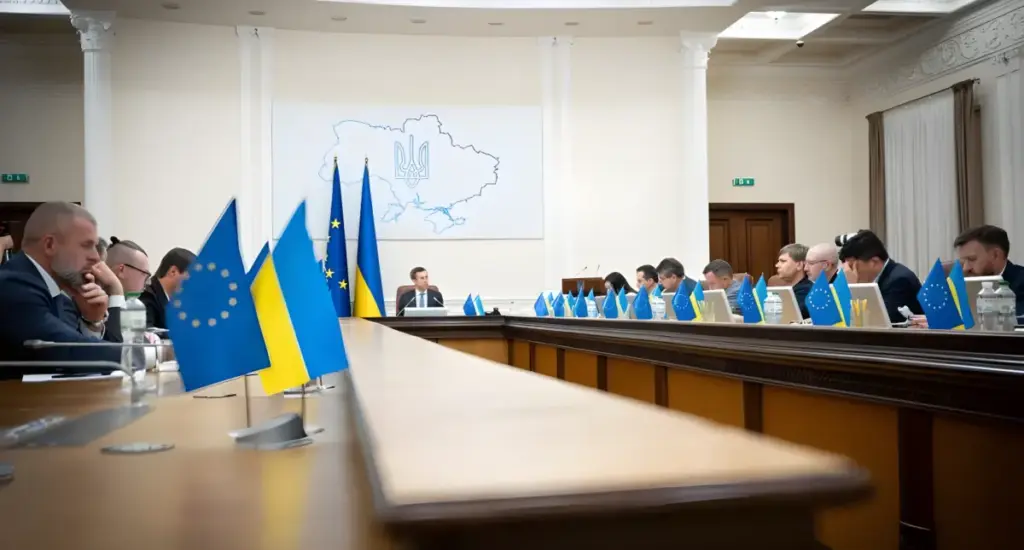
The European Commission wants to open all negotiation clusters for Ukraine by July, but the final decision, as before, requires the consent of all EU countries. This is reported by Kurs Ukrainy, the PromPolitInform portal reports.
This concerns the opening of negotiation clusters – large blocks of reforms, according to which the candidate country must bring its legislation and institutions into line with EU rules.
According to European officials, the first cluster could be opened in June, and the remaining five in July. This schedule was previously publicly promoted by European Commissioner for Enlargement Marta Kos.
Kos stated that the European Commission has already carried out significant preparatory work, so technically the process is ready for a formal launch. Ukraine also claims that it is ready to open all six negotiation clusters.
The main limitation remains political. For each key step in the enlargement process, a unanimous decision of all 27 EU countries is required. Previously, Ukraine’s progress was slowed down by the position of Hungary, but Brussels expects to use a new window of opportunity after the change of power in Budapest.
For Ukraine, this is an important signal: the process of joining the EU is gradually moving from general political promises to a specific calendar. The opening of clusters in itself does not mean membership, but launches substantive negotiations on reforms, the economy, justice, markets, the budget and other areas.
Kyiv insists on a clear date for accession and previously called 2027 a desirable benchmark. The European Commission has not officially confirmed such a date and emphasizes that accession should depend on the fulfillment of requirements, not on political acceleration.
For Ukrainians, this process has more than just symbolic significance. Negotiations with the EU will directly affect rules for business, the agricultural sector, the judicial system, public administration, competition, customs, and access for Ukrainian companies to the European market.