Between November 16 and 21, the Defense Forces of Ukraine launched a series of systematic strikes against oil infrastructure, bridges, air defense systems, and Russian army repair bases. The geographic scope of the strikes included Krasnodar Krai, Rostov, Kursk, and Novgorod regions, Bashkortostan, Tatarstan, as well as Russian-occupied Ukrainian territories. This is reported by the portal PromPolitInform, citing information from the Ministry of Defence of Ukraine, based on data from the General Staff of the Armed Forces of Ukraine.
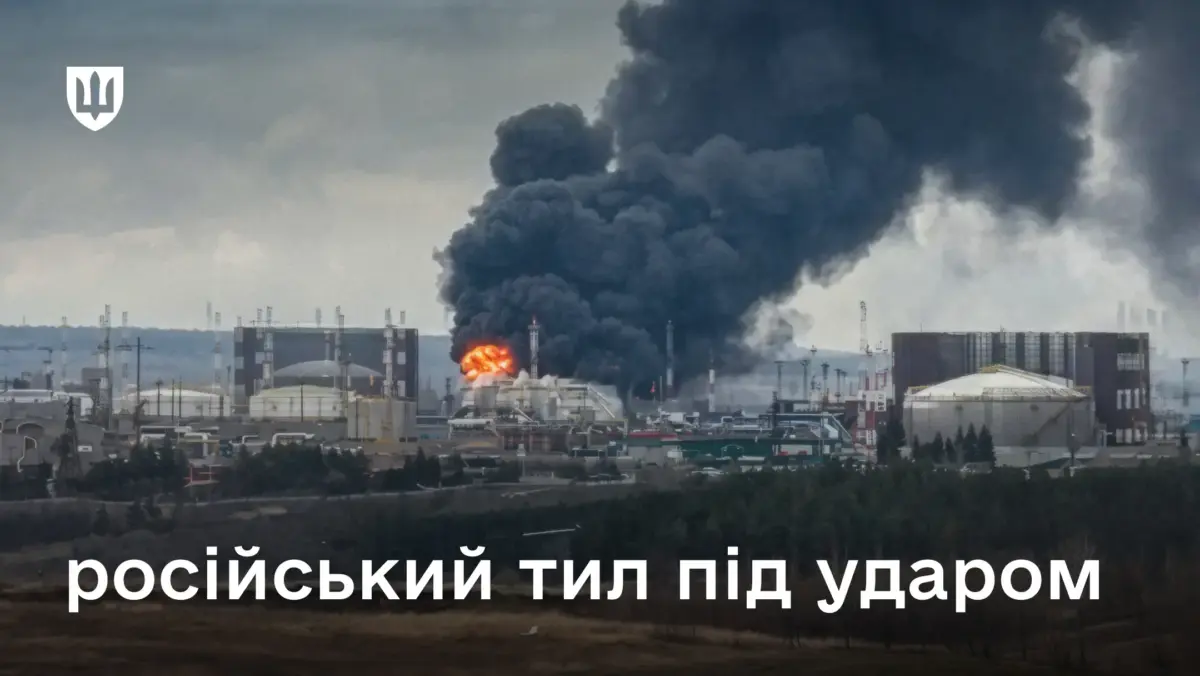
On the night of November 16, Ukrainian forces struck the Ilsky Oil Refinery in Krasnodar Krai, hitting the AT-4, AT-5, and AT-6 primary oil refining units and the motor gasoline production complex. The plant has an annual capacity of approximately 6.6 million tons of oil and is critical for supplying Russian forces in the south and occupied Crimea. On the same day, three oil depots in the city of Azov, Rostov Region—Flash Energy, Tranzit-Express, and Azovskaya—were hit, causing fires at four production facilities.
Subsequently, on November 17, an attack occurred on the Gazprom Neftekhim Salavat petrochemical complex in Bashkortostan, located 1,500 kilometers from the border with an annual capacity of 10 million tons. A fire broke out at the site. Additionally, operators from the 1st Separate Center for Unmanned Systems attacked the Bashneft-Ufaneftekhim plant in Ufa, which is part of a complex with an annual capacity of 23.5 million tons.
Strikes on transport corridors and repeat refinery attacks
On the night of November 18, Ukrainian troops again attacked the Ilsky refinery, destroying an RVS-5000 storage tank and damaging eight other tanks, an oil pipeline, and warehouse facilities. Simultaneously, the Afipsky refinery in Krasnodar Krai was struck, resulting in damage to a refining unit.
On November 19, the Kaleykino oil pumping station in the Almetyevsk district of Tatarstan was targeted. This is a strategic hub where oil is blended for further transportation via the Druzhba pipeline. The attack caused one RVSPA-50,000 tank to ignite and damaged two others.
Destruction of the Kerch Bridge and logistics crossings
Enemy transport infrastructure also suffered significant losses. On the night of November 16, the Defense Forces struck the Kerch Bridge, damaging its structure. The following night, a secondary strike led to the collapse of an automobile span, and on the night of November 19, the Ukrainian Navy’s Neptune coastal missile systems struck the bridge, damaging the railway tracks and forcing a halt to traffic.
Furthermore, Ukrainian forces systematically destroyed bridge crossings in the enemy’s rear. Between November 14 and 21, bridges across the Siverskyi Donets near Pryshyb, Stanytsia Luhanska, and Luhansk were hit, along with bridges over the Mius River near Taganrog and Lakedemonivka.
Neutralization of air defenses, command posts, and aircraft
In parallel, the destruction of Russian detection and command systems continued. On November 17, ten radar and electronic warfare stations were hit, including in the area of Yakovenkove in Crimea and near Pryazovske in Krasnodar Krai. Subsequently, a Pantsir-S2 complex was hit in the Bryansk region, and a UAV command post was destroyed near Selydove.
Logistical supply depots were struck near Rubizhne and Lysychansk, while concentrations of military equipment were hit near Berdyansk. Reports also indicate a strike on three ballistic missile launchers in a single night, with the destruction of one already confirmed.
On the night of November 21, an ammunition depot in Pervomaiske, Crimea, was hit, along with command posts near Pryshyb and Ukrainsk. In addition, the Defense Forces damaged Russia’s repair capabilities: on November 18, a repair base near Khomutovka in the Kursk Region was destroyed. Furthermore, the results of the strike on the 123rd Aircraft Repair Plant in Staraya Russa, Novgorod Region, were clarified, confirming damage to three military transport aircraft, including a heavy Il-76.
Photo: Ministry of Defence of Ukraine