By 2027, logistics near the contact line will primarily be handled by ground robots
Ukrainian developers of Ground Robotic Complexes (GRCs) do not see them as a full replacement for manned vehicles in the near future. Currently, the industry is focused on automating specific processes and integrating unmanned systems into the broader military ecosystem. This was reported by RBC-Ukraine (Костянтин Широкун) citing Ratel Robotics, according to the portal PromPolitInform.
According to industry experts, robotic platforms are already performing a significant volume of logistics tasks, minimizing risks to personnel in dangerous frontline areas. Taras Ostapchuk from Ratel Robotics predicts that by 2027, most logistics near the contact line could be automated, though armored vehicles will remain necessary for rapid troop transport and protected logistics.
Economic viability of platform development
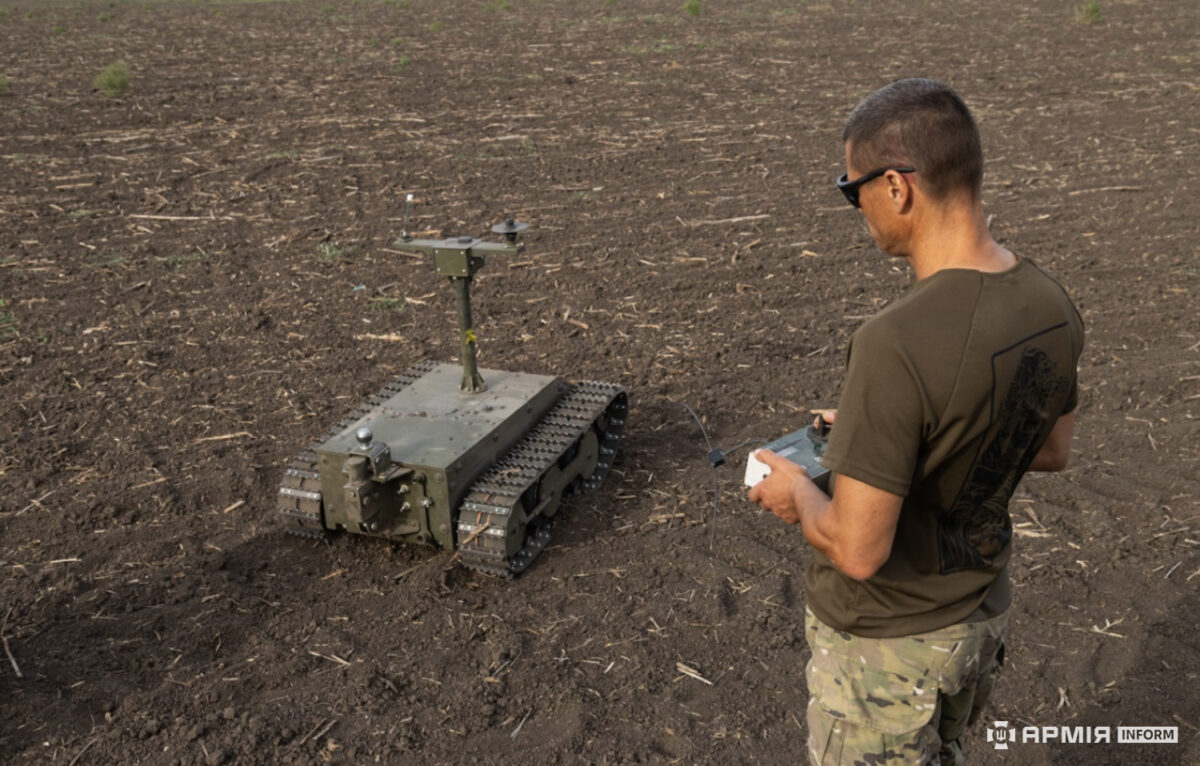
Manufacturers emphasize that converting existing pickup trucks or APCs to remote control is not always justified. Creating specialized platforms designed from the ground up for unmanned operation is a more cost-effective solution. Today, GRCs in the 0-5 km zone from the front line are successfully replacing standard vehicles, which have become priority targets for enemy FPV drones.
Advantages of wheeled and tracked systems
The choice of chassis depends on specific operational conditions, as there is no universal solution. Wheeled platforms are characterized by ease of maintenance, higher speed, and energy efficiency on solid surfaces. Tracked complexes, meanwhile, demonstrate superior mobility in mud, sand, or snow due to lower ground pressure, although their design is more complex to repair.
Transition to autonomous control
A key technological challenge remains the dependence of robots on stable communication with the operator. Developers are implementing systems for automatic return along a path, autopilots, and AI algorithms for threat detection. Artificial intelligence training is conducted by combining synthetic datasets with data obtained directly during combat missions.
Expanding the functionality of ground drones
Modern GRCs are transforming into multifunctional complexes that deliver ammunition, evacuate the wounded, and serve as platforms for offensive weaponry. There have already been documented cases of the successful use of remote-controlled machine guns to suppress enemy breakthrough attempts. In the future, the development of amphibious platforms capable of crossing water obstacles and the creation of a unified ecosystem integrating ground and aerial drones are expected.
Illustrative photo: ArmyInform / CC BY 4.0