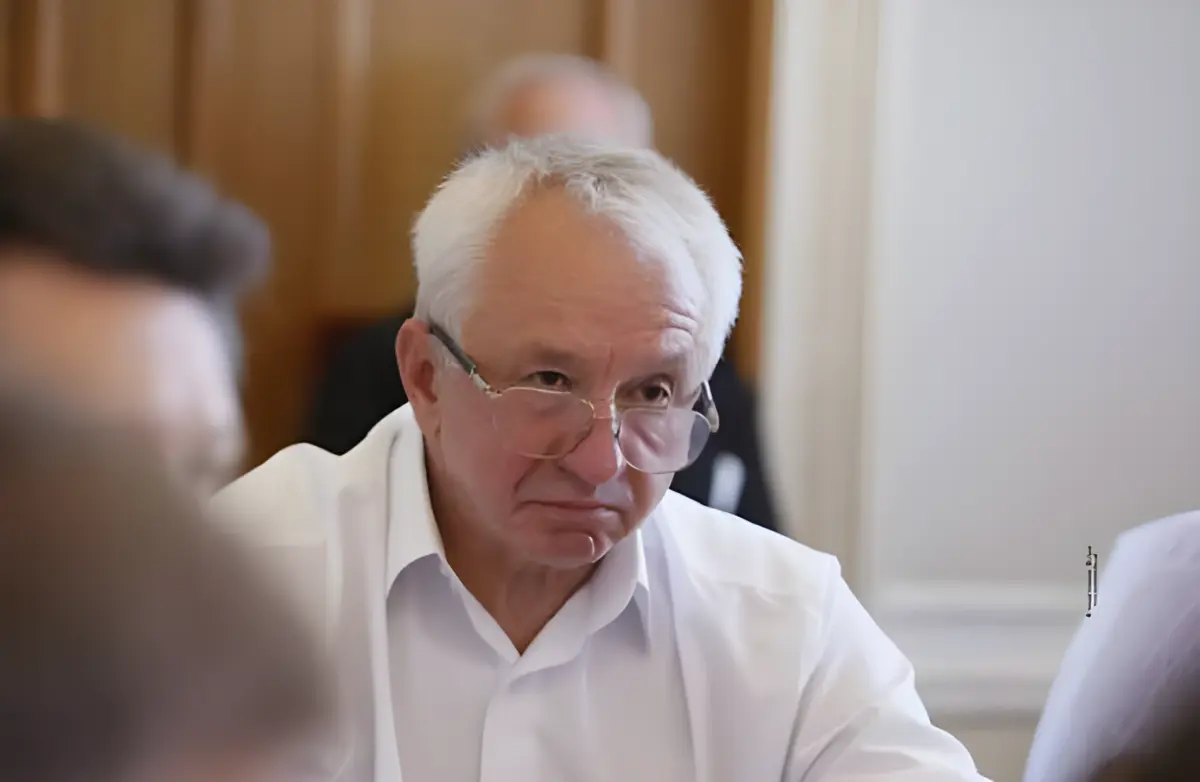
Oleksiy Kucherenko, a Member of Parliament from the “Batkivshchyna” (Fatherland) party, stated that not a single one of the 26 energy infrastructure protection projects in the Kyiv region has been completed on schedule. He noted that while official documents claim a 55% completion rate, he estimates the actual progress to be only around 15%. The MP believes that evidence regarding potential violations should be handed over to law enforcement, and that the government must urgently find a solution for additional funding and the completion of the work, ensuring that residents of Kyiv and the surrounding region do not become hostages to the situation.
KyivVlada learned of this from a statement posted on Facebook by Oleksiy Kucherenko—an MP and member of the Verkhovna Rada’s Temporary Investigative Commission tasked with probing potential legal violations concerning public safety during martial law. This is reported by the portal PromPolitInform.
“To date, not a single one of the 26 protection facilities in the Kyiv region has been completed. According to the schedule, construction was supposed to be finished by October 1. The current head of the region (Timur Tkachenko – Ed.) would very much like to complete this work, but serious legal violations have already occurred, and everyone is afraid to take responsibility for providing additional funding for the project. Yet, it does require additional funding,” the post reads. According to him, the issue concerns 26 protection structures for electrical substations, the construction of which was organized by the Kyiv Regional State Administration; as of the end of November, not a single facility has been completed. While official reports indicate an average completion rate of approximately 55%, the actual volume of work confirmed by signed completion certificates amounts to only about 15% of the project’s initial cost—which is roughly 1.8 billion hryvnias. According to his data, contractors have received advance payments totaling approximately 750 million hryvnias.
“They are manipulating the figures—claiming 55% completion based on documents, while the actual level is only 15%,” stated Kucherenko.
Kucherenko believes that those involved in the project are currently trying to shift responsibility onto one another.
“They are hemming and hawing, passing the buck back and forth. Everyone realizes that someone has to be held accountable, so right now, there is simply an attempt to shift that responsibility,” he said.
The MP also specifically addressed the current head of the Kyiv Regional State Administration, Tymur Tkachenko. According to Kucherenko, the regional head is interested in seeing the work completed; however, further funding is complicated by potential irregularities that occurred earlier.
As of November 2026, Tymur Tkachenko heads the Kyiv Regional State Administration.
Kucherenko also mentioned the former head of the Kyiv Regional State Administration, Mykola Kalashnyk, under whose leadership—according to the MP—the project was initiated. Kalashnyk currently serves as the Minister for Restoration, Infrastructure, and Transport of Ukraine. The MP specifically addressed the situation involving one of the contractors, stating that, in his view, this further complicates the completion of construction. However, Kucherenko did not cite any court rulings establishing the guilt of specific individuals; therefore, his characterization of these actions as legal violations represents his own personal position.
According to Kucherenko, the situation requires both an investigation and an urgent management decision to ensure the work is completed.
“Two things are needed here. MPs must handle the investigation—and I believe they need to follow through on the decision they voted for yesterday, which is to refer the cases to law enforcement. Meanwhile, the government must urgently find a solution to complete these facilities, ensuring that the residents of the Kyiv region and Kyiv city do not remain hostages to this egregious negligence and wrongdoing,” he concluded.
Notably, on November 26, the Verkhovna Rada Committee on Transport and Infrastructure held a closed-door meeting to examine potential irregularities during the construction of protective structures at energy facilities in the Kyiv region, as well as the efficiency of budget spending. Participants included Minister Mykola Kalashnyk, along with representatives from the Kyiv Regional Military Administration (KRMA), the Security Service of Ukraine (SBU), the Ministry of Internal Affairs, the National Police, the Kyiv Regional Prosecutor’s Office, and the general contractor.
It should be recalled that civic activist Serhiy Sternenko released photographs from energy facilities near Kyiv, confirming that the protective structures remain unfinished and that substation equipment is left exposed. Previously, Maksym Shkil, founder of the company Avtostrada—one of the country’s largest road construction contractors—stated that funds are allocated to contractors in a non-transparent manner, and that the government owes his company payment for work completed to protect energy infrastructure.
As reported, the Kyiv Regional Council has established a temporary oversight commission to verify the implementation of the 2023–2027 program for the resilience of life-support systems and critical infrastructure in the Kyiv region. This initiative was proposed amidst a scandal concerning the execution of resilience plans and the use of budget funds for the construction of protective structures for energy facilities. The commission will examine the financing of the projects, their actual execution, and the preparedness of local communities for prolonged power outages.
Furthermore, as previously reported, on November 13, 2026, Oleksii Kucherenko—a Member of Parliament and member of the Verkhovna Rada’s Energy Committee—stated that not a single one of the 26 planned protective structures for energy facilities in the Kyiv region had been completed. Following a review of the situation, the Verkhovna Rada’s Temporary Investigative Commission decided to refer the matter to the Security Service of Ukraine (SBU), the State Bureau of Investigation (SBI), and the National Police regarding potential criminal offenses; to the State Audit Service, requesting a financial and operational audit of the relevant department within the Kyiv Regional Military Administration (KRMA); and to the Cabinet of Ministers, urging them to ensure the completion of the construction.
Amid a scandal involving the alleged embezzlement of 1.89 billion hryvnias—funds earmarked for protecting energy infrastructure in the Kyiv region—various stakeholders have offered conflicting accounts regarding why the construction failed and who bears responsibility for implementing the regional resilience plan. Specifically, the former head of the KRMA, Mykola Kalashnyk, and his then-deputy, Ruslan Oliinyk, provided differing explanations as to who was responsible for organizing and overseeing the execution of the work. This publication has gathered the perspectives of the various parties involved in the matter.
Subsequently, on November 14, Mykola Kalashnyk—serving as the Minister for Restoration, Infrastructure, and Transport of Ukraine—reported that the total amount of advance payments transferred to contractors for the construction of protective structures for energy facilities in the Kyiv region reached 911.44 million hryvnias. According to him, contracts with the contractors were concluded by the Department of Regional Development of the Kyiv Regional Military Administration (KRMA), while oversight of the project’s implementation was assigned to the then-deputy head of the KRMA, Ruslan Oliinyk. The Minister also stated that on October 13, the Kyiv Regional Military Administration initiated the transfer of these facilities to the Agency for Restoration to complete the work.
At the same time, concerns regarding the timely funding of measures to ensure energy resilience were also raised in relation to the capital. Specifically, Petro Panteleiev, Deputy Head of the Kyiv City State Administration (KCSA), explained during a meeting of the Verkhovna Rada’s Temporary Investigative Commission that funds for establishing a backup power supply system for Kyiv’s water supply were only allocated in 2025, while funding for the engineering protection of critical infrastructure was allocated in 2026. According to him, the city authorities did not perceive such a level of threat to critical infrastructure during 2023–2024.