Scientists have proposed a circular hub model for recycling demolition waste
The Ministry of Economy of Ukraine has presented three fundamental scientific studies focused on strategies for social, environmental, and energy recovery of the country. Experts have proposed new approaches to tax incentives, industrial waste recycling, and the energy balance. This is reported by the portal PromPolitInform, citing information from the Ministry of Economy of Ukraine.
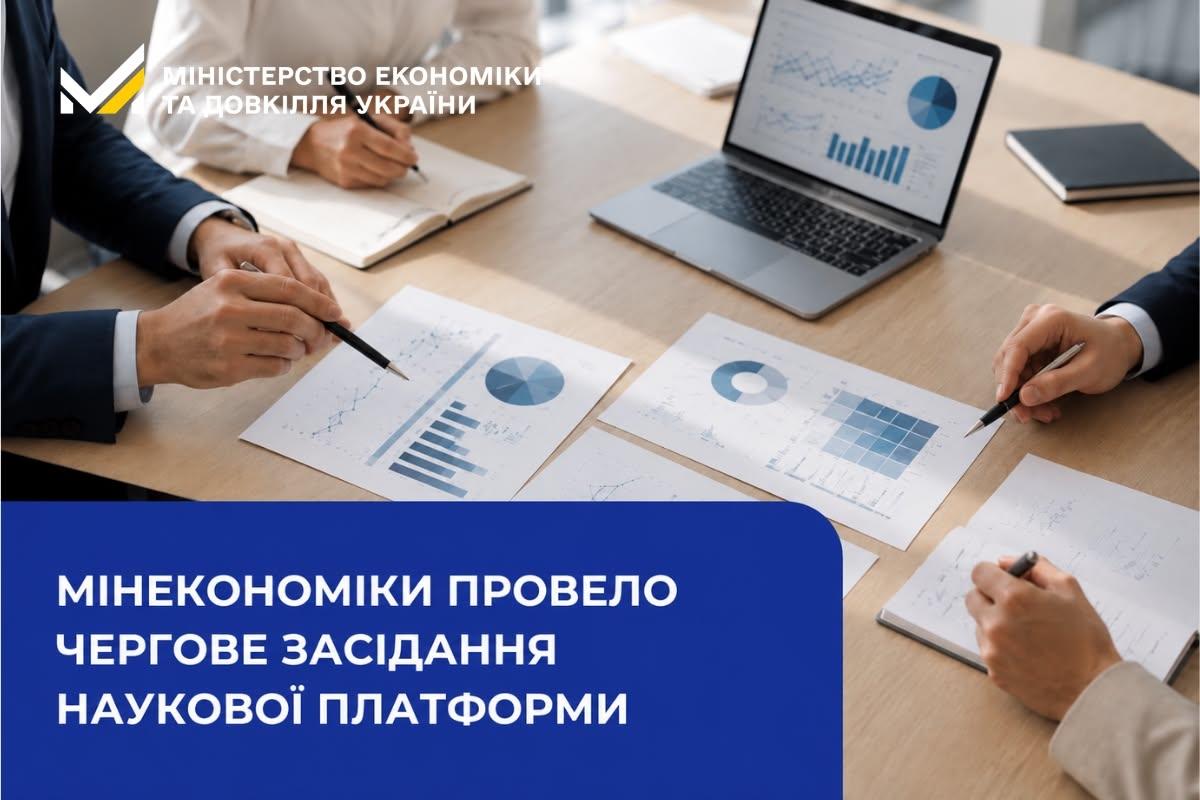
During a meeting of the Scientific Platform, over 80 specialists, including government officials and scientists, discussed ways to support economic growth. The results of the presented works are intended to form the basis for state policy during the post-war recovery period.
Social insurance optimization
Liudmyla Cherenko, an expert at the Ptoukha Institute for Demography and Quality of Life Studies of the NAS of Ukraine, presented an analysis of international experience regarding tax incentives for social insurance contributions. The research is based on 2025 International Labour Organization data covering 149 countries.
The authors of the study recommend moving away from universal rate reductions in favor of flexible tools integrated with personal income tax. Such measures should be targeted and aimed at supporting vulnerable groups of workers or regions requiring special development. Implementing time-bound incentives is viewed as a tool for legalizing employment and bringing business out of the shadow sector.
Circular economy in industry
Research on the relationship between environmental policy and industrial development was presented by Dmytro Lazarenko from the Institute of Industrial Economics of the NAS of Ukraine. He proposed a model of an integrated circular hub that enables the recycling of construction waste generated by war-related destruction into secondary materials.
According to the authors’ estimates, implementing such a project requires an investment of 4.3 million euros. Expected outcomes include annual regional GDP growth of 1.0–1.2 million euros, the creation of over 200 jobs, and the generation of up to 20 MW of thermal energy. Additionally, the project would reduce carbon emissions by 60,000 to 100,000 tons per year.
Energy transformation of Ukraine
The third paper, presented by Danylo Cherevatskyi from the Institute of Industrial Economics of the NAS of Ukraine, focuses on forecasting energy resource needs. The scientist developed a methodology linking cumulative primary energy consumption with GDP indicators.
The analysis proves that Ukraine has emerged from a quarter-century-long cycle of extensive energy-intensive development and has reached a point of energy parity. This creates conditions for shifting to an intensive economic growth model through decoupling mechanisms, where GDP growth becomes possible with minimal increases in energy consumption.
Photo: Ministry of Economy of Ukraine
Read also: Rosstat records highest inflation surge since VAT hike due to utility tariffs