A third facility worth 70 million rubles has opened in Luhansk, while funding for similar institutions is set to rise in Mariupol
Occupation administrations in temporarily captured Ukrainian territories are expanding their network of youth centers. These projects are funded by the federal budget of the Russian Federation and are designed to exert influence over Ukrainian youth. This is reported by the portal PromPolitInform, citing the Telegram channel of Andriushchenko Time.
A third youth center, spanning over 800 square meters, has been commissioned in Luhansk. The project cost 70 million rubles, with the premises located directly within the building of the occupation city administration. The center’s infrastructure includes an assembly hall, a media studio, and work spaces for occupation-controlled youth organizations.
Control infrastructure in the Luhansk region
Leonid Pasechnik stated that there are currently 11 such institutions operating in the occupied districts of the Luhansk region. The occupation administration plans to scale this network across all municipalities by 2030, ensuring long-term influence over the local population. The total federal funding allocated for these initiatives exceeds 250 million rubles.
Budget priorities in Mariupol
An analysis of Mariupol’s 2027 draft budget reveals selectivity in funding allocation against a backdrop of a one-third total expenditure cut. Specifically, personnel and operational costs for the local youth center are planned to increase 3.59-fold, while funding for municipal museums is set to rise 2.8-fold. Furthermore, financial support for school educational advisors is expected to grow by 35.6%.
Ideological influence on youth
Such centers serve as a tool for integrating children and adolescents into the Russian political and cultural sphere outside the school curriculum. Control over extracurricular activities allows the occupiers to dictate the content of events and the operations of youth organizations. The focus on strategic planning through 2030 indicates the Russian Federation’s intention to solidify its ideological influence over future generations of Ukrainians in occupied territories.
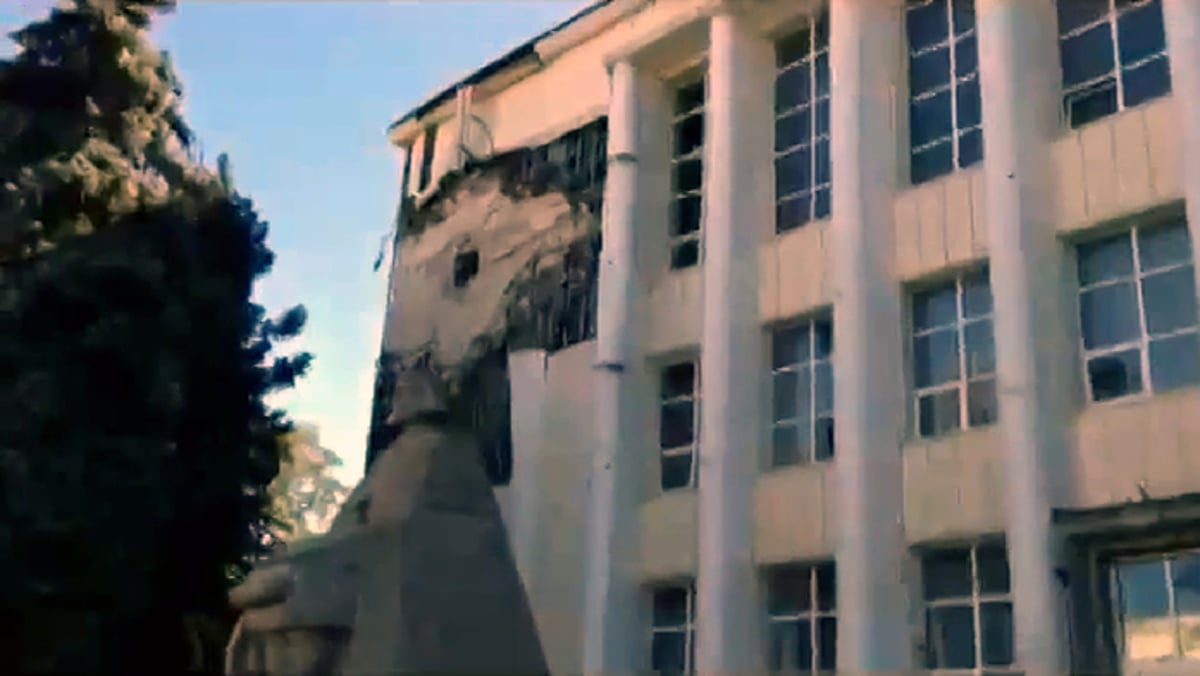
Illustrative photo: Authorized Ukrainian TV channel «Inter» Youtube stream / CC BY 3.0
Read also: Household tariffs, November 2026: gas, electricity, heating, water