Why do some military personnel avoid working with a psychologist? What myths about psychological assistance still exist?
Why do soldiers and veterans often avoid talking about their experiences even with their loved ones? Can chronic stress really change how people perceive information and increase vulnerability to information-psychological operations, and how does this occur at the level of brain processes? And how can those waiting for their partner to return from war become a reliable rear and build a “bridge of trust”?
Correspondent of АрміяInform sought answers to these questions together with psychologist Olena Bortnikova, who has more than 10 years of practical experience, holds a PhD in Philosophy, and is the founder and head of the psychological center “DiLend,” reports the portal Prompolitinform.
Ms. Olena, how do you currently see the trend of military personnel seeking help from psychologists? In your opinion, has the culture of consulting psychologists among the military developed during the full-scale war in Ukraine?
Back in 2014–2015, seeking help from a psychologist among military personnel was rather rare. The rhetoric often sounded like: “I can handle it myself, why would I need a psychologist?” This was associated with a fairly high level of stigma around the topic of mental health.
With the beginning of the full-scale war, the situation has gradually begun to change. Visiting a psychologist is increasingly less often perceived as a sign of weakness. Military personnel are turning to specialists more frequently with specific practical requests.
For example, someone might say: “I have a problem with sleep. Recommend a technique so I can at least switch my head off for a few hours.” In such cases it has to be explained that the brain cannot be completely “switched off” — it works constantly. But a psychologist can teach tools that help reduce tension, release excessive control, decrease intrusive thoughts or flashbacks, and thus make it easier to fall asleep. Therefore, today the requests from military personnel are often practical in nature.

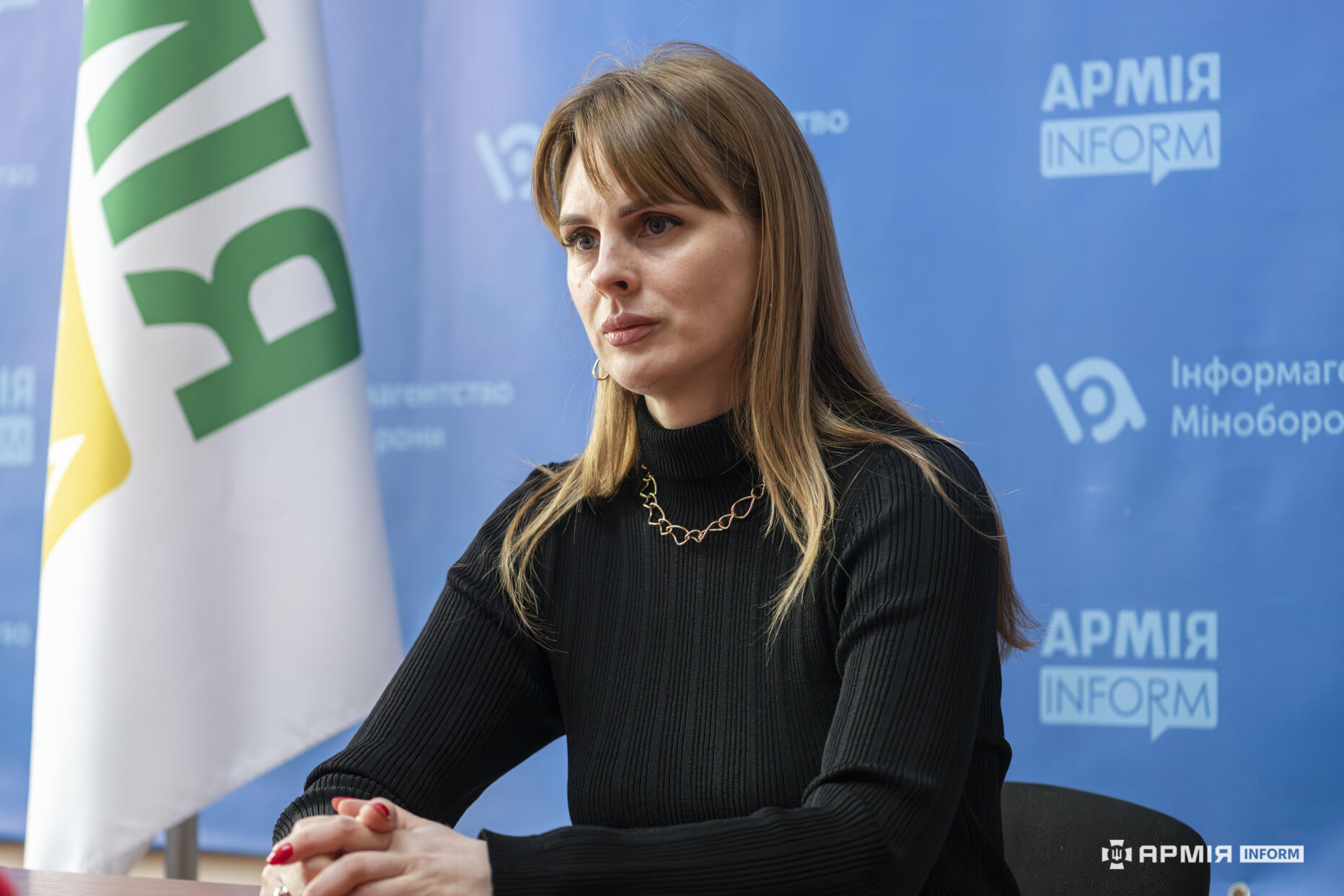
Olena Bortnikova. Photo: Vitaliy Pavlenko / ArmyInform
I sometimes explain the work of a psychologist through the metaphor of a “toolbox.” Conditionally speaking, there is a “hammer,” a “screwdriver,” a “wrench.” The psychologist’s task is to show these tools and teach how to use them. Whether to use them or not is already the responsibility of the person.
However, most military personnel do use these tools because they understand well: the psyche, just like a weapon, needs maintenance. A weapon must be cleaned and kept in proper condition — the same applies to the psyche. Therefore, after the start of the full-scale war there have been more requests, and they are much more conscious.
Why do some military personnel not want to go to a psychologist? Which myths about psychological assistance would you highlight?
There are still many prejudices. If we speak about the military environment, stigma around everything related to the psyche has been forming there for generations. One can still hear: “If you went to a psychologist, it means you’re crazy.”
The first common myth sounds like this: “If I asked for help, it means I can’t cope.” But first, a human being is a social creature. Second, the situations military personnel find themselves in are often abnormal from the point of view of ordinary human experience. Under such conditions, needing support or additional tools for adaptation is natural.
I sometimes explain it like this: the psyche is a resource. We don’t say that a tank is weak because it runs out of fuel. It simply needs refueling. The same applies to the psyche — sometimes it also needs to be “refueled.” Therefore, seeking help from a psychologist is not a sign of weakness, but rather a sign of responsibility for one’s condition.
The second myth is related to the fear of stigmatization: “If I go to a psychologist, I may be written off or sent away.”
In reality, a psychologist is not a psychiatrist. They do not prescribe medication and do not make medical diagnoses. The psychologist’s task is to help a person adapt to difficult conditions, learn to work with stress, and maintain psychological resilience.
The third myth sounds something like this: “A psychologist won’t understand because they haven’t been on the front line.” But a doctor does not need to personally experience appendicitis to know how to perform surgery to remove it. Similarly, a psychologist works based on knowledge about how the human psyche functions.
A specialist understands how hormonal reactions, neural processes, and emotional states interact. For example, why many soldiers feel a pull to return to war. This is related to the functioning of the brain’s stress and reward systems, the activity of structures such as the amygdala, as well as other elements of the limbic system.
Another fear sometimes voiced by soldiers is: “If I go to a psychologist, I’ll fall apart and start crying.” But therapy is not about “crying on someone’s shoulder.” It is a process of controlled release of tension.
I sometimes explain it through the metaphor of a coffee machine: if pressure builds up and there is no outlet, the system may malfunction or “explode.” But if a person gradually reduces internal pressure in a safe environment and with the guidance of a specialist, it actually prevents such breakdowns.
Why do some military personnel avoid talking about their experiences even with their loved ones?
I call this mechanism “protective silence.” After returning from the front, many soldiers for some time do not want to talk about their experiences with their loved ones. And it is often not about distrust.
On the contrary, sometimes it is a way of protecting loved ones from what they went through. Some images of war are very difficult to integrate into peaceful life without causing pain to the listener.
Therefore, for partners or relatives this may sometimes look like distancing or closed-off behavior, but in fact it is often a form of care.

Between experiencing an event and being able to describe it in words there can be a great distance. A person needs time to comprehend what they have lived through.
This exists in my own family as well. My husband is a soldier. And I know that sometimes a person can speak about certain events only years later. And that is normal. Sometimes it is more important not to try to understand everything, but simply to accept the person beside you.
What happens to a person’s psyche after returning from war and combat? Why do we sometimes hear soldiers say that “war pulls you in,” that they feel drawn back even though it was dangerous there? Veterans often say that everything was clear at the positions, but in civilian life they feel a constant sense of meaninglessness…
In war, the psyche works in a different mode — the hypervigilance mode.
There, danger is concrete and understandable. If something rustles — it may be a threat. The body reacts instantly: adrenaline and cortisol levels rise.
When the threat is neutralized or a mission is completed, the brain receives a reward signal. Dopamine and endorphins are released.
Thus, a cycle of strong neurophysiological reactions forms: tension — action — relief. The psyche gradually gets used to such a high level of stimulation.
In civilian life, however, a sharp decompression occurs. In war, many things are clear: tasks, decisions, results. In peaceful life, the structure is often far less defined. It can be compared to an athlete who is used to intense training and suddenly has to maintain fitness with only light walks.
That is why the process of returning to civilian life requires time and support.
Why does humor become harsher in war? Does it have some hidden function?
Black humor is one of the most powerful psychological defense mechanisms.
When a person can joke even about very frightening things, a certain desacralization of fear occurs. The object that caused terror no longer has absolute power over the person.
When people laugh about death, horrors, and even torture, they turn these phenomena into objects of mockery. Accordingly, the person who allows themselves to laugh at them symbolically rises above them. In this sense, humor helps maintain internal control over the situation.
In addition, black humor is an important element of group identity. It unites soldiers and creates a sense of shared experience.
Soldiers often say: “A peaceful city irritates me.” Why does this aggression toward coffee, laughter, and traffic jams arise, and how can both sides live with it?
This is a conflict between two realities — military and civilian.
A person who has lived for a long time in conditions of risk and constant tension may sometimes perceive the carefree atmosphere of a peaceful city as injustice or even as devaluation of what they experienced.
When someone casually drinks coffee and relaxes, it may irritate them because it seems as if the meaning of everything the soldier did on the front line, risking their life, is being lost.
This does not mean civilians are doing something wrong. The emotional states of these two worlds can simply be very different. And it is important to understand: psychological adaptation after war takes time.
When a person receives support and, if necessary, works with a psychologist, these reactions gradually become less acute.
Today many people talk about “post-traumatic growth.” Is it possible to come out of war not “broken,” but stronger? And what is needed for that?
Sometimes what psychology calls post-traumatic growth really does occur. This is a situation when, after experiencing trauma, a person rethinks life, values, and relationships, and emerges from the experience more mature and self-aware.
However, it is important to understand that not every trauma automatically leads to growth. People become stronger not because of the trauma itself, but because of the process of living through and overcoming it.
What key points regarding information hygiene as an element of a serviceman’s psychological resilience would you highlight? Please explain how chronic stress changes information perception and increases vulnerability to information-psychological operations.
When a person is in a state of chronic stress, their thinking may become more “tunnel-like.”
There is a structure in the brain called the amygdala, which is responsible for rapid emotional reactions, especially to fear and threat. There is also the prefrontal cortex, which is responsible for analysis, logic, and critical thinking.
When a person is exhausted, sleep-deprived, or under strong stress, amygdala reactions may dominate. The prefrontal cortex activates more slowly.
This is exactly what information-psychological operations are designed for — they try to hit emotionally sensitive topics. That is why sleep, rest, and information hygiene are an important part of psychological resilience.
Ms. Olena, could you give some universal advice for those waiting for their loved ones to return from the front? How can they become a reliable rear and build a “bridge of trust”?
First of all — wait.

Olena Bortnikova. Photo: Vitaliy Pavlenko / ArmyInform
But a person’s return from war is not a return to the same life that existed before. Both partners change during that time. Therefore, it is important not to try to “quickly bring everything back to the way it was.”
It is far more valuable to create a feeling of a safe harbor for the person — a space where they are accepted without pressure and without interrogations.
A bridge of trust is built not only with words but, above all, with a sense of safety. Sometimes it is useful simply to be nearby without asking many questions. Sometimes shared silence is enough.
And if partners want to preserve their relationship, accepting the changes in each other can become a very strong foundation for their future life together.
Author: Liudmyla Klishchuk / ArmyInform
Photos: Vitalii Pavlenko / ArmyInform