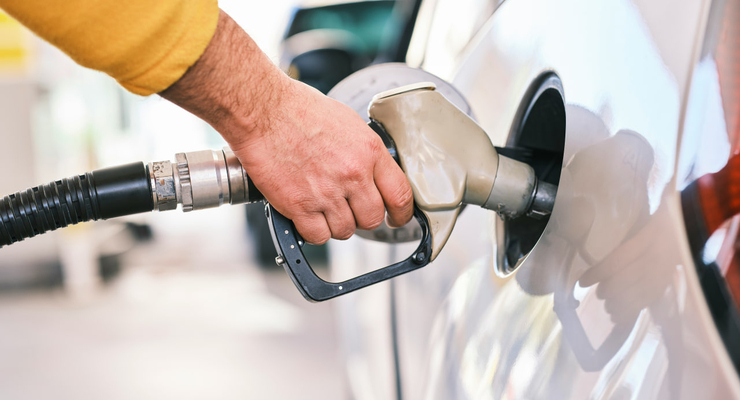
The program will operate from March 20 to May 1, 2026, and the amount of the refund depends on the type of fuel.
On March 18, the Cabinet of Ministers approved a decision to expand the “National Cashback” program for the purchase of fuel. Accrual of payments will begin from March 20 and will continue until the end of April. However, Ukrainians themselves will indirectly pay for its implementation. This is reported by Dengi.ua with reference to the publication of “Economic Truth”. The PromPolitInform portal informs.
It is noted that the program will operate from March 20 to May 1, 2026. The amount of the refund depends on the type of fuel: 15% is provided for diesel, 10% for gasoline and 5% for autogas.
It is reported that the cashback will be accrued at all gas stations that have already joined or will join the program. The money will be credited to the same card to which the “National Cashback” is credited. You can use these funds in the same directions: to pay for utilities, purchase medicines, Ukrainian-made products, books, postal services or for donations to volunteers.
At the same time, the maximum amount of payments under the program remains unchanged – up to 3 thousand UAH, but you can get no more than 1 thousand UAH from the purchase of fuel. To take advantage of the maximum cashback, drivers will have to purchase significant amounts of fuel.
Thus, owners of gasoline cars need to refuel approximately 142-143 liters per month, based on the average cost of A-95 at about 70 UAH per liter as of March 17. For diesel cars, this figure is about 85.7 liters at an average price of 77.8 UAH per liter, and for cars running on liquefied gas – about 459 liters at a price of 43.75 UAH per liter.
According to the publication, while the resolution was being prepared, the initiative was ironically dubbed “eBak” in society – by analogy with “eSupport” and other state programs.
At the same time, it remains unclear whether the introduction of cashback will lead to an increase in fuel consumption in the country and, as a result, to an increase in imbalances in the foreign exchange market. However, the very fact of stimulating consumption, and not restraining it as in other countries, may put additional pressure on the hryvnia.
In addition, the financing of the program actually falls on the state budget, and therefore on taxpayers. This may affect both the growth of prices for goods and an increase in budget expenditures.
At the same time, direct costs for the implementation of the program are not provided for in the budget for 2026 – there is no separate expense item for it. Financing is carried out at the expense of government decisions. Thus, in February, the Cabinet allocated UAH 700 million for payments for December of last year, and on March 12, it additionally allocated UAH 2.14 billion from the Reserve Fund.
According to the publication’s sources familiar with the decision, it is planned to additionally allocate UAH 4 billion from the same fund to implement the “fuel cashback”. However, the capabilities of the Reserve Fund are limited: in 2026, its volume will be UAH 49 billion. Given the ongoing Russian aggression, these funds may be needed by the state to solve other urgent tasks related to the war.