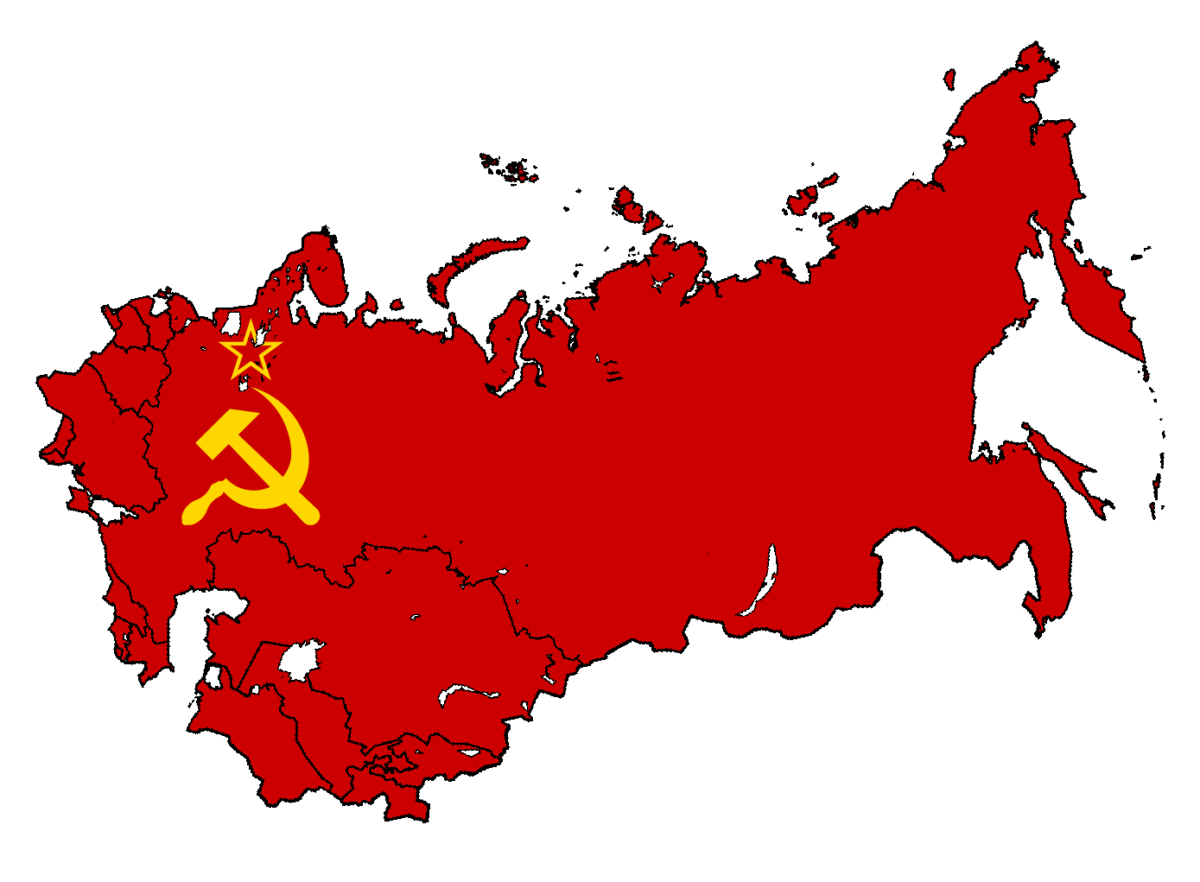
Wherever socialism has triumphed, authoritarian or totalitarian states have emerged. And true socialist “equality” envisioned identical clothing, food, beds, working hours, medical treatment, thoughts, and identical submission to authority
Ukraine has gifted the world many geniuses. Among such prominent Ukrainian intellectuals is Academician Ihor Rostyslavovych Shafarevich, born in Zhytomyr in 1923 into an intelligent family. His father taught theoretical mechanics, and his mother was a philologist. From childhood, he displayed exceptional aptitude for mathematics. In the late 1930s, the family moved to Moscow.
At 15, Ihor Shafarevich entered the Faculty of Mechanics and Mathematics at Moscow State University. He studied as an external student, completing the course in two years instead of five. At age 19, he defended his candidate thesis, and at 23, his doctoral dissertation, becoming one of the youngest doctors of science in the country.
His career as a mathematician was extremely successful, but to the general public of the Soviet Union, he became known primarily for his journalism. One of his fundamental works is titled “Socialism as a Phenomenon of World Culture.” It provides an unprecedentedly deep analysis of socialism as a theoretical concept and its various practical implementations throughout human history, beginning from the emergence of the oldest civilizations on planet Earth. In this article, we will continue the discussion of this topic.
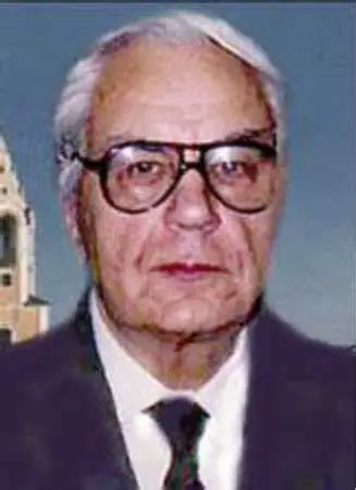
Academician Ihor Rostyslavovych Shafarevich (1923–2017)
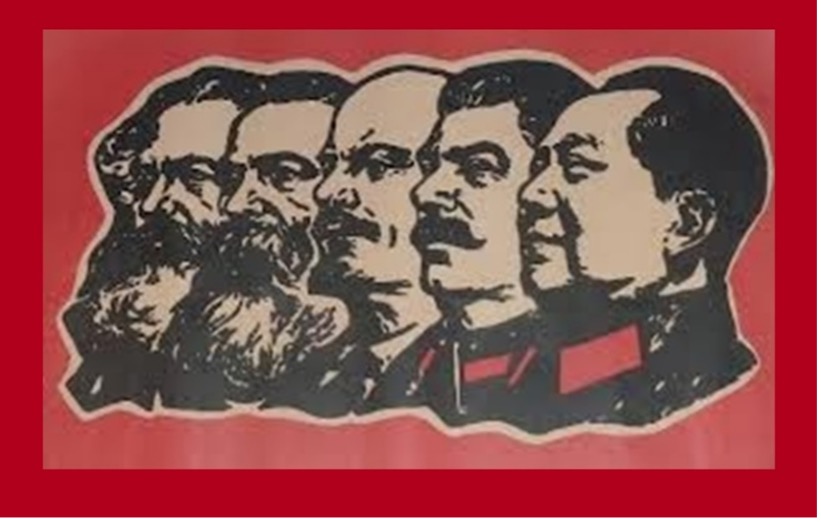
The creators of socialism as a theoretical concept, which has not lost its relevance today, are Karl Marx and Friedrich Engels. In a concise form, it is set out in the famous “Manifesto of the Communist Party.” Its fundamental principles are as follows:
1. The destruction of private property in all its manifestations;
2. The destruction of the family. This point is contained in the Manifesto in a somewhat veiled form;
3. The destruction of religion;
4. The maximum possible equality of all citizens.
The assertion of such principles has a long history and begins with antiquity. Plato—the ancient Greek philosopher, student of Socrates, and teacher of Aristotle, founder of the Academy in Athens, the first higher educational institution in Europe (4th century BC)—described the community of property and upbringing as the ideal of a harmonious society in his work “The Republic.”
The Stoics—an ancient philosophical school founded by Zeno of Citium around 300 BC in Athens—promoted the equality of people as a natural given. Early Christians practiced the community of property in their communities.
In the Middle Ages, there was Thomas More, who described a society without private property in his work “Utopia” (1516). Tommaso Campanella, in his work “The City of the Sun” (1602), proposed the community of property, education, and equality of people. Mazdak (5th–6th centuries, Persia) also advocated for the community of property and the equality of society members.
The next step was taken by utopian socialists of the 18th–19th centuries. Henri de Saint-Simon proposed limiting private property only to items of personal consumption. Charles Fourier held similar views on property, and as for family life, he believed that people should live in large communities where individual relationships would not be limited to the family.
Robert Owen was also against private property and the traditional family. Society was supposed to raise children. He proposed replacing religious dogmas with rational morality.
For Étienne Cabet, author of “Voyage to Icaria,” public property extended even to personal consumption items. Children’s upbringing was to be carried out by society. It should be noted that the circle of socialist apologists was by no means limited to the mentioned authors.
Practically for each of the named and unnamed authors, the ideal society—socialism—realized either all four or only some of the fundamental points set out in the Manifesto.
Which of the four principles of socialism is the most important? Let us analyze them all. Let’s start with the first one. What makes a person free? Private property. If you are a very wealthy person, you have estates in all the most prestigious corners of the world. You eat exquisite food. You are treated by the best doctors in the world. You can perform only the work that is to your liking, regardless of the remuneration for it. You can choose not to obey any other person, only the law, and even the latter you can violate within wide limits.
If you have no property, you sleep under bridges or in abandoned buildings. You count it a blessing to wait in a long queue for a charitable bowl of thin soup. Your health is of no interest to anyone. Your greatest happiness is to find something useful in a dumpster, beating out those like yourself.
Most people do not fall into either of these extremes, but they can afford more the higher their income. Their freedom of choice grows directly with it. But this is the realization of what we call personal freedom. Therefore, denying a person’s right to private property is a denial of their personal freedom.
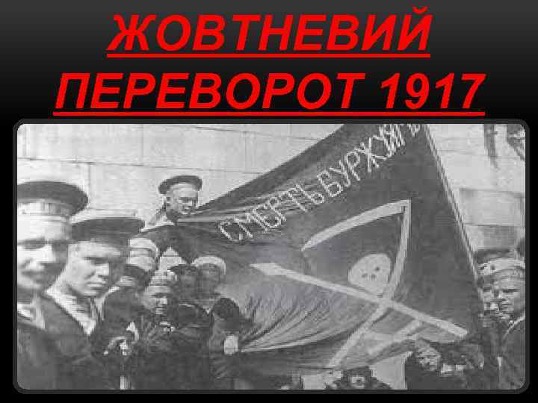
Recall the result of the Bolshevik October coup of 1917. The majority of the country’s population then consisted of peasants; they were personally free and owned 80% of arable land (only 20% belonged to large landowners). To attract the peasants to their side, the Bolsheviks promised to transfer those 20% to them without payment. The peasants fell for it, and they formed the backbone of the Red Army, which defeated the White Army and helped the Bolsheviks retain power.
Subsequently, the Bolsheviks took all the land from the peasants, leaving only small household plots for use (not ownership), and took their cows and horses. They made daily unpaid labor on the collective farm mandatory and prohibited leaving the place of residence even for a day. What is this if not the complete deprivation of peasants of personal freedom and a return not even to serfdom, but to a slave-owning system?
Sincere care for you by other people is the highest possible achievement in this world. It protects you from the whims of fate. It is the best insurance policy in case of illness, work troubles, or social cataclysms. Not everyone has such a policy, but when they do, it is their powerful rear guard, providing the possibility of greater freedom of action in all complex life situations.
The best candidates for the role of your strong rear guard are your wife and children. Therefore, the destruction of the family makes you maximally defenseless in the face of life’s trials and sharply narrows your freedom of action. In other words, the second point of the classics of socialism’s program is also aimed against human personal freedom.
The attempts of the first years of Soviet power to switch to a herd-like sexual life proved unsuccessful. However, the authorities did not give up on realizing this principle. They maximally simplified marital relations, allowing their dissolution upon the request of only one of the parties.
Previously, religion played a colossal role as a guide in life, as a moral support for a person in the complex vicissitudes of their life. Religion has always been a symbol of spiritual freedom from the political conjuncture of society. Religion remains an important factor in modern life as well.
An interesting pattern is observed in the world: along with the destruction of religion, the population of the corresponding countries is dying out. The population is growing only in countries with a high level of citizen religiosity. Consequently, the third principle of “scientific socialism” is also aimed at restricting individual freedom. This time, their spiritual freedom is not just being destroyed; it falls under the powerful press of a new religion called “scientific socialism.”
The Communist authorities did not stop at informational warfare against religion. Under the pretext of fighting the famine provoked by the actions of these same authorities in the first years of Soviet power (Ukraine alone lost 3.5 million people in 1921–1923), the authorities first confiscated all material values from existing temples and then began to destroy them. As for the priests, they either physically destroyed them or sent them to concentration camps for “re-education.”
Finally, we arrive at what can be called the common denominator of all the points listed above. This principle is called equality. The classics of socialism understood this equality not only as equality before the law. They understood it as physical, everyday, intellectual, social, and legal uniformity.
Fulfilling the first three principles of socialism outlined above significantly brings this equality closer, but does not guarantee it due to the biological disparity of people. True equality—identical clothing, food, beds, working hours, medical treatment, thoughts, identical obedience to authority, etc.—is impossible without external coercion. And here a paradoxical internal contradiction arises.
On one hand, the equality of all people is impossible without destroying the hierarchy in society. On the other hand, equality is impossible without external coercion, which requires the creation of such a hierarchy—a hierarchy of individuals who inflict violence upon others without belonging to their number.
Promoting the destruction of the existing hierarchy, socialists remain silent about the necessity of creating a new, even more powerful hierarchy, because the old hierarchy existed in accordance with the basic instincts of people, while the new one requires their denial.
The latter is a more complex task and requires greater violence. It can be said otherwise: the forceful denial of property inequality among people is more than compensated for by creating even greater inequality in the distribution of power in society.
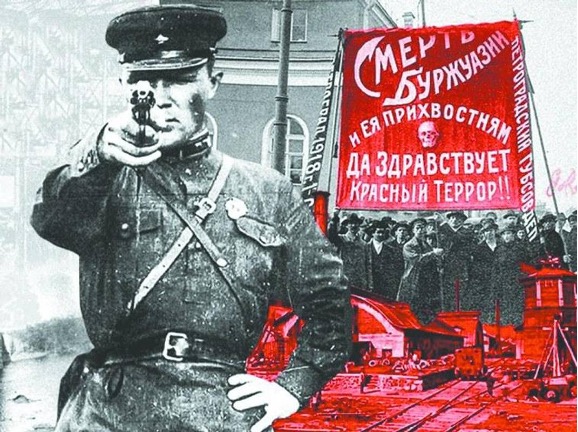
The power of the Communist leaders of the Soviet Union was so immense that it made their existence possible beyond any legal limitations. They had the ability to unilaterally decide matters of life and death for both individual people and even entire nations without involving judicial instances or collective discussion.
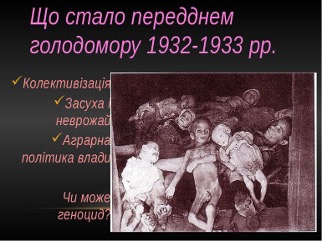
In just two years (1932–1933), the demographic losses of Ukrainians from the genocide by famine amounted to 10.5 million people. In which legal instance of the Soviet Union was this matter considered? Who issued this man-eating verdict to the Ukrainian people? Did the civilized world, apart from National Socialist Germany, condemn this unprecedented cave-man barbarism against an entire European people?
Analyzing society, its material and spiritual factors, the “classics” did not take into account a category like power. In any society, power is very unevenly distributed among its members.
The more totalitarian the power, the more uneven this distribution. In the authoritarian Russian Empire at the beginning of the 20th century, there were only about 20,000 prisoners in concentration camps (katorga). In the Soviet Empire, their number was measured in millions.
Also, millions were destroyed without trial or investigation through an artificially organized famine, or millions were relocated to Siberia. Hundreds of thousands were executed by the decisions of non-judicial bodies. The Tsar could not unilaterally decide the fate of even individual people.
The Soviet dictator could unilaterally decide the fate of millions at once.
The “Great” French Revolution began with the storming of the Bastille, where, due to the “cruelty” of the authoritarian royal regime, 7 prisoners were held—4 counterfeiters, 2 madmen, and the well-known Marquis de Sade (who spent 32 years in prisons and psychiatric hospitals, was imprisoned in the Bastille and other fortresses due to accusations of sexual crimes, blasphemy, and pornography), who called on the people from his cell window to come and free the prisoners.
After the storming, the counterfeiters joined the insurgents, the madmen had to be killed because they attacked those who freed them. And the Marquis de Sade, from the Charenton asylum, delivered a speech to the insurgent people. As always, a fiery one. After the Jacobins came to power, executions took place daily in the central square of Paris to the gathered Parisian crowd. The more noble the executed person was, the greater enthusiasm it evoked in the crowd. There is nothing more terrible than the power of the mob, and most revolutions are carried out by its hands, and its ideals are realized after the victory.
Interestingly, the Manifesto in no way mentions the personal freedom of people. It remains outside the scope of discussion. Instead, the category of human equality is in the center of attention. Why does the concept of “scientific” socialism, despite this circumstance, remain popular to this day among the general public?
My answer is this: because freedom and equality are incompatible categories. The greater the equality of people, the lesser their personal freedom. And vice versa. Because between freedom and equality, most people choose equality, and only a much smaller part chooses freedom. In each specific society, the ratio of these parts is different.
The desire for equality is the realization of envy; the desire for freedom is the realization of the higher spiritual needs of a person.
France before the “Great” French Revolution and Muscovy before the “Great” October Socialist Revolution were examples of societies with a high degree of hierarchy. It was social envy that was the engine of the catastrophic events for both states.
For the mob, revolution is a way to raise its status through the destruction or humiliation of those it envies. During the French Revolution, one of the most tragic cases was the execution of the outstanding chemist Antoine Lavoisier in 1794.
The judge of the revolutionary tribunal then stated: “The Republic has no need of geniuses”—a phrase that went down in history as a symbol of fanaticism and contempt for intellect and science. It seems that as a result of this revolution, France forever lost its status as the cultural and intellectual capital of Europe and the world.
Ihor Shafarevich argues that the concept of socialism, not as a theoretical concept but as its practical embodiment, has existed for as long as humanity. Effectively, the same opinion was held by Karl Marx and Friedrich Engels. In the work “The Origin of the Family, Private Property and the State,” Engels viewed the primitive community as a society without private property, with an equal distribution of material goods.
In doing so, he ignored the distribution of power. And it is a resource more important than property. The “classics” believed that “primitive communism” disappeared with the emergence of classes and the state, but could be reborn in the form of the communist society of the future. But the “classics” did not take into account that every society distributes the resources it possesses unevenly among its members.
Yes, the primitive tribe had few material resources, but there was a power hierarchy, and power in it was distributed very unevenly. The tribal leader possessed the coziest corner of the cave where the tribe lived. He had the most comfortable spot by the fire around which the tribe warmed themselves. He received the best piece of meat from the hunted game, and he had priority rights to engage in intimate relations with the best women of the tribe. The shaman had roughly the same advantages. And each of them had members of the tribe close to them who allowed for the effective implementation of their power. Therefore, there was no equality even there among primitive people; instead, there was a power hierarchy, which was the only thing that made the survival of the tribe possible.

Therefore, the desire for equality is the main stimulus for destitute people to raise their social status. At the same time, they do not realize the complexity of this problem and the huge price that will have to be paid for this subconscious desire.
For the theorists of socialism, the question of power became a stumbling block. By refuting the power hierarchy, which the consistent realization of the principle of human equality (and not just material equality) required, they destroyed a civilized society that is impossible without such a hierarchy. At the same time, they consciously avoided discussing the problem of power because they understood that only a power hierarchy that humanity had never imagined before could realize their senseless and destructive concept. Striking examples here are the Soviet Union and Communist China.
The most honest socialists were the anarchists. They went to the end. Equality means equality for all and in everything, which is impossible while a power hierarchy exists. Down with all power. Anarchy, that is, lawlessness, is the mother of order. Life proved the senselessness of such a concept. In no country in the world has it been possible to realize the principles of anarchism.
But the principles of “hypocritical” socialism were realized in many states. And this worked because attractive slogans were sounded for ordinary people, while their practical realization took place without any public discussion, and only in a way that did not negate the strength and immutability of the new elite’s power. Choosing between principles and power, the latter always chose power.
The active promotion of socialist ideas has two explanations. The first is the hypocrisy of those who crave power at any cost. At the same time, wherever socialism has triumphed, authoritarian or totalitarian states have emerged. The second is the subconscious or conscious yearning of the carriers of the socialist idea for death—their own death and that of all humanity.
It is precisely this second conclusion that Ihor Shafarevich reasonably formulated in his fundamental work “Socialism as a Phenomenon of World History.” Here it is appropriate to recall Hegel’s dialectic, which consists in the fact that the development of thought, nature, and society occurs through contradictions: each thesis generates an antithesis, and their struggle ends in a synthesis that resolves the contradictions while simultaneously raising them to a new level.
This is an algorithm that explains movement and change as a necessary process. In our case, the thesis is life, its antithesis is death. With every lived day, a person overcomes death, avoids dangers, and chooses their life path in a way that offers the greatest longevity. But sooner or later, death wins. However, life continues in one’s children if the life strategy was chosen correctly.
The antithesis—death—is needed so that the thesis—life—becomes more perfect and stronger. If a given person is not capable of such perfection, they give way in life to another person who has chosen a more effective life strategy.
In the modern world, we see both tendencies. On one hand, the average life expectancy of people is growing. Thus, the average age of the deceased, according to my calculations in the years before the start of the Second World War, was 17–20 years in villages in the north of Odesa Oblast. Nowadays, it exceeds 70 years.
It would seem that now a person is better at overcoming death. But the population of European countries is dying out. This is nature’s verdict for the erroneous life strategy of entire nations. On the other hand, other peoples are rapidly increasing their numbers, trying to seize the living space being vacated. Ukraine is among the leaders on the path to extinction. In 1991, there were 56 million of us. Now, in 2026, by estimates (and why by estimates—where are the precise numbers?), there are about 20 million. The tragedy also lies in the fact that this issue is not even discussed by Ukrainian society.
The dualistic religion of Manichaeism, which combined elements of Christianity, Judaism, Buddhism, and Zoroastrianism, treats the world as an eternal struggle between light (good) and darkness (evil), where the human soul is the field of this struggle. If one looks at living nature, what can be considered good here? That which contributes to the survival and reproduction of a given community. And what should be considered evil? That which contributes to its extinction.
From this point of view, evil is winning in modern Europe; it is also winning in Ukraine. What contributes to this? In my opinion, it is the victory of leftist ideas in the worldview of society. The decisive turning point came in 1945 as a result of the end of the Second World War.
The word “socialism” has disappeared from the name of our state and many others, but the socialist poison has remained in our souls. The family is in decline. Women, having achieved supposed equality with men, have stopped having children. And why? Men do not have them. Only those families where men are the undisputed leaders remain with many children.
Religion is in decline, and with it, the Christian morality that protected the spiritual health of people. Gay parades are becoming a common phenomenon, as are premarital sexual relationships with their negative impact on subsequent family life. Reckless propaganda of equality does not weaken but strengthens racial conflicts in many countries. Equality of all and in everything: men and women, the wise and the ignorant, the educated and the uneducated, the moral and the immoral, etc.
Forced leveling of the unequal weakens the strong and strengthens the weak. But the progress of society is driven precisely by the strong. So with what purpose is society weakening them? There are few geniuses and many ignorant people. They all have one vote in elections. Who will be elected? The person whose advantages only an intelligent person can appreciate? No, the one who managed to please the social bottom of society.
In this case, how effective will state policy be? We see this well in the example of Ukraine. Imagine that decisions at war were made by a vote of all military personnel. Such an army would have lost the very first battle. But in civilian life, such decision-making is the norm.
So far, the demand for the destruction of private property is outside the focus of society. I think this is because money for the demoralization and dismantling of modern civilization comes from representatives of the wealthy strata of the population. And why do they need this? And why did Prince Mikhail Bakunin become the leader of the version of socialism—anarchism—that was extremely destructive for society? And the anarchist Prince Peter Kropotkin? And the wealthy bourgeois Friedrich Engels? And there is no end to them.
The drive for the death of society can be realized in many ways. The most dangerous of them is through the financial and property elite of society.
Modern humanity is experiencing a spiritual crisis. This is the prerequisite for the white race losing its leadership positions in the world, primarily due to its extinction. How to fight this? Understand the tragedy of the current situation. This especially applies to Ukraine. Understand the threat that the entire complex of leftist ideas poses to modern society.
One should remember that these ideas find the greatest response among the social bottom. Over the last hundred years, such ideas have completely proven their failure to the world. What can be set against them? Only a complex of right-wing ideas. Unfortunately, the realization of right-wing ideas requires people with a good education, and there are not so many of them in society.
Socialism should be perceived not as a verdict that cannot be reversed, but as a challenge that must be accepted with the hope of victory. Otherwise—biological death for both Ukrainians and all humanity. But socialism is only one possible path to nowhere. Therefore, let us be vigilant, courageous, and strong.
Author: Valeriy Shvets, Doctor of Physical and Mathematical Sciences, Professor, Academician of the Academy of Sciences of Higher Education of Ukraine
Illustrative photo: Unknown artist. No known copyright restrictions. / CC BY-SA 4.0