Russians who live abroad and do not support the war will now be prosecuted for the slightest like, story, or repost on the internet—not to mention donations made to the “wrong” places.
In the near future, Russia will turn into a concentration camp with revived principles: imprison and confiscate. Anyone who has left the country and committed acts deemed vile by the government must understand that if they return home, Magadan awaits them. According to State Duma deputy Andrey Lugovoy, anyone who attempts to harm their homeland, their country, or the citizens of the Russian Federation will “lose everything and die outside our country like a stray dog.”
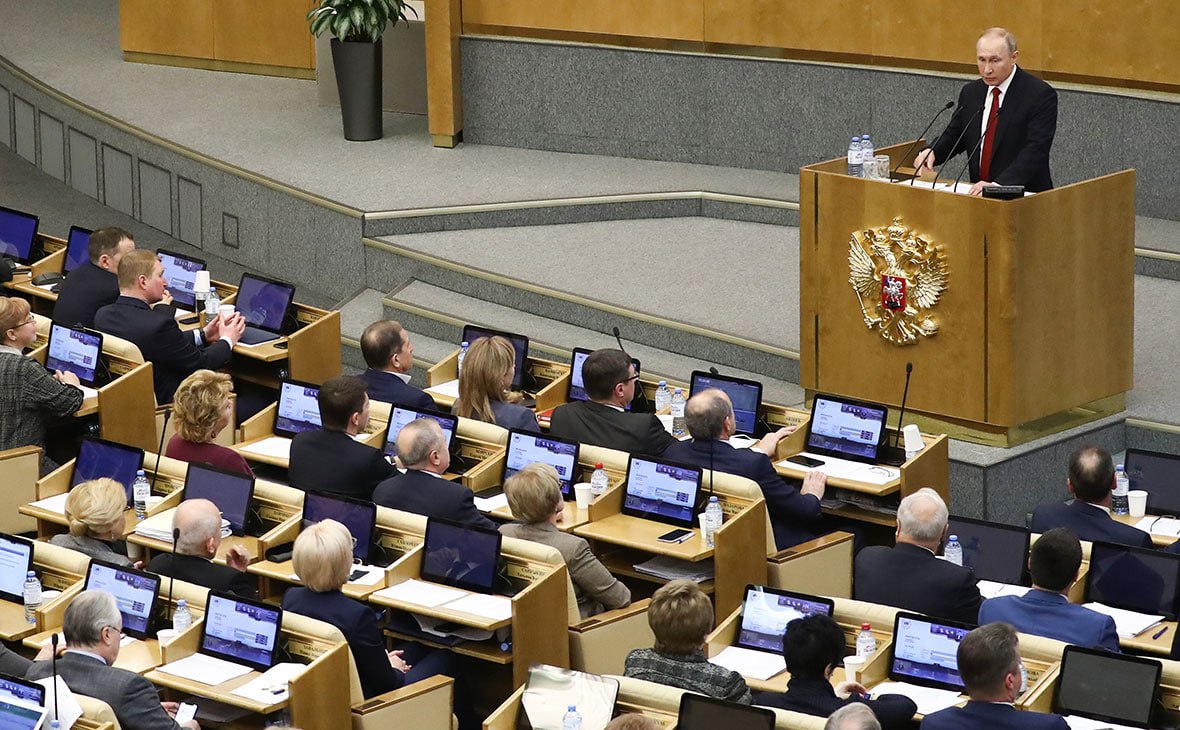
The State Duma has passed in the first reading amendments allowing the seizure of money, valuables, documents, and property—including for “fake news” about the Russian army and calls for anti-state activities—from “scoundrels and traitors” to the Motherland. Putin and his circle have moved to direct confiscation of property. The funds, naturally, will go toward the war against Ukraine.
Those who decide to return home to see their loved ones will most likely see them through prison bars. Since the beginning of the full-scale invasion of Ukraine, Russian authorities have punished even small money transfers to Ukraine, interpreting them as “providing financial assistance to a foreign state in activities directed against the security of the Russian Federation.” A law introducing life imprisonment for treason was signed by Russian President Vladimir Putin on April 28, 2023.
Offending “patriots” are detained прямо at airports. However, authorities deliberately conceal official statistics and often do not disclose the names of detainees. There are quite a few such arrests, though only a few high-profile cases are publicly known.
For example, singer Sharlot, who returned to Russia, was detained at St. Petersburg’s Pulkovo Airport. He was later arrested and criminal cases were opened against him for burning his passport and criticizing authorities. He was sentenced to 5.5 years in a penal colony.
Former Yandex employee Sergey Irin received 15 years in prison for donating $500 to a Ukrainian foundation. His actions were classified as treason. He left Russia in 2022, returned in 2024 to visit family, and was detained at the airport. He was also fined five million rubles. During sentencing, Irin refused to stand and held a sign reading: “Putin is a dickhead!”
Nineteen-year-old Daniil Efimov was sentenced to 12 years for transferring money to a Ukrainian charitable foundation of Serhiy Prytula. Efimov was flying from Russia to Turkey with his father and girlfriend when border guards took him for questioning, confiscated his phone, and found transfers in his banking app. He was immediately detained.
Most often, ordinary citizens become defendants. Their detention is not immediately known—sometimes only at the sentencing stage. Media reports on such cases based on FSB press releases. For example, in May 2024, a court in Zabaykalsky Krai sentenced local resident Suleymanova to 12 years in prison for allegedly collecting and transmitting information about Russian troop movements.
One of the most well-known cases is that of Ksenia Karelina, who was sentenced to 12 years for a $51 donation but later released in a prisoner exchange. Her actions were classified as treason. She was also fined 300,000 rubles.
Nadin Geisler, leader of the “Army of Beauties,” a women’s volunteer movement that emerged in Belgorod after the war began, was sentenced to 22 years in prison. The group collected humanitarian aid for Ukrainians, rescued animals, and evacuated refugees to non-occupied Ukrainian territories. The 30-year-old volunteer was also fined 320,000 rubles on charges of treason, aiding terrorism, and public calls against Russian security. All three charges were based on a single Instagram post, whose authorship was not even proven, according to her defense. This is the harshest sentence given to a woman for a non-violent crime.
Physicist Artem Khoroshilov was sentenced to 21 years in prison. He was accused of preparing sabotage, attacking critical infrastructure, making explosives, and treason due to donations totaling around 700,000 rubles to Ukrainian funds, including in cryptocurrency. In his final statement, he said he did not specifically seek out civilian-only funds and donated where both civilians and the Ukrainian military were supported. He also stated that case materials include transfers to purely humanitarian organizations.
Locksmith Yevgeny Varaksin from Sverdlovsk region received 12 years in a high-security colony for transferring 100 Polish zloty to the charity Caritas, which also helps Ukrainians affected by the war. He was accused of treason for donations allegedly used to purchase equipment and supplies for the Ukrainian army.
Ukrainian-born Alexander Vechirko was sentenced to 13 years for allegedly transferring cryptocurrency to a relative, who then sent it to a fund purchasing military supplies for Ukrainian units.
Ekaterina Egorova from Chita was sentenced to 12 years for donations to the Ukrainian armed forces. According to the FSB, she sent money for equipment and gear. She was detained while attempting to leave Russia.
Dmitry Mikheev received 18 years on charges of “terrorism” and “treason” for allegedly donating to the “Freedom of Russia Legion.”
Student Andrey Glukhov, who has cerebral palsy, was sentenced to 12 years for two transfers totaling 1,450 rubles. He believed he was helping collect signatures to accelerate peace negotiations.
A criminal case for treason was opened against Alexander Sarbaev for transferring 400 rubles to Ukrainian military medics in February 2022.

Photo Anastasia Chirikova
Some detainees’ names are never disclosed, though reports of new cases constantly appear. For example, in June 2023, a 39-year-old Russian living abroad was detained at Yekaterinburg airport for allegedly financing the Ukrainian armed forces. He faces 12 to 20 years or life imprisonment.
Authorities monitor not only bank transfers but also cryptocurrency and foreign banking apps at border crossings. In 2025, about 10% of treason-related charges were linked to donations to Ukrainian organizations.
A growing trend is combining “espionage” charges with terrorism-related ones. A new criminal code article allows prosecution of foreigners and stateless individuals for aiding activities allegedly directed against Russia’s security.
Financial data is obtained via Rosfinmonitoring, which has access to banking information. Cryptocurrency transactions are also closely monitored.
Authorities continue using a wide range of repressive tools—from criminal prosecution for “fake news” about the army to extrajudicial punishments such as dismissals, pressure on relatives, and denial of documents. New laws expand the powers of security forces and tighten control over dissent.
This system is only beginning to gain momentum, reviving the worst aspects of the USSR. However, proponents believe that Putinism will inevitably collapse. The only question is when—and how many lives will be lost before that happens. Deputies have stated that “all rot that does not trust the president must be destroyed”—estimated at around 30 million people.
Author: Anastasia Chirikova
Photo by the author and from open sources