Iran wants to charge the world’s biggest tech companies for using undersea internet cables laid under the Strait of Hormuz, and state media have veiled threats that traffic could be cut off if the companies refuse to pay.
It is reported by CNN, informs the portal PromPolitInform.
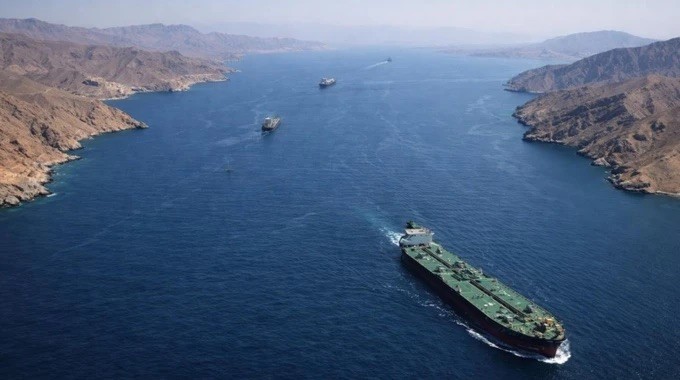
Thus, in Iran they started talking about the introduction of control over underwater Internet cables that pass through the Strait of Hormuz and connect the Persian Gulf countries with Europe and Asia.
The initiative has already raised concerns over risks to global internet traffic, the banking system and international digital services.
Tehran wants to introduce fees for tech giants
Last week, Iranian lawmakers discussed a plan that could address undersea cables in the region.
“We will introduce fees for the use of Internet cables,” said Ebrahim Zolfagari, spokesman for the Iranian armed forces.
Media affiliated with the Islamic Revolutionary Guard Corps said Tehran plans to require companies such as Google, Microsoft, Meta and Amazon to comply with Iranian law.
In addition, cable owners may be required to pay license fees for their installation, and they want to transfer the right to repair and maintain infrastructure exclusively to Iranian companies.
At the same time, it is not yet clear whether all cables pass through Iranian territorial waters, and how Tehran will be able to force international companies to fulfill these requirements under the conditions of severe US sanctions.
A Threat to the Global Internet
After statements by Iranian officials, state media began to publish veiled threats about possible damage to cables.
Submarine cables are the basis of global digital communication – it is through them that the vast majority of the world’s Internet traffic and data transmission passes.
In the event of an attack, the consequences can affect not only the speed of the Internet, but also the operation of banking systems, military communications, cloud infrastructure, online services, streaming platforms and remote work.
According to Mostafa Ahmed, a senior researcher at the Habtoor Research Center, international operators have long avoided Iranian waters due to security risks and lay most of the cables closer to the Omani part of the Strait of Hormuz.
However, two large cables – Falcon and Gulf Bridge International (GBI) – still pass through Iranian territorial waters. This was stated by the director of research at TeleGeography Alan Moldin.
IRGC and the risk of a “digital catastrophe”
Mostafa Ahmed warned that the Islamic Revolutionary Guard Corps has combat divers, small submarines and underwater drones at its disposal, potentially posing a threat to cable infrastructure.
In his opinion, any attack can cause a chain “digital catastrophe” on several continents at once.
The greatest risk is for the Gulf countries, where large-scale communication disruptions are possible, which may affect oil and gas exports, as well as the banking sector.
Serious consequences are also predicted for India, which relies heavily on international internet traffic through the region. The outsourcing industry, which brings billions of revenues to the country, may also be at risk.
In addition, the Strait of Hormuz remains an important digital corridor between Asian data centers, in particular in Singapore, and European cable nodes. Disruptions can slow down financial transactions and cross-border payments between Europe and Asia.
Some regions of East Africa, according to experts, may also face Internet shutdowns.
How critical is the threat
Despite the risks, TeleGeography notes that cables passing through the Strait of Hormuz account for less than 1% of global international bandwidth as of 2025.
However, even local damage can create serious interruptions for individual regions and critical digital services.
Earlier, the US president called on Tehran to conclude a deal amid interruptions in global energy supplies and a security escalation in the region.
Photo – from open sources