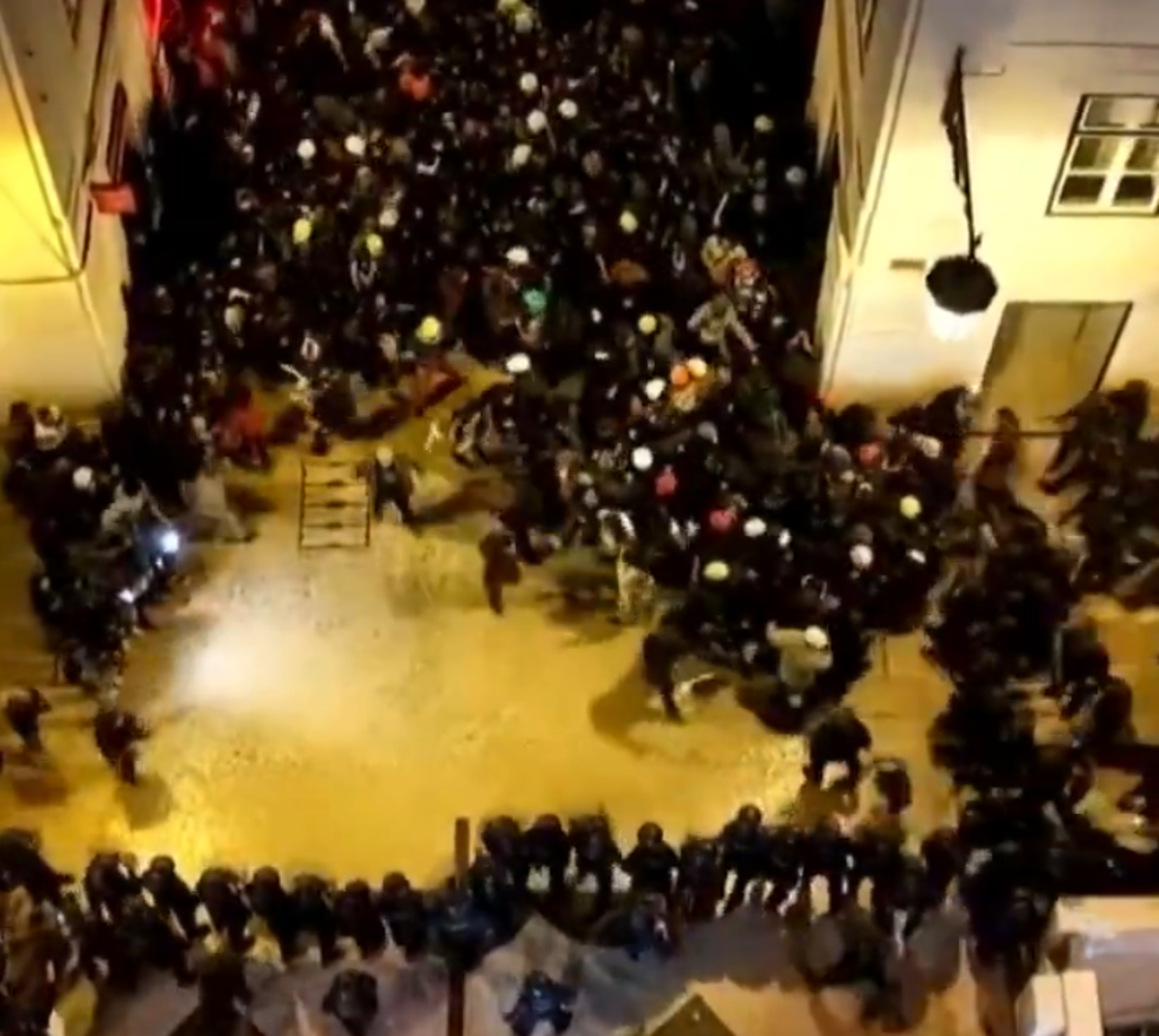
Dozens of people were injured during the crackdown in Lisbon and Porto
In Portugal, law enforcement officials dismantled tent camps established by activists protesting against a new government housing bill. Clashes between police and protesters resulted in dozens of injuries and multiple arrests. This was reported by Ukrinform citing Reuters, according to the portal PromPolitInform.
In the Portuguese capital, Lisbon, and the city of Porto, law enforcement agencies conducted operations to clear tent camps set up by participants in mass demonstrations. Following a peaceful march, protesters demanded that the government revoke a legislative bill which, in their view, would only exacerbate the nation’s housing crisis.
Housing crisis in Portugal
The country is currently facing one of the most acute real estate market situations in Europe, which is disproportionately impacting the younger population. Since 2017, housing prices have more than doubled, while rental rates under new contracts have seen a similar surge.
Following a massive rally in central Lisbon, protesters set up over 50 tents in Rossio Square. Around 4:30 AM, law enforcement officers warned the protesters that their presence was illegal and subsequently used shields and batons to clear the area.
Results of the police operation
Similar measures were taken at Dom Joao Square in Porto. According to official data, authorities in Lisbon seized 69 tents, with another 30 seized in Porto, resulting in a total of 13 arrests across both cities. During the clashes, 13 police officers sustained injuries, eight of whom were hospitalized.
Meanwhile, the activist group Acampada Lisboa reported over 30 injuries among protesters, ten of whom required medical attention. In response to the police actions, the organization has called for another rally in the capital.
Position of the Portuguese authorities
The controversial bill includes provisions to simplify eviction procedures for tenants and remove caps on rental prices for new contracts. The document has already passed its first parliamentary reading with the passive support of the far-right party Chega.
Prime Minister Luis Montenegro has ruled out the possibility of withdrawing the bill but indicated that the government is open to amendments before the final vote. He stated that while political forces must find common ground, the government’s program remains the basis for future state policy in this sector.
Photo: Ukrinform
Read also: Who are the ‘Russians’? Does a dominant ethnos exist in Moscovia