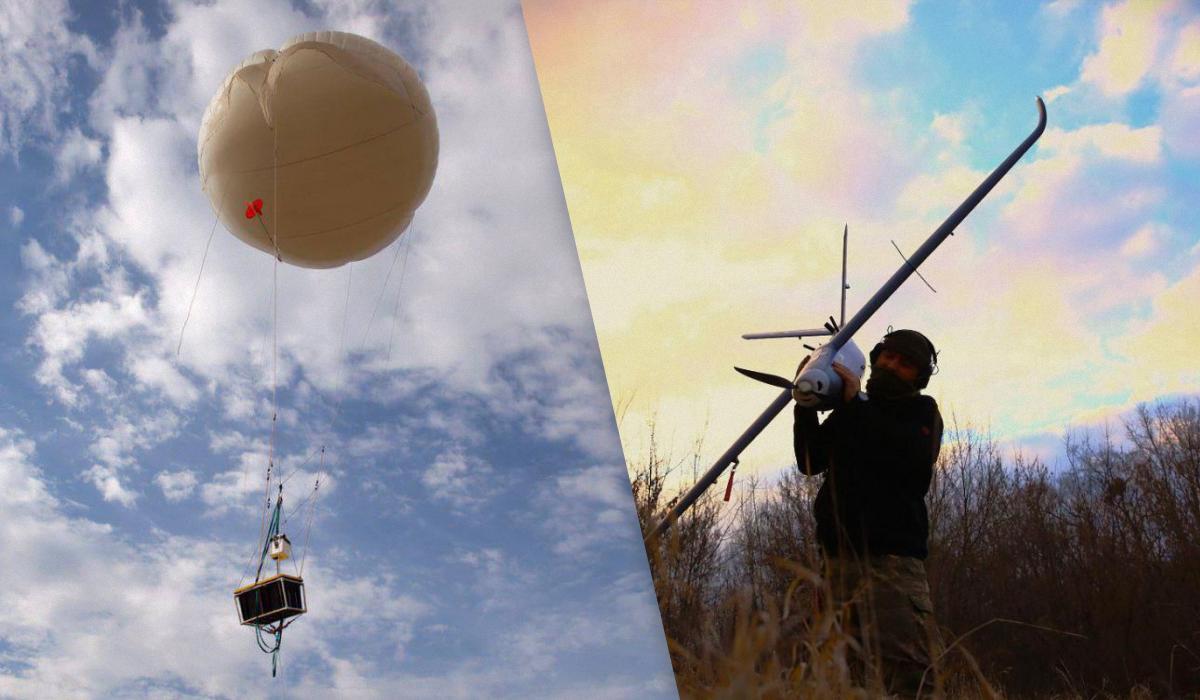
A military technology dating back to the French Revolution – hot air balloons – is increasingly making a comeback on the modern battlefield. According to The Wall Street Journal, the Ukrainian Armed Forces are successfully using them to strike deep into Russia, as well as for reconnaissance, transportation, and as decoys.
The balloons can conduct reconnaissance and transport payloads. They are virtually undetectable on radar and hover high above electronic warfare lines, which disable other aircraft, according to UNIAN, as reported by the PromPolitInform portal.
They can also carry weapons, including kamikaze attack drones, over thousands of kilometers to strike distant targets.
“Kyiv, lacking funding and access to sufficient quantities of modern weapons, has turned to hot air balloons as an inexpensive backup option with an asymmetric advantage in the form of local wind currents,” the publication notes.
According to sources, Ukraine began using balloons shortly after Russia’s invasion to drop bombs or grenades and harass Russian defenses by carrying cargo that appeared on radar as fighter jets. In 2024, Ukraine began using balloons, often from American suppliers, as a delivery system for small kamikaze weapons that fly autonomously to a precise target.
According to sources familiar with the situation, this combination of capabilities provided the ability to strike deep into Russian territory—at oil fields and refineries, shipping terminals, and railways—and weaken the Russian economy.
Last year, Ukrainian forces used balloons to attack Russian oil refineries, as well as Moscow and Ryazan. According to sources, balloons were also used to deliver attack drones to Moscow in December, the publication notes.
Balloons are dependent on the wind. In Ukraine, prevailing winds blow eastward, meaning the balloons naturally drift toward Russia.
Operators say the combination of AI and more accurate weather forecast data has allowed them to strike distant targets with greater precision. The balloons ascend and descend using vents or propellers to find favorable air currents. Andrew Evans, director of strategy and transformation for the U.S. Army’s Intelligence Corps, noted that shooting down a balloon that costs only a few hundred dollars can cost an adversary millions of dollars.
Today’s high-altitude balloons can fold down to the size of a backpack, are equipped with lightweight cameras and other sensors, and are powered by the sun using solar-absorbing materials or small solar panels. They can autonomously adjust their course, and operators can run software updates to change the balloon’s mission. Planetfall, a company based in the UK and Germany, has developed attack drones that are dropped from its balloons to an altitude of 19 miles, where low temperatures and thin air would severely damage conventional drones. Once dropped, the drones can strike targets almost vertically, making them virtually impossible to intercept. An additional advantage is the lack of radio contact or engine heat signature that could give them away, according to the company’s founder, Viktor Freiherr von Susskind. The company has research and development contracts with the British Armed Forces, and Ukraine is already using its systems.