On what principles is it formed during the struggle for its own existence in the conditions of glocal genocidal aggression
The developments surrounding the renewal of Ukraine’s military leadership reveal another important feature of the current stage of civilizational confrontation on a planetary scale. At the center of public attention are no longer just personnel decisions as such. Far more significant is the question of the principles on which the strategic military leadership of a state fighting for its own existence is formed in the conditions of glocal genocidal aggression (GGA).
This is discussed by Hryhorii Liubovets and Valerii Korol, employees of the NGO “Center for Communication and Content Security,” specifically for the Prompolitynform portal.
From Formal Positional Status to a Value System
It is telling that public resonance arises not around the administrative procedure of appointment. The subject of discussion becomes moral principles, honor, responsibility, trust, professional reputation, the ability to preserve the lives of servicemen, make difficult decisions, and take responsibility for the future of the armed forces. Thus, in the public sphere, there is an increasingly clear shift in emphasis from formal positional status to a value system that must ensure the strategic resilience of the state.
That is why statements about honor as the foundation of military service acquire special significance. In this context, honor appears not only as an ethical declaration but also as an operational principle of governance. It determines the decision-making process, the nature of interaction between commanders, the level of trust within the military environment, and society’s readiness to support its own Defense Forces. Moral principles and values begin to perform not only a humanitarian function but also a direct security function.
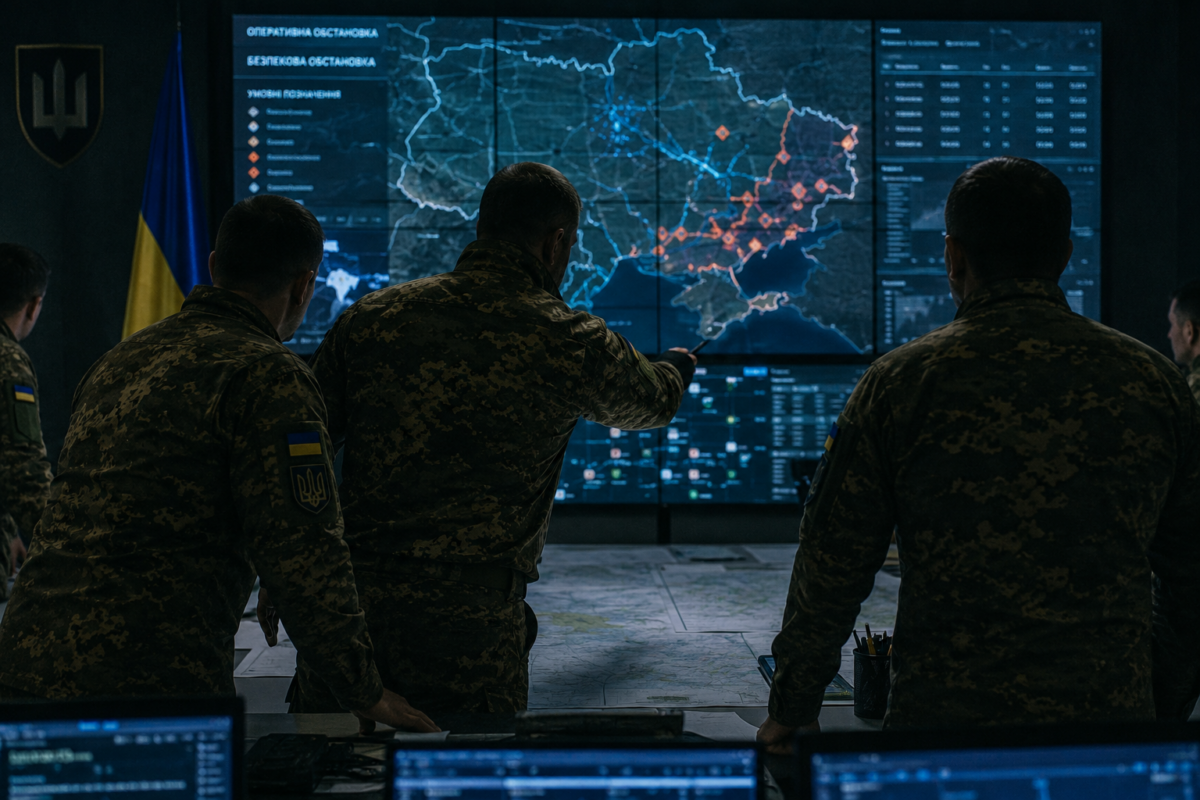
This resonance reveals another fundamental shift. In the context of modern confrontation with GGA practices, military effectiveness is increasingly determined not merely by the number of personnel, the quantity of weapons, or the organizational structure. The quality of strategic thinking, the ability for rapid renewal, technological development, inter-institutional interaction, and the engagement of society’s intellectual potential are becoming equally significant. Military governance is increasingly integrating with scientific research, engineering solutions, digital technologies, the defense industry, civic initiatives, and international partnership.
It is in this context that the interaction between state institutions, military leadership, and civil society acquires new meaning. Civic activism is increasingly manifesting not as a denial of statehood, but as a desire to participate in strengthening its capacity. In a democratic society, such interaction can serve as a kind of feedback mechanism that helps institutions respond promptly to new challenges, refine priorities, and strengthen public trust.
Equally indicative is the attention of international partners to personnel changes in Ukraine’s security and defense sector. This demonstrates that the modern defense capability of a state has long transcended the boundaries of purely internal administrative competence. It is becoming a component of a broader system of international interaction, strategic partnership, and shared responsibility for the security of the European space of civilizational dimension. Under these conditions, the transparency of decisions, the clarity of their logic, and trust between partners acquire independent security value.
Taken together, this resonance demonstrates that modern civilizational war can increasingly less be viewed solely as a confrontation between two armies. It encompasses a much wider range of interconnected processes in which military force, state governance, technological development, civic responsibility, international support, and moral foundations function as interdependent components of a single system. It is their coherence that determines the state’s ability not only to defend itself but also to constantly renew its own resilience.
This represents one of the most important transformations of modern civilizational confrontation. The subject of strategic advantage becomes not only the potential of an individual institution but also the state’s ability to create an environment in which military personnel, scientists, engineers, administrators, manufacturers, international partners, and citizens act as complementary participants in a common endeavor. It is this military-civilian synergy that is gradually becoming one of the key resources for national resilience and development.
In this logic, the concept of “civilizational” ceases to be an abstract worldview category. It is manifested in the ability of society, the state, and the military to jointly create an environment of trust, responsibility, technological development, partnership, and humanity, which ensures not only the effective conduct of war but also creates the preconditions for preserving statehood, freedom, and the future. That is why modern military-civilian synergy acquires the significance not of an auxiliary mechanism, but of one of the determining factors of Ukraine’s strategic resilience in the conditions of existential civilizational confrontation.
Conclusions
-
The societal partner resonance surrounding the renewal of military leadership in Ukraine indicates that in the context of existential civilizational war, strategic effectiveness is no longer determined solely by personnel decisions within the military hierarchy. It increasingly depends on the coherence of strategic military governance, state vision, technological development, the defense industry, the scientific community, international partnership, and civil society as interconnected components of a single system.
-
That is why any changes in only one element of this system cannot fully realize their potential if they are not accompanied by a corresponding transformation of other strategic levels of state governance. During periods of existential confrontation, the synchrony of military, institutional, technological, and administrative changes acquires particular importance.
-
The public resonance surrounding personnel decisions demonstrates another feature of a modern visionary democratic state – civic activism can serve as a mechanism for strategic feedback, signaling a societal demand for aligning state decisions with the principles of trust, responsibility, justice, and the long-term resilience of institutions. In this understanding, civic participation appears not merely as a political phenomenon but as one of the mechanisms for adapting the state to the new conditions of existential confrontation.
-
Further developments also testify to the transformation of international partnership. It is increasingly less limited to military or financial support and is increasingly linked to the state’s ability to demonstrate consistency in reforms, institutional maturity, strategic vision, and predictable development. In this way, partnership is gradually acquiring the characteristics of shared responsibility for the future architecture of European and international security.
-
In this context, civilizational warfare means not only the need to deter the aggressor. It requires the constant renewal of state governance models, the development of human potential, technological superiority, and military-civilian synergy. It is the ability to integrate these components that determines the strategic resilience of the state in the conditions of glocal genocidal aggression.
Consequently, modern strategic governance is increasingly determined not by individual personnel decisions, but by the state’s ability to create a unified environment in which the military command, civilian strategic leadership, the scientific community, the technology sector, civil society, and international partners act as complementary participants in a shared civilizational mission to protect human dignity, statehood, and the international legal order.
In the conditions of existential confrontation, isolated changes within a single link of the system have limited strategic effectiveness without the synchronous transformation of the entire architecture of state governance. The subject of strategic advantage becomes no longer a specific individual or institution, but the ability of the state and society to ensure the synchronous development of interconnected military, civilian, technological, scientific, social, and international environments.
It is the coherence of strategic military governance, state vision, technological innovation, scientific support, public trust, and international partnership that forms the state’s ability not only to respond to challenges but also to anticipate them in a timely manner.
Authors: Hryhorii Liubovets, Valerii Korol, NGO “Center for CCB”
Photo from open sources