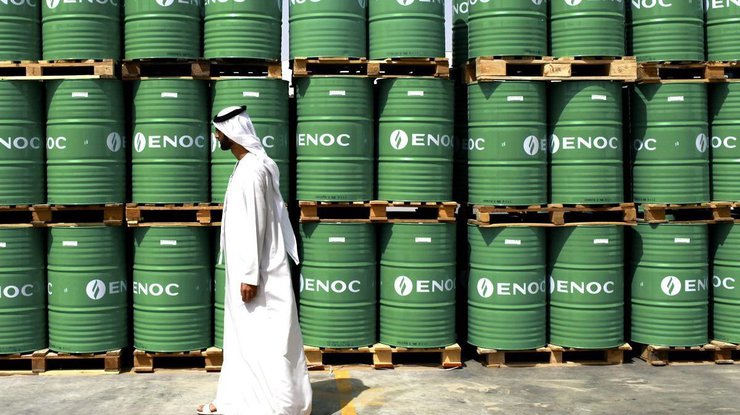
The United Arab Emirates has announced its withdrawal from OPEC and the OPEC+ format, which has become one of the most resonant decisions on the global oil market in recent times. This is reported by News N, Reuters. The PromPolitInform portal reports.
The decision was made on April 28 and, as noted, was a serious blow to the oil alliance and its key member Saudi Arabia. The UAE has been among the leading countries of the organization for many years, so their withdrawal may weaken the position of OPEC, which has traditionally sought to maintain unity, despite internal disagreements.
UAE Energy Minister Suhail Mohamed al-Mazruei said that the decision is political in nature and was made after reviewing the country’s energy strategy. At the same time, he emphasized that this step was not discussed with other states, including Saudi Arabia.
One of the key factors was the situation around the Strait of Hormuz, a strategic route through which about 20% of the world’s oil and gas supplies pass. Against the backdrop of war and threats from Iran, oil exports from the Persian Gulf countries have come under pressure.
An additional factor was the contradictions within the region. The UAE criticized other Arab countries for insufficient support in the face of Iranian attacks. Representatives of the Emirati leadership have also publicly expressed dissatisfaction with the weak political and military position of their partners.
The UAE is among the ten largest oil producers in the world: they account for about 6% of world reserves and about 8% of global exports. The loss of such a participant could reduce the ability of OPEC and OPEC+ to influence the market.
Experts note that the Emirates’ withdrawal could have mixed consequences. On the one hand, the country will no longer be limited by quotas and will be able to increase production. On the other hand, this will reduce coordination among exporters, which can lead to both an increase in prices due to uncertainty and a decrease in them if supplies increase.
Reference:
OPEC (Organization of the Petroleum Exporting Countries) is an international cartel of oil-producing countries, created in 1960 to coordinate oil production and influence world prices. It includes mainly countries in the Middle East, Africa and South America.
OPEC+ is an expanded format that appeared in 2016. It arose because the market share of OPEC alone was not enough to fully control prices. It includes OPEC countries and additional large oil producers such as Russia, Kazakhstan and others.
The United Arab Emirates (UAE) is a state in the Middle East, located on the Arabian Peninsula. The country consists of seven emirates, the largest of which are Abu Dhabi and Dubai. The capital is Abu Dhabi.
The UAE is one of the world’s largest oil producers and a major player in the global energy market. The country’s economy is also actively developing due to finance, tourism, trade and technology. The Emirates are considered one of the key economic and transport centers of the region.