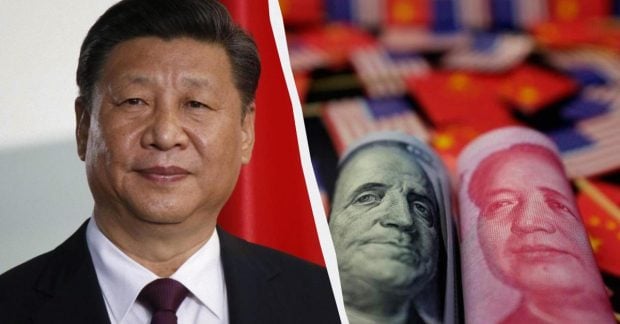
Beijing Wants to Turn the Yuan into a Global Reserve Currency and Strategically Challenge US Financial Dominance
Chinese President Xi Jinping called for accelerating the yuan’s transformation into a global reserve currency, declaring the need to strengthen Beijing’s role in the international monetary system. This was reported by the Financial Times, citing the Chinese leader’s speech, as reported by Comments.ua. PromPolitInform reports.
According to Xi Jinping, China needs a “strong currency” that could be widely used in international trade, investment, and foreign exchange markets, and eventually achieve reserve status. To achieve this, he emphasized, the country needs to create a strong central bank capable of effectively managing monetary policy, as well as world-class financial institutions and international financial centers that can attract global capital and influence global price formation.
Beijing has been consistently promoting the internationalization of the yuan for many years. As Han Sheng Ling, a China expert at The Asia Group, notes, China’s goal is not to immediately displace the US dollar, but to create a strategic counterweight that would limit Washington’s influence as the global financial order transforms.
Following Russia’s full-scale invasion of Ukraine in 2022, the yuan became the second-largest currency in global trade finance. However, its share of official foreign exchange reserves remains modest. According to the IMF, as of the third quarter of 2025, the dollar represented approximately 57% of global reserves, up from 71% in 2000. The euro accounted for approximately 20%, while the yuan ranked only sixth with 1.93%.
Zhang Jun, chief economist at China Galaxy Securities, believes that China’s priorities of restoring domestic growth and developing new technologies will contribute to the yuan’s strength on the global stage in the long term.