Even in the conditions of a full-scale war, Ukraine is among the twenty largest steel producers in the world, and metallurgy remains one of the main budget-forming sectors of the economy. The industry provides work for tens of thousands of people and forms a broad production ecosystem. This is reported by TSN, according to the PromPolitInform portal.
Currently, the basis of the metallurgical industry of Ukraine is six enterprises: the Metinvest Group’s Zaporizhstal and Kametstal plants, ArcelorMittal Kryvyi Rih, as well as Interpipe Steel, Dnipro Metallurgical Plant and Dniprospetsstal. They continue to operate in conditions of security risks and economic restrictions.
In particular, Zaporizhstal, after stopping at the beginning of the full-scale invasion, resumed production: now it can produce up to 4 million tons of pig iron and 3.6 million tons of hot rolled steel per year. The enterprise employs about 8,500 people, more than 1,300 of whom are mobilized to the Defense Forces.
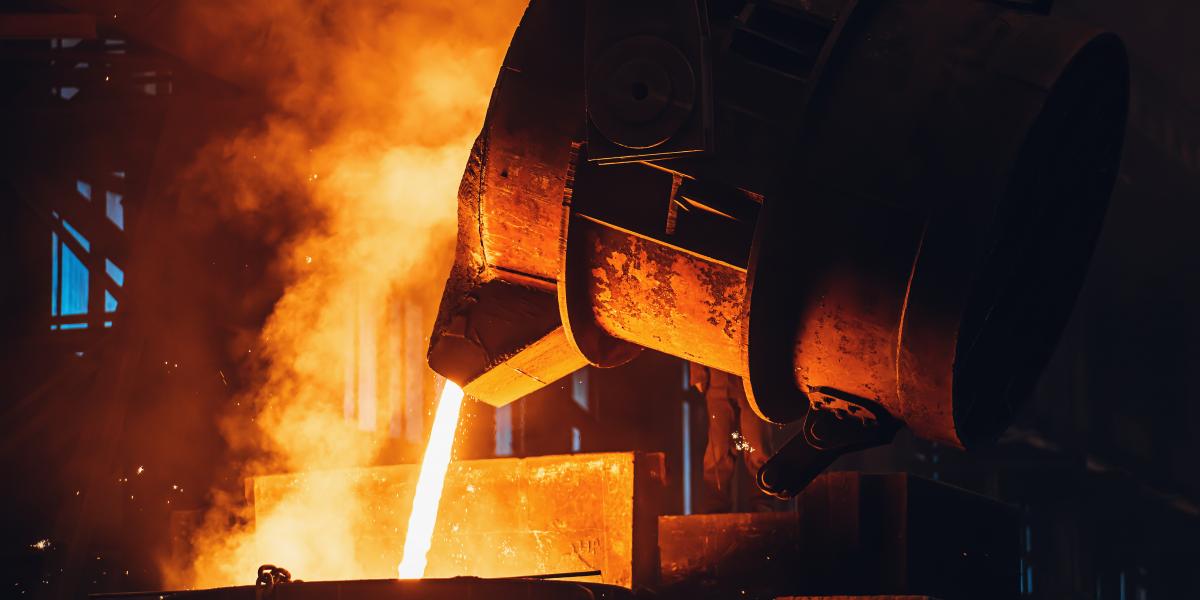
As explained by the head of the enterprise’s technical department, Ivan Zaitsev, steel production is a complex multi-stage process, from the preparation of iron ore raw materials to the smelting of pig iron and the subsequent purification of the metal from impurities. “At temperatures above 2,000°C, iron melts and turns into pig iron. And it is subsequently purified into steel,” he says.
Steel is widely used in everyday life – from cars and household appliances to bridges, rails and building structures. According to industry data, just one car contains about 900 kg of steel. And the reconstruction of Ukraine’s infrastructure after the war will require hundreds of thousands of tons of metal products.
At the same time, the war significantly affected the industry: Ukraine lost part of its production capacity, in particular the Azovstal and Ilyich Iron and Steel Works in Mariupol. Logistics were also disrupted due to the blockade of seaports, which forced companies to reorient to exports via land routes.
“About 60% of products are currently exported mainly to EU countries. At the same time, the domestic market is gradually recovering due to reconstruction needs,” says GMK Center analyst Andriy Glushchenko.
Despite the challenges, the industry maintains production due to the presence of its own raw material base: Ukraine has significant reserves of iron ore, which allows it to maintain the metallurgical cycle even in wartime.
Experts note that metallurgy will play a key role in the country’s post-war recovery, as demand for steel for housing, bridge construction, and transport infrastructure will grow.
As is known, last year the metallurgical industry brought Ukraine 15.2% of export revenues ($6.4 billion). The key goods remained iron ore ($2.8 billion) and steel ($2.4 billion). MMC also provided 18.3% of total capital investments in Ukrainian industry in 2024. And the largest metallurgical companies in the industry (Metinvest, ArcelorMittal Kryvyi Rih, Interpipe, DCH Steel, Ferrexpo) paid a total of almost a billion dollars in tax payments.