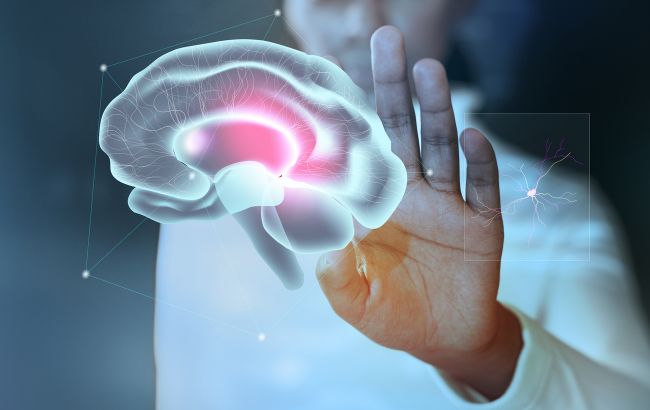
Scientists from Princeton University have mixed living brain cells with high-tech electronics. The development, called 3D-MIND, is able to recognize complex patterns while consuming millions of times less energy than modern AI systems. This is reported by RBC-Ukraine with reference to the scientists’ research published in the journal Nature. The PromPolitInform portal informs.
What is the essence of the experiment?
Unlike previous attempts, where neurons were grown in flat Petri dishes, the Princeton team created a flexible 3D mesh of microscopic metal wires and electrodes.
Thanks to a thin epoxy coating, the structure remains flexible enough so that soft neurons can grow right through it, weaving contacts from the inside.
This method allowed scientists to create a three-dimensional network of tens of thousands of living cells that interact with an electronic structure. This makes it possible to stimulate and record the brain’s electrical activity at a much finer level than ever before.
Key breakthrough
The researchers observed the system for more than six months, training it to recognize spatial and temporal patterns of electrical impulses. The main reason for creating such a “biocomputer” was a critical problem of modern AI – huge energy consumption.
According to Professor Tian-Ming Fu, the human brain consumes only a tiny fraction of the power compared to server stations that perform similar tasks. The new system consumes about a million times less energy than modern neural networks.
Technology potential
Although the initial goal of the scientists was to study fundamental problems in neuroscience, the authors of the study see great potential in practical applications:
Development of AI: creation of new types of computing systems that work on the principles of the living brain.
Medicine: understanding how neurological diseases arise and develop.
Energy: overcoming the “energy barrier” that significantly limits the scalability of AI.
Currently, scientists are working to increase the scale of the system and train it to perform more complex computational tasks. The developers are confident that 3D biological neural networks will help not only to reveal the nature of thinking, but also create a solid evidence base for the treatment of complex diagnoses.