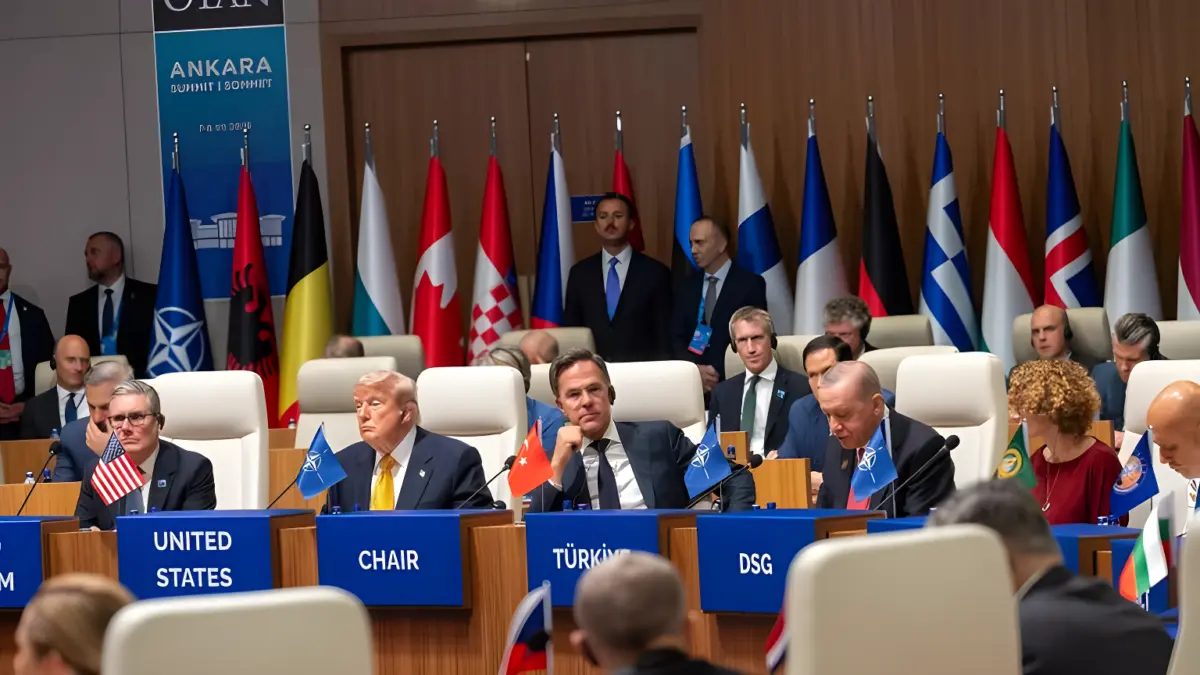
The NATO summit, which took place on July 7-8 in Ankara, ended with a promise of €70 billion for Ukrainian military needs in 2026 and at least the same amount in 2027. This is not €140 billion of completely new money: most of it is already provided for in the European and national programs of the alliance member states. This is reported by The Page, according to the PromPolitInform portal.
The new result was a two-year aid framework, the recognition of Russia as a long-term threat, and Donald Trump’s promise to provide Ukraine with a license to produce Patriots.
How NATO members were persuaded to allocate €70 billion to Ukraine
After the US refused to supply Ukraine with weapons and ammunition for free and offered Europe to buy them, the allies launched the PURL initiative (Prioritized Ukraine Requirements List).
How the PURL mechanism works:
Ukraine independently forms a monthly list of the most urgent needs of the front.
The Supreme Allied Commander Europe (SACEUR) approves the list and compares it with the available surpluses of the US army.
Alliance members and partners (except the US itself) contribute money to a trust fund for the purchase of equipment according to the approved list.
The US ships the equipment directly from American arsenals, which speeds up logistics. The supply is coordinated by the NSATU command in Wiesbaden.
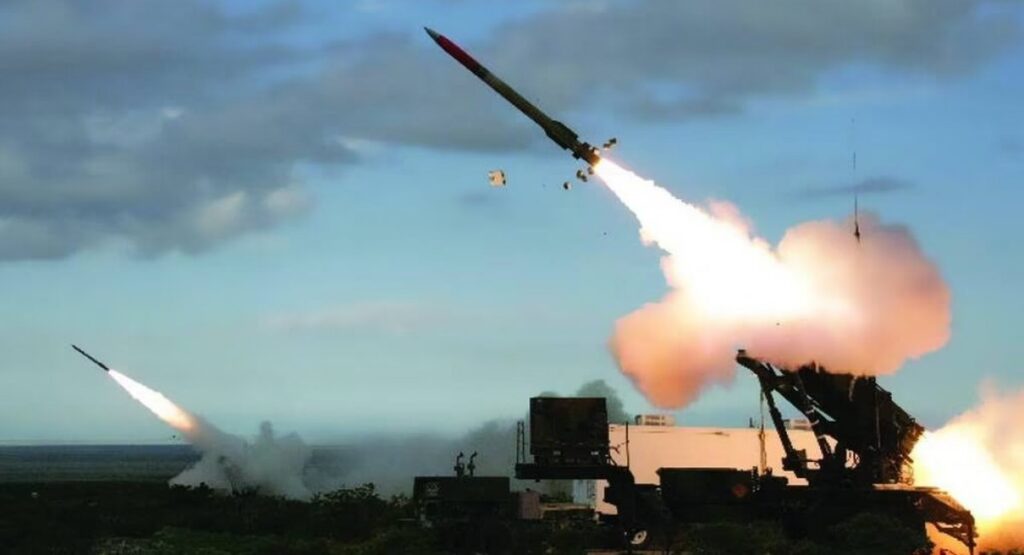
About 90% of missiles for Ukrainian air defense systems are financed and supplied through PURL, as European countries have limited capabilities to independently produce these interceptors in the required quantities.
NATO Secretary General Mark Rutte’s initial proposal for financing aid to Ukraine under PURL was stricter: each ally was to spend at least 0.25% of GDP on military aid to Ukraine each year. This formula would distribute costs according to the size of their economies and would force states that had so far lagged behind to increase their contributions.
But this idea was supported by only seven countries that were already meeting this standard or even giving more. The United Kingdom, France, Italy, Spain and Canada opposed a uniform quota for everyone, but not against aid to Ukraine itself.
Germany proposed a compromise: a common minimum of €70 billion without national quotas. Italy initially objected to the commitment for 2027, but ultimately did not block the declaration. In the end, the final text was supported by all 32 allies.
What does €70 plus €70 billion from NATO really mean?
The Ankara Declaration states that the allies commit to providing Ukraine with €70 billion in military equipment, assistance and training by 2026 and reaffirm their sovereign commitment to maintain at least an equivalent level in 2027.
What does the €70 billion in aid consist of:
Approximately €30 billion per year is the military part of the already agreed EU Ukraine Support Loan of €90 billion: €60 billion of this is earmarked for defence procurement in 2026–2027.
The remaining €40 billion or so is bilateral aid from Europe and Canada, procurement through PURL, training and other programmes. A significant part is already planned or being delivered, new contributions may come from states that have lagged behind so far.
The US does not finance Ukraine: Europe and Canada pay, and Washington sells scarce weapons through PURL and provides intelligence. As of June, the allies have financed the purchase of more than $6 billion in American equipment through PURL.
The main value of the decision is not the new amount, but the political commitment to support for two years.
Poland did not refuse to help Ukraine, but tried to increase its own value in NATO
On the eve of the summit, Polish Prime Minister Donald Tusk made a statement about the new Polish contribution, which in Ukrainian headlines turned into a call “not to promise Ukraine new financial assistance.” In fact, he was addressing the Polish delegation and talking about new obligations specifically for Poland, and not refusing Alliance members to support Ukraine.
The full key fragment of his statement was as follows: “Poland will be consistent on the need to support Ukraine in the war with Russia. But I appeal to the entire delegation to be cautious about any further statements about financial support from Poland. It’s not that I don’t think Ukraine doesn’t need financial support. I think Poland has a very significant responsibility for the entire eastern border of the European Union, and everyone should take that into account. Ukraine is at war, but Poland bears the main burden of protecting our border in peacetime and also protects the European border from threats from the east, so it needs to be treated especially.”
Warsaw was effectively “putting a price on itself”: it demanded to take into account the costs of the eastern border, logistics, the reception of Ukrainians and the assistance already provided before asking for a new contribution to PURL.
Tusk’s later statement removed the possibility of interpreting this as to a Ukranian statement:
“Polish policy on the Russian-Ukrainian war is stable and will not depend on political emotions or political games between political parties in Poland… at the same time, Warsaw will protect its own economic interests, but will continue cooperation in the field of security and defense against Russia.”
So, it was about the price of the Polish contribution, not about refusing to help Ukraine.
The Czech Republic made a U-turn on PURL
Before the summit, the government of Czech Prime Minister Andrej Babis refused to allocate budget money for weapons for Ukraine. In Ankara, Foreign Minister Petr Macinka announced that Prague would make a contribution to PURL for the first time.
These are not additional costs: the money will be redirected from already planned aid projects, and the amount has not yet been named. According to ČT24, this is the Czech Republic’s first participation in PURL and Babis’s departure from the promise of “not a single koruna” for Ukrainian weapons.
Ukraine receives important public support from Turkey
Turkish President Recep Tayyip Erdogan, speaking at the NATO summit, pledged that his country would continue both the transfer of military assets from its stockpiles and its contributions to the PURL.
“In addition to military support for Ukraine from our national stockpiles, we will continue to contribute within the PURL,” the Turkish president said.
Turkey is a non-EU member, NATO’s second-largest army, a major defense power, and a Black Sea neighbor of Ukraine and Russia. Its participation shows that support for Kyiv is not limited to the EU and the Alliance’s eastern flank.
At the same time, Erdogan maintained his role as a mediator: “While supporting Ukraine, we are also using our communication channels to encourage Russia to peace.” Ankara remains both a supplier and a negotiating platform.
The summit that was supposed to convince Trump that NATO is working
Trump arrived in Ankara irritated: he accused allies of insufficient support for the war against Iran, called Spain a “terrible partner” and again demanded control over Greenland.
The organizers tried to respond in the language of spending and contracts: NATO announced more than $50 billion in new purchases.
The contracts were supposed to show that European rearmament relieves the burden on the United States and at the same time brings orders to the American military-industrial complex. PURL, Patriot purchases and European maintenance of American missiles fit into this model.
As American analysts emphasize, Trump does not seek the collapse of NATO: he wants to lead the “group of winners” and take credit for the increase in allied spending.
In the closed part, according to Reuters, Trump told the allies: “We want to stay with you.” This did not cancel his claims, but it was the answer the Alliance needed to fears of a US withdrawal.
What was agreed at the NATO-2026 summit
A significant decision of the summit was the recognition in the final declaration of Russia as a long-term threat to Euro-Atlantic security and stability. The allies also confirmed the “ironclad” obligation under Article 5 of the NATO charter: an attack on one is an attack on all.
The summit for the first time enshrined in the declaration that Ukraine not only receives Western assistance, but also “contributes to transatlantic security”. Kyiv sought political recognition of its role as a “security contributor”, although this formulation does not create formal status or new guarantees of membership. In the end, this formulation was not used, but political recognition of Ukraine’s new role was recorded.
Europe and Canada already finance the vast majority of security assistance to Ukraine. The US remains the manufacturer of Patriot, a supplier of intelligence and high-tech systems, but ceases to be the main donor.
Ankara has consolidated the formula “a stronger Europe in a stronger NATO”. The alliance has announced over $40 billion in investments in countering drones, joint long-range missile projects and a new 155-mm ammunition standard. This is NATO rearmament, not aid to Ukraine.
What specific amounts and contracts to support Ukraine have already been announced by NATO members
The most specific production agreement was signed in Ankara by Ukrainian Foreign Minister Andriy Sybiga. Together with German Defense Minister Boris Pistorius, he concluded an implementation agreement on the joint production of Ukrainian long-range BARS drones within the framework of the Build with Ukraine program. Germany will finance the first stage, and all manufactured devices will be received by the Ukrainian Defense Forces.
Separately, President Volodymyr Zelensky concluded three new Drone Deals – with Estonia, the Netherlands and Denmark, bringing the number of such agreements to nine. They include joint production, financing, localization and technology transfer.
Norway is allocating an additional 3 billion kroner — about $307 million — for Ukrainian air defense. Together with Denmark, Germany and Canada, it will order Patriot missiles from a manufacturer in the US, and for faster deliveries it plans to buy them from countries that have stocks.
Canada has allocated part of the previously announced 2 billion Canadian dollars: 475 million — for ammunition, almost 400 million — for 35 armored vehicles and 50 million — for IT and engineering equipment. Therefore, the so-called “new package of 900 million” is a detailing of the funds already promised, the Canadian government clarifies.
The Netherlands, Germany, Poland and Sweden have signed a letter of intent to create the first in Europe maintenance center for various types of PAC-3 missiles. This project itself does not increase the number of interceptors in Ukraine: its task is to repair and return existing missiles to service more quickly. It is not yet clear whether the center will service Ukrainian PAC-3s.
Other agreements – the Triton and GlobalEye purchases, a new 155-mm ammunition and a long-range ground-based missile project – are NATO rearmament and are not included in Ukraine’s €70 billion.
Trump changed his tone on Ukraine and promised permission to manufacture Patriot
According to American analysts, the successful Ukrainian strikes on the Russian rear have changed the perception of Kyiv in Washington. Ukraine came not only to ask for weapons, but to demonstrate its ability to inflict strategic losses on Russia and offer the United States its own drone technologies.
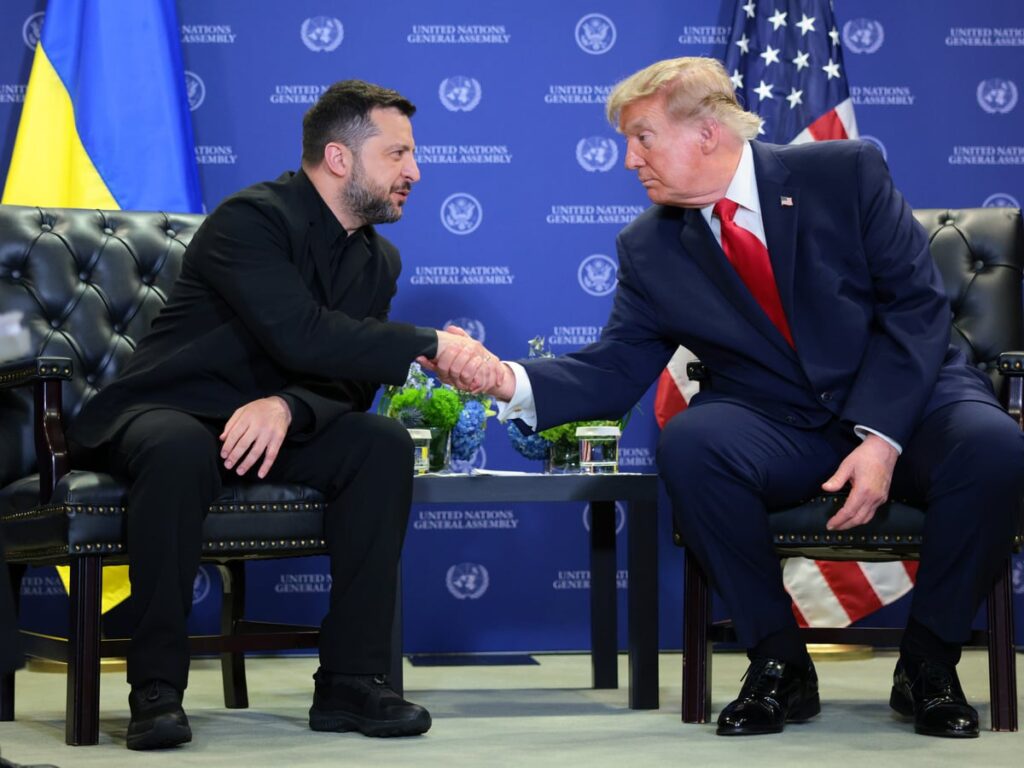
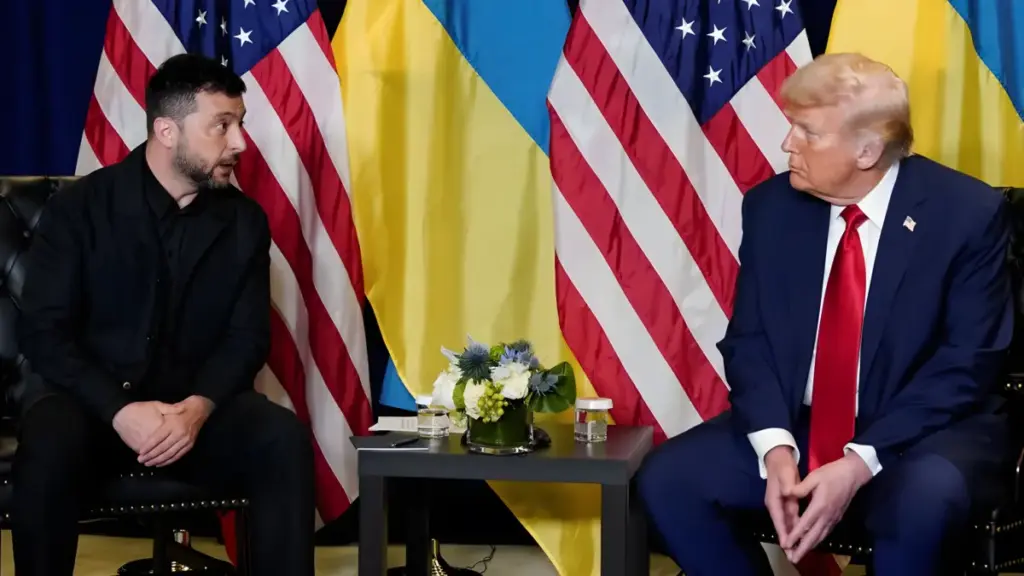
Confirmation of the change in attitude was tangible during Zelensky’s meeting with Trump. The US president, who had previously accused Kyiv of being unwilling to make peace, this time said that Zelensky “did an extraordinary job” and “was very effective.”
The most notable success was Trump’s statement at a joint press conference with Volodymyr Zelensky. The American president promised to provide Ukraine with a license to produce Patriots and transfer the necessary technological know-how.
“We will give you a license to produce Patriots. That way, he (Zelensky) will not be able to complain that we are not giving him enough. Produce them yourself,” Trump said.
However, he admitted that the manufacturing companies have not yet been informed of this decision. That is, at the moment this is a political promise, and not a concluded license agreement or an already agreed training program. However, this is a colossal success, because a few years ago there was no question of granting permission to produce Patriot missiles.
Trump also confirmed the US’s readiness to purchase Ukrainian drones, work on security guarantees, and allowed a future visit to Kyiv. At the same time, he said he would call Putin.
What the summit brought to Ukraine
The summit in Ankara did not give Ukraine NATO membership or guarantees equal to Article 5. Zelensky was not invited to the main closed session, but he spoke at the industrial forum, took part in the dinner and held successful negotiations with Rutte and Trump.
So, the main warnings of Western analysts that Zelensky would not be allowed to speak at all and would be “hidden so as not to annoy Trump” did not come true.
As a result, Europe and Canada fixed a two-year financial minimum for Ukraine, specific contributions to air defense appeared, the US retained a technological role and allowed the opening of the production of Patriot missiles, which Ukraine needs. The real value of the summit will be determined by the speed with which promises turn into missiles, contracts and production lines.