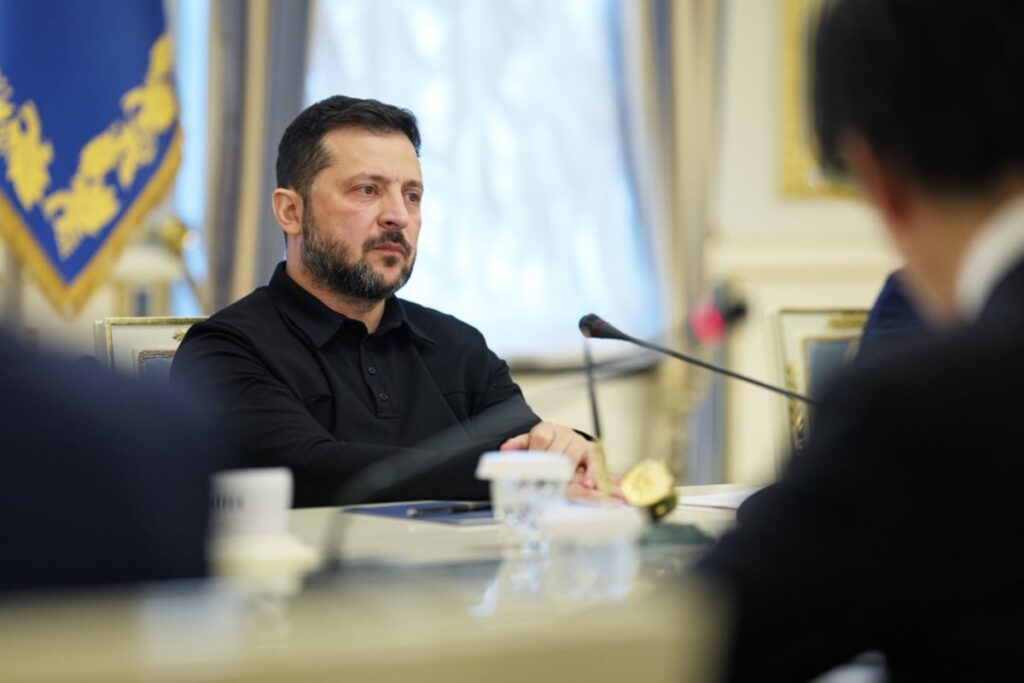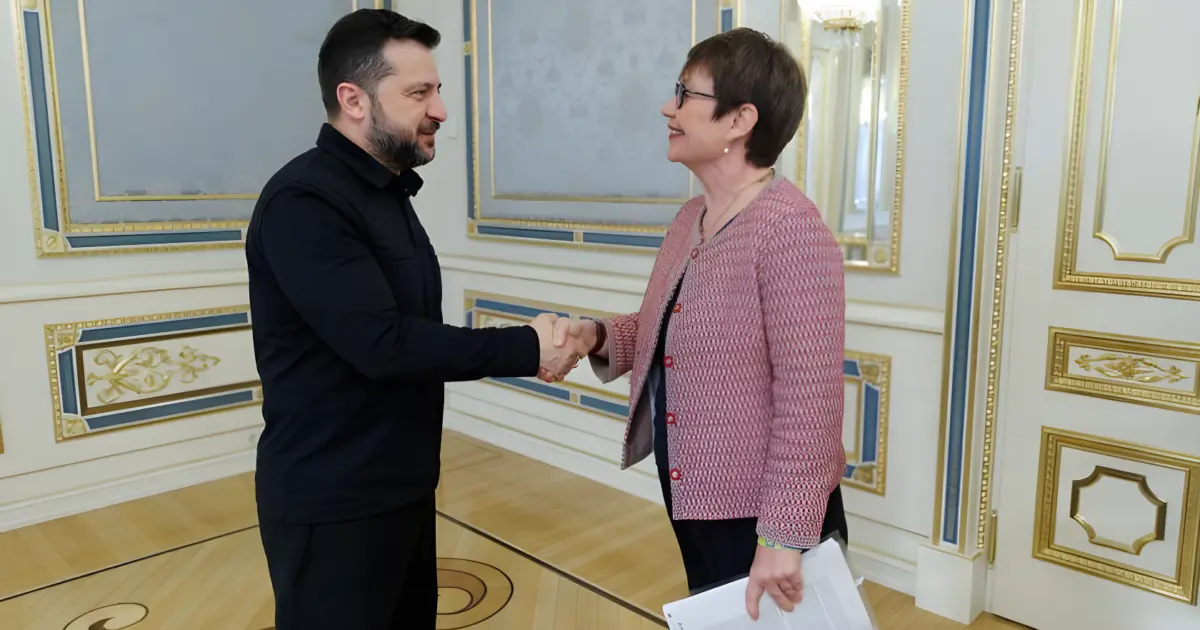
Ukrainian President Volodymyr Zelenskyy met with Odile Renaud-Basso, President of the European Bank for Reconstruction and Development (EBRD). This was reported by Rubryka, citing the Office of the President, and conveyed by the PromPolitInform portal.
The Head of State expressed gratitude for the unwavering support for Ukraine and for the visit to the country during a challenging period marked by intensified Russian attacks.
“We value our bilateral cooperation and our joint projects. Thank you for supporting them; this is especially important now—during a time of escalation involving the use of drones and missiles. Since the Russians initiated this phase of attacks, we have been working on various types of air defense systems and additional drone interceptors,” Volodymyr Zelenskyy emphasized.
The meeting focused primarily on preparations for the winter season and support for Ukraine’s energy sector. The President noted that much has already been achieved through the partnership with the EBRD to increase and protect electricity generation capacity. Ukraine looks forward to the continuation of this cooperation. According to Odile Renaud-Basso, the primary focus is on developing generation capacity and renewable energy, as well as decentralizing and protecting the energy system.
In addition to energy, discussions covered logistics and data centers, which are also constantly under attack due to the escalation by the Russian Federation. Volodymyr Zelenskyy emphasized the importance of partners assisting in the reconstruction of everything the Russians are attempting to destroy.
They also discussed war risk insurance and additional measures to support Ukrainians and the economy, specifically opportunities to attract investment to bolster Ukrainian exports. Due to constant Russian strikes, a significant volume of food—upon which countries across virtually every continent depend—remains in Ukraine. There are specific financial and infrastructure areas where the EBRD can provide assistance.
Volodymyr Zelenskyy outlined the de-escalation measures proposed by Ukraine regarding the export of agricultural products.
“The increase in attacks and the resulting uncertainty, along with the problems in the Black Sea, could have a more significant economic impact. Therefore, determining how we can act under these circumstances to continue providing support and helping businesses survive and maintain their operations is crucial,” the EBRD President noted.