Without systemic support, the linguistic surge could be followed by a rollback to Russification
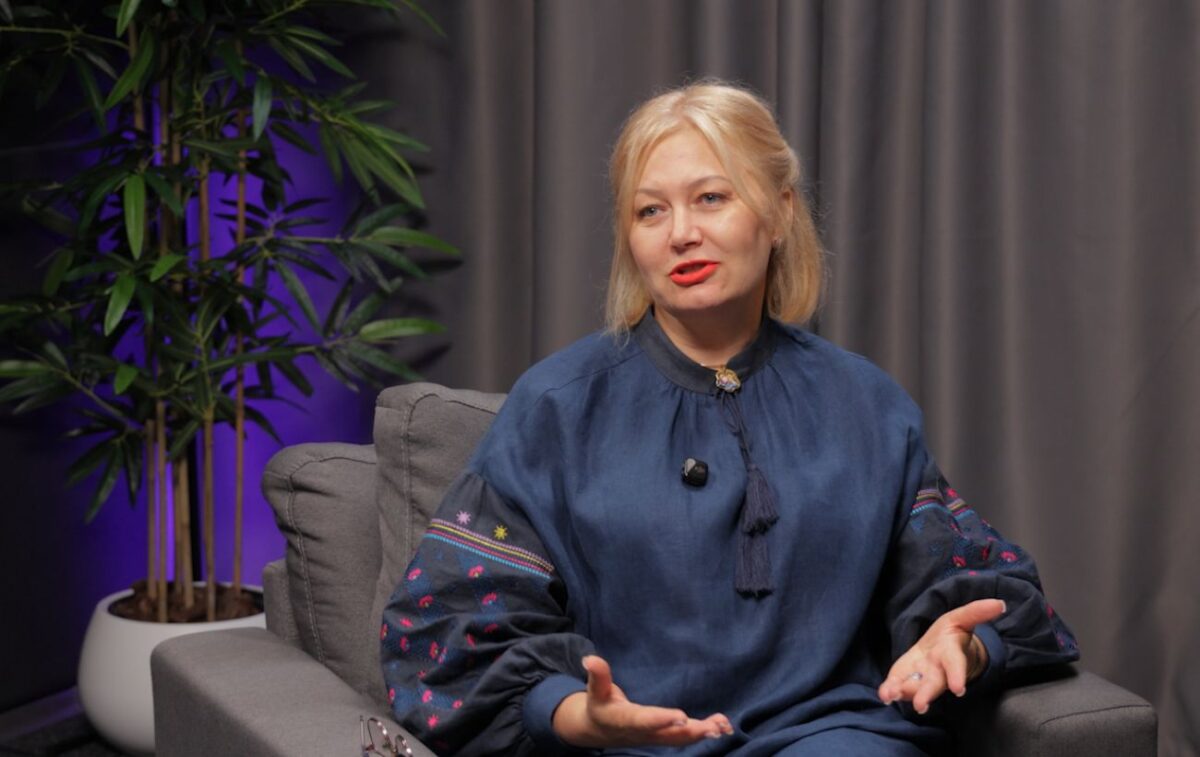
Writer and public figure Larysa Nitsoi stated that Russian aggression has become the most powerful driver of society's Ukrainisation. At the same time, she emphasised that the lack of a clear state language policy creates risks of returning to Russification. This was reported by RBC-Ukraine (Володимир Куренной), according to the portal PromPolitInform.
Larysa Nitsoi noted that the war and missile attacks have forced many Ukrainians to reconsider their views, but this process must be secured at the legislative level. According to her, previous waves of interest in national culture often faded due to a lack of systemic support from the authorities, which led to new stages of the spread of Russian influence.
The writer is convinced that language is not only a tool for exchanging information, but also a decisive factor in worldview and ethnic psychology. She refers to the research of linguists and philosophers, arguing that bilingualism in the country creates deep divergences in the vision of political and social processes, which negatively affects reforms.
The threat of separatism and language in education
Nitsoi paid special attention to the functioning of the Ukrainian language in educational institutions. In her opinion, educational spaces should be fully Ukrainian-speaking not only during lessons, but also after hours. She supported initiatives to introduce internal rules in schools that restrict the use of the Russian language, emphasising that autonomy allows administrations to set such requirements.
The writer also expressed concern over agreements regarding the Hungarian minority in Zakarpattia, which, in her view, create prerequisites for linguistic and territorial separatism. She stressed that instead of granting special conditions, the focus should be on integrating minorities into a single state language space.
The past and prospects for development
Analysing the historical context, Nitsoi emphasised that the modern Russian-speaking nature of many regions is an artificial consequence of the Holodomor, repressions against the intelligentsia, and the policy of Russification. She rejected claims about a shortage of quality Ukrainian content, calling them an excuse to remain within the Russian information field.
In conclusion, the public figure stressed that future victory depends on forming a critical mass of conscious citizens in the country. In her conviction, the war will end only when Ukraine finally establishes itself as a nation-state with strong ideological and cultural positions, making any influence from the Russian aggressor impossible.
Photo: RBC-Ukraine
Read also: European Business Association requests simplified labelling of imported goods during the war