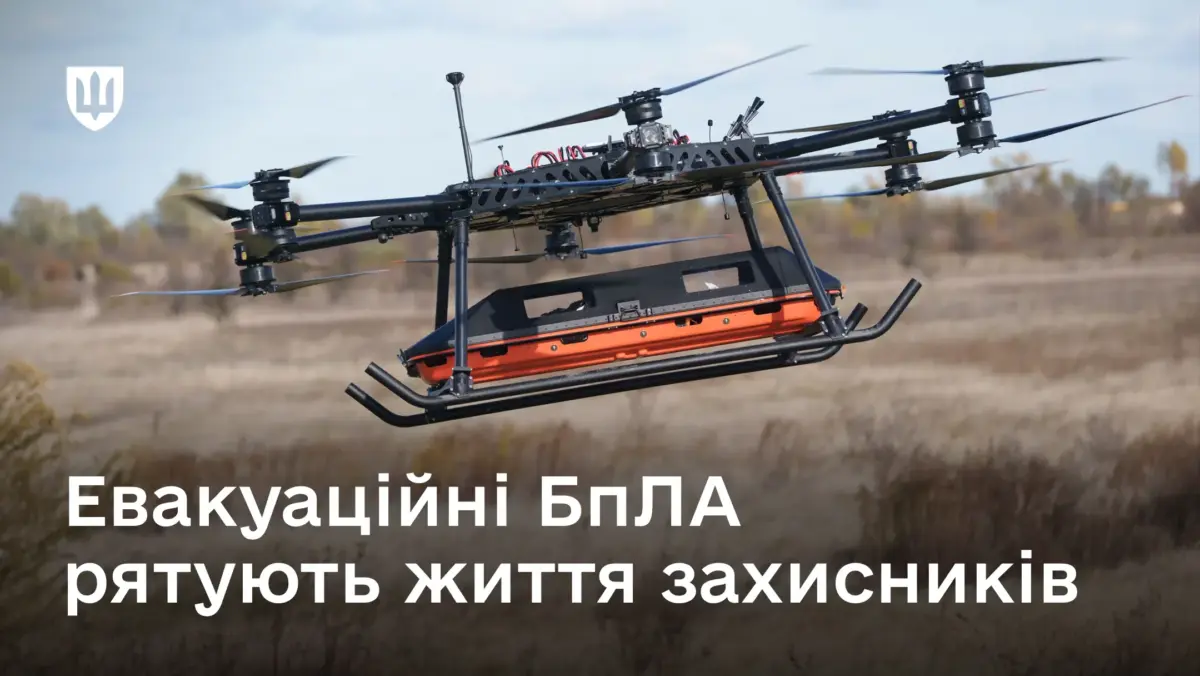
Evacuation UAVs can carry up to 150 kg over distances exceeding 15 km
Ukraine has become the first country in the world to deploy heavy unmanned aerial vehicles for evacuating wounded soldiers from the battlefield. The defense tech cluster Brave1 is developing this technology with support from the Ministry of Defence of Ukraine. This is reported by the portal PromPolitInform, citing information from the Ministry of Defence of Ukraine.
The need for aerial evacuation drones arose due to the widespread enemy use of UAVs, making traditional evacuation routes unavailable. While ground robotic systems carry out most rescues, their limited speed can be critical when saving severely wounded soldiers.
When ground routes are blocked or mined, heavy aerial drones remain the only viable evacuation option. In 2024, military forces and Brave1 established formal requirements to launch the development of evacuation drones.
Technical Specifications for Evacuation UAVs
Defense-tech developers must meet strict technical standards for these aerial platforms. An evacuation drone must carry a minimum payload of 130 kg over a distance of at least 15 kilometers.
To survive electronic warfare, the drones are equipped with communication systems featuring at least three alternative channels. Optional equipment includes lidars, optical stabilization, and non-GPS navigation modules.
First Successful Rescue Operations
In October 2026, the Armed Forces of Ukraine conducted the world’s first medical evacuation using the heavy hexacopter Heavy Shot Ayudag-6. Weighing 98 kg with a payload capacity of 130 kg, the drone traveled over 15 km each way to rescue an infantryman of the 30th Mechanized Brigade from a blocked position.
The mission required months of preparation and incorporated operational experience from the 92nd Assault Brigade’s robotic unit. The wounded soldier secured himself to the drone’s winch using pre-dropped equipment, while supporting units deployed distraction bombers to draw away enemy air defense drones.
Stargate Unmanned Aerial Complex
Another Brave1 development, the Stargate complex, was specifically designed for assault unit evacuations. The system deploys in 10 minutes, reaches speeds up to 105 km/h, carries 150 kg, and features a specialized medical module with a stretcher.
Assault troops from the CODE 9.2 unit executed two successful evacuations of severely wounded soldiers within a week from a gray zone 5 km from the Russian border. Operating under heavy electronic jamming, the drone flew nearly 30 km one way and returned safely using AI-based navigation.
Photo: Ministry of Defence of Ukraine
Read also: Military can order amphibious URCs on Brave1 Market