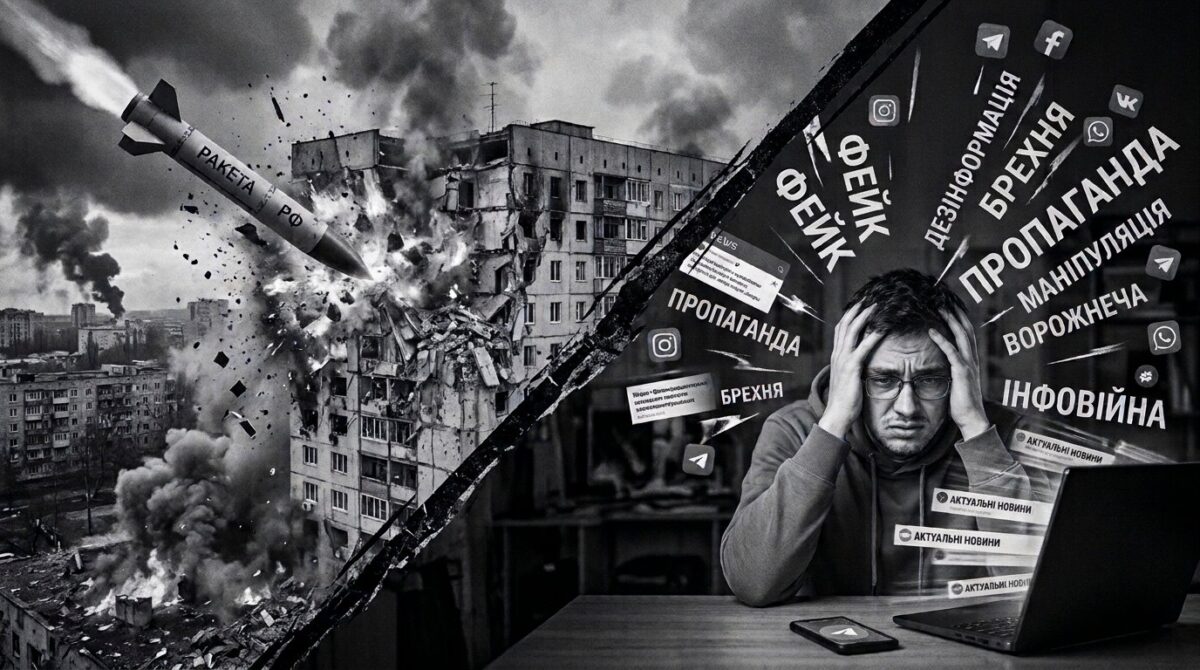
We raise the question: will human beings, having lost
their old rootedness, find a new soil for rooting and existence,
such soil and foundation upon which human essence
and all human labor will flourish anew?
What will become the foundation and soil for future rooting?
Martin Heidegger, 1955
Humanity is facing a threat that can no longer be explained merely through disinformation, isolated information operations, digital manipulations, or episodes of violence. Technological development, while expanding the possibilities of communication, content production, linguistic interaction, and knowledge dissemination, has simultaneously created conditions for scaling practices aimed at destroying identity, trust, public interaction, and the human ability to collectively comprehend reality. What could once be viewed as an individual information incident or violation can today become a component of prolonged, interconnected processes of influence over societies, dominance establishment, and aggression against them, also targeting their institutions, identity, and human behavior.
This is written by Hryhorii Liubovets and Valerii Korol, staff members of the NGO “Center for CCS”, specially for the Prompolitinform portal.
This threat acquires special urgency under the conditions of the permanent aggressiveness of collective putinism, which utilizes various environments, institutional ties, and technological capabilities to reproduce and expand conditions where aggressive practices can acquire new scales and formats. Their effect is not necessarily limited to the immediate results of a specific operation. It can accumulate and manifest through the weakening of trust, the establishment of force as an unconditional criterion of correctness and the right to action, the normalization of impunity, the destruction of public and international criteria of reliability, as well as the fragmentation of society and the narrowing of opportunities for coordinated collective action. Consequently, the objects of counteraction, neutralization, and displacement become not only messages and the direct actions of the aggressor, but also those changes in the communication and content environment through which its current actions and their delayed effects can transform public relations, institutional interaction, and the ability of people to jointly comprehend reality and act.
Cognitive Erosion: From Manipulating Perceptions to Destroying the Capacity to Know
The changing nature of contemporary challenges and risks, which in the interaction of local, regional, and global processes create glocal threats, is evidenced by the assessment of Paolo Cesarini, Head of the Executive Board of the European Digital Media Observatory (EDMO). According to him, the goal of modern disinformation operations increasingly consists not in convincing a person of a specific statement, but in causing cognitive erosion—a state in which trust in facts and information sources is weakened, as well as the ability to distinguish, verify, and reasonably evaluate the reliability of messages. This can be accompanied by the loss of trust in the very possibilities of reliable cognition, the intensification of alienation, cynicism, and apathy, and distrust in public institutions. As a result, the destructive effect of disinformation influence can go beyond the perception of individual messages and affect the ability of people to jointly comprehend reality, interact, and coordinate socially significant actions.
This shift is fundamental—while disinformation influence may be aimed at fixing a certain perception of reality, cognitive erosion undermines the very human ability to distinguish between reliable and unreliable, substantiated and manipulative, verify statements, and form judgments based on available evidence. In this way, the grounds for mutual trust and joint decision-making are weakened.
The spread of cynicism, hypertrophied distrust, despair, and under certain conditions, vindictive cruelty, can create an environment where people increasingly disbelieve in the possibility of mutual understanding, and social conflicts become more difficult to resolve constructively. In its extreme manifestation, such transformation contributes to the devaluation of the social as a value—the denial of the significance of interaction, mutual responsibility, and the capacity to coexist and act in the presence of differences.
Under such conditions, for putinism as a glocal aggressor, it is no longer obligatory to convince societies of its own correctness. It is sufficient to consistently form and exploit glocal circumstances in which people lose the ability to agree on facts, trust sources of knowledge and public institutions, including international ones, totally suspect each other of manipulations, and therefore lose motivation or the opportunity for coordinated joint action. This signifies a transition from influencing individual beliefs to influencing the conditions in which beliefs, trust, and public agency are formed.
Here a fundamental question arises regarding the essence of the concept of “dehumanization” practiced by the current political regime of the Russian Federation: can it be viewed as a technological process of a glocal scale, and not merely as a research-conceptual metaphor or a synonym for degradation? If cognitive erosion systematically undermines a person’s ability to distinguish reliable from unreliable, recognize another as a subject of interaction, and put shared rules, institutions, legal norms, and internationally recognized values—including the right of peoples to self-determination and respect for statehood—into question, then its consequences extend far beyond the information sphere. We are talking about undermining the fundamental normative and value bases of human coexistence, which creates prerequisites for transforming public agency and transitioning to practices of dehumanization.
Combined with the existing practices of collective putinism of permanent coercion, violence, institutional destruction, and the denial of agency, they can transform the very conditions of human coexistence. This concerns not only changing beliefs or attitudes toward another, but also destroying the foundations upon which reliable cognition, mutual trust, and responsibility ensure public life. In this context, “Putinist dehumanization” requires doctrinal and applied comprehension as a possible systemic technology of glocal aggression, the mechanisms, tools, and consequences of which must continue to be established and comprehensively researched.
EDMO’s methodology—identifying fakes and content created using artificial intelligence, analyzing propaganda narratives, in particular the narrative about a “corrupt Ukraine”, and establishing organizers and coordinators of relevant networks through fact-checking and OSINT—remains an important tool. It helps recognize specific operations, identify their participants, and establish connections between disseminated content and its organizers. Information exchange between European institutions, government bodies, and independent organizations also holds operational significance.
n
However, detecting fakes is not identical to overcoming cognitive erosion, just as recording and identifying the organizers of an information operation do not in themselves restore destroyed trust. Even effective responses to individual communication and content threats do not guarantee the protection of the environment in which these threats are constantly reproduced. Therefore, the issue lies not in abandoning existing tools, but in overcoming the limitations of a counteraction model focused predominantly on monitoring, verification, and responding to individual threats. If such limitations persist, the communication and content means of anthropological-cognitive-mental aggression can continue to be used to undermine trust, destroy agency, and transform the conditions of public coexistence. Consequently, the task lies not only in identifying and neutralizing specific threats, but also in countering the reproduction of those destructive environmental changes that ensure their prolonged effect.
How to transform threat detection and glocal situational awareness into the capacity of societies of EU member states and the European community as a whole to preserve and develop full-fledged life, communication, and coordinated joint action in an environment where the aggressive influence of collective putinism does not cease after the exposure of another operation? How to transition from awareness of threats to the capacity of societies to maintain their own agency, interaction, and development despite the permanence of aggressive influence? It is precisely this question that elevates the problem to the level of communication and content security.
Digital Environment: When Communication is Mobilized Against Violence
Another manifestation of the glocal threat, which within the framework of this concept is examined through the notion of “Putinist dehumanization”, is revealed by the statement of French President Emmanuel Macron regarding the use of social networks to involve people in attacks and robberies during the riots on October 17, 2026. On October twenty-sixth, Macron emphasized that social networks not only polarize society and spread images of violence, but can also be used to mobilize people for offenses, attacks, and robberies. This example draws attention to the fact that digital platforms do not merely transmit information about events: they can provide action coordination, accelerate the spread of calls, influence group behavior, and contribute to the normalization of violence and impunity.
This challenge is not exhausted by the question of how much social networks affect democracy. It is necessary to understand under what conditions the digital environment supports public interaction, and under what conditions it becomes a resource for manipulation, mobilization to violence, undermining trust in the legal order and public institutions, and weakening civic responsibility.
At the same time, the use of social networks for coordinating violent rather than merely protest actions in France does not in itself prove that their organization belongs to the Russian Federation or structures associated with collective putinism. The causes of specific riots, the composition of participants, coordination mechanisms, and the possible role of external actors must be established separately in each case. However, the absence of a proven connection of a specific event with an external aggressor does not eliminate the need to study the mechanisms of digital mobilization and assess the possibilities of their use by various aggressive actors, in particular collective putinism. We are talking not about the automatic attribution of every case of violence, but about identifying mechanisms that can be used to intensify social contradictions, destroy trust, and destabilize institutional interaction.
The response to this challenge cannot be reduced to a choice between the uncontrolled nature of platforms and the abandonment of digital communications. The digital environment has become an inseparable part of everyday life, education, economy, civic participation, and international interaction. Excessive restrictions without proper consideration of human rights, public needs, and the principle of proportionality can create new problems, while the absence of proper legal and institutional guarantees leaves people vulnerable to manipulation and violent mobilization.
Therefore, the subject of security must be not the elimination of the digital environment from human life, but the protection of the ability to use it for reliable cognition, free communication, and responsible participation. This requires legal, technological, and institutional conditions that simultaneously protect the individual, preserve the openness of society, and ensure the responsible functioning of digital systems. In the dimension of communication and content security, it becomes fundamental not only to prevent the use of digital platforms for violent mobilization, but also to preserve public capacity for reliable cognition, mutual responsibility, and coordinated action.
Transnational Repressions: When Geographic Borders Do Not Stop the Aggressive Policy of Collective Putinisim
The report by the UN Special Rapporteur on the human rights situation in the Russian Federation, Mariana Katzarova, reveals another dimension of the glocal threat associated with the actions of collective putinism. In the report “Nowhere is safe: exporting the rule of fear beyond borders”, transnational repressions are viewed not as a set of isolated cases of persecution abroad, but as the extension beyond the borders of the Russian Federation of the exact same state repressive system operating inside the country. The persecution of critics of the authorities, journalists, human rights defenders, and other opponents goes beyond national territory, while internal repressions and external aggression appear as interconnected components of state policy.
This connection is of fundamental importance for understanding security. It reveals the limitations of an approach where a threat is assessed predominantly by the geographic location of an event, without analyzing the institutional mechanisms, organizational ties, and political goals with which it may be associated.
Transnational repressions can be implemented through physical persecution, intimidation, pressure on relatives, the use of legal and administrative procedures, and digital tools. In the broader dimension of communication and content security, this requires investigating also possible interconnections between persecution abroad, information operations, and technological networks. At the same time, specific connections between such tools must be established on the basis of evidence rather than assumed automatically.
Consequently, the geographic location of an event does not always explain its regime affiliation, and crossing a state border does not necessarily terminate the operation of the repressive mechanism. That is why the geographic-regime dimension of security involves establishing not only where the persecution took place, but also which structures, networks, and mechanisms ensured or could ensure it, how they interact, and to what political goals they are subordinated. Such an approach makes it possible to view cross-border actions not in isolation, but in the context of the glocal reproduction of aggressive practices.
The consequences of transnational repressions extend beyond individual human rights violations. They can restrict freedom of speech, research activities, international cooperation, and the ability of people to participate in documenting and exposing aggressive practices. The threat acquires special acuity when persecution is directed against those who study the mechanisms of aggression, document violations, or organize counteraction. In such cases, pressure is directed not only against specific individuals—it can hinder the production of knowledge, the dissemination of evidence, and the coordination of joint actions.
Therefore, protection against transnational repressions requires not only responding to individual cases, but also coordinated international interaction, the preservation of evidence, the protection of people under threat, countering the politically motivated abuse of legal mechanisms, and ensuring the accountability of those responsible. Without proper mechanisms for prevention, investigation, and bringing the guilty to justice, the extraterritorial nature of repressions will continue to create opportunities for persecution beyond the jurisdiction where it began. In the dimension of communication and content security, this means the need to protect not only the rights of individuals, but also the conditions under which societies can freely acquire knowledge, document aggression, maintain international interaction, and jointly counter threats.
Permanent Simultaneous-Glocal Aggressions: Why Individual Incidents Do Not Explain the Systemic Threat
Cognitive erosion, digital mobilization, and the transnationalization of repressions reveal different dimensions of a broader process. Digital technologies, international networks, and institutional interconnections create opportunities for combining various forms of aggressive activity of putinism. Individual operations may differ in goals, means, and scale, but at the same time cause interconnected consequences: weaken trust, complicate public interaction, and test the capacity of democratic institutions to defend their own foundations.
That is precisely why viewing such phenomena exclusively as separate problems is dangerous. If each case is analyzed solely within its own field—disinformation as a media problem, violence as a public order problem, repressions as a human rights problem, and international cooperation as an academic ethics problem—one may fail to see the conditions that allow various aggressive practices to interact and reinforce one another.
This does not mean that every social disturbance, digital incident, or human rights violation should be automatically linked to the Russian Federation. On the contrary, understanding the systemic glocal threat-challenge requires a more precise establishment of specific connections, the differentiation of the causes of events, and evidentiary analysis of possible interactions between them. But it is likewise unacceptable for the need to prove involvement in each individual incident to lead to the ignoring of already identified systemic practices of aggression by collective putinism.
The concept of permanent simultaneous-glocal aggressions makes it possible to place at the center of analysis not only individual events, but also their simultaneous deployment in different environments and at different levels—local, national, regional, and global. Permanence means that the threat is not reduced to a single completed episode. Simultaneity focuses attention on the contemporaneity of different processes, and glocality on the interaction of local manifestations with broader networks, institutions, and political regimes.
With such an approach, the security task changes. It is insufficient to establish that a certain operation took place and respond to its immediate consequences. It is necessary to understand how it fits into the broader environment of aggression, what opportunities it opens for subsequent actions, and what conditions of human coexistence it destroys. Otherwise, society risks constantly reacting to new manifestations of the threat without eliminating the vulnerabilities that allow it to reproduce.
International Law: Protecting the Communication Environment as a Condition of Human Agency
The systemic nature of the threat-challenge elevates the problem to the level of international law. If digital networks have become an environment upon which access to information, education, public interaction, and the realization of human rights depend, the question arises of legal guarantees for such access and the limits of powers of states and digital platforms.
The internet cannot be viewed exclusively as a tool whose availability and functioning are determined by the interests of a specific political regime hiding behind national sovereignty under the imitation of so-called national interests. At the same time, the right to access the digital environment does not mean the absence of any restrictions: it must be coordinated with the protection of other people’s rights, privacy, security, and the legitimate requirements of public order.
Therefore, the task lies not in the abstract proclamation of unlimited access, but in the development of international legal foundations that protect human communication capabilities from the arbitrary use of power while simultaneously ensuring the responsible functioning of digital systems. If the communication environment becomes a necessary condition for the realization of rights and public participation, its security cannot remain exclusively a technical issue or a subject of unilateral state control.
This is especially important under conditions where digital communications and the content landscape can simultaneously ensure access to knowledge, support public interaction, disseminate manipulative content, and create opportunities for persecution. The legal response must take into account this multidimensionality, without substituting the protection of the individual with control over them.
Scientific Openness Under Threat: When Knowledge Infrastructure Can Become a Resource for Repression
Particular attention is required by the joint appeal of the Ministry of Education and Science of Ukraine and the Ministry of Digital Transformation of Ukraine to the international scientific community with a call to cease institutional cooperation with Russian academic and research institutions. The appeal emphasizes that the continuation of such cooperation can legitimize and strengthen the aggressor state, preserving for its institutions access to international research networks, scientific resources, and infrastructure.
The context of this appeal is not limited to political assessments of the war. The document mentions the Russian drone strike on September 28, 2026, against the Presidium of the National Academy of Sciences of Ukraine in Kyiv, as a result of which two people were killed, seven were wounded, and the building sustained damage. Such an example directly sharpens the question of the aggressor state’s attitude toward scientific infrastructure and the responsibility of the international scientific community for the nature of its own institutional ties with Russian institutions.
At the same time, the appeal provides for specific measures: the suspension of joint research projects involving researchers associated with Russian institutions, the rejection at the review stage of manuscripts submitted from such institutions, and the suspension of editorial duties of individuals formally connected to Russian institutions. It is fundamentally important that these measures concern formal institutional affiliation, rather than the citizenship, nationality, or ethnic origin of a specific person.
This distinction is necessary, but it does not exhaust the entire problem. It is also necessary to raise the question of whether the global scientific community can maintain habitual models of institutional openness without assessing the risks of using this openness to strengthen the repressive capabilities of the aggressor state.
Scientific knowledge, open data, professional networks, research tools, and international contacts ensure the development of science. However, under conditions of transnational repressions, they can potentially be used for other purposes as well: establishing professional ties, identifying researchers, revealing the directions of their work, and obtaining information capable of helping repressive structures. Such a risk is especially important for scientists, experts, and direct-action practitioners who study putinism / collective putinism, expose the mechanisms of global aggressiveness, and counter the practices of glocal genocidal aggression.
Under such circumstances, the persecution of researchers—threats, discreditation, abductions, and killings—can pose a threat not only to their lives and professional activities, but to the very process of producing knowledge about aggression. The intimidation of individuals is capable of affecting broader professional communities, weakening international networks of counteraction, and deterring research of public significance.
Here it is necessary to distinguish confirmed cases of transnational repressions, potential risks of using open data, and specific instances of using scientific cooperation to carry out persecutions. The latter require separate evidence. However, the need to evidentiary establish specific cases does not relieve international institutions from assessing foreseeable risks arising in an environment where transnational repressions are already a subject of international attention.
The danger lies not in scientific openness as such, but in the possibility of its asymmetrical use by subjects of aggression. Therefore, academic freedom and international knowledge exchange cannot be a ground for the automatic preservation of any institutional ties regardless of their consequences. The scientific world is part of the international public environment, and consequently, must take into account whether its resources and infrastructure are becoming additional opportunities for the aggressor.
The Ukrainian appeal in this context has significance not only as a call for symbolic distancing from Russian institutions. It raises the question of institutional responsibility to ensure that international knowledge networks do not provide legitimation for aggression and do not create additional risks for those who research and expose it.
This challenge requires a practical response: agreed criteria for institutional cooperation, risk assessment for researchers, the protection of professional networks and sensitive data, the exchange of information on confirmed threats, and the definition of responsible institutions. We are talking neither about the automatic restriction of people by origin nor about the abandonment of freedom of scientific cognition. We are talking about preventing the use of scientific openness to strengthen repressions and aggression.
Consequently, the international scientific community faces a choice that cannot be resolved merely by referencing traditional principles of academic cooperation. It is necessary to defend these principles from being used to the detriment of people, society, and science itself. Otherwise, the infrastructure created for the development of knowledge and international understanding risks remaining open even when grounded reasons arise to assess its use in the interests of repressive activity.
Communication and Content Security: From Responding to Incidents to Protecting the Conditions of Human Coexistence
The examined examples of glocal manifestations of the threat reveal interconnected dimensions of the aggressive practices of collective putinism. Cognitive erosion weakens the ability of societies to distinguish reliable from unreliable, form well-founded judgments, and coordinate joint actions. Digital platforms can be used to mobilize for violence even in democratic societies. Transnational repressions spread persecution beyond state borders. Institutional ties can create opportunities for using the resources of the international environment in the interests of aggressive practices, and scientific openness in the absence of proper guarantees can create additional risks for people who research and expose aggression.
Each of these problems requires its own response mechanisms. However, they cannot be viewed as isolated directions, because they concern a common question—what conditions determine the ability of a person to cognize reality, interact with others, preserve their own agency, and jointly protect society from aggression? We are talking not only about identifying threats and neutralizing individual tools of influence, but also about preserving the conditions under which people and societies are capable of countering aggression without losing the opportunity for full-fledged life, communication, and development.
It is here that the significance of communication and content security (CCS) as a broader paradigm is revealed. Its subject is not only the reliability of information, the security of networks, or the resilience of individual institutions. CCS encompasses environments where people receive, comprehend, and disseminate content, form perceptions of reality, build relationships, and realize their own agency. Accordingly, its task consists not only in responding to individual threats, but also in protecting and restoring the conditions necessary for reliable cognition, responsible communication, and coordinated joint action.
The anthropological-cognitive-mental dimension of modern aggressions and the CCS paradigm itself makes it possible to place the human being at the center of security as a subject of cognition, communication, creation and dissemination of content, public interaction, and joint action. We are talking about preserving conditions in which people can verify information, trust well-founded conclusions, conduct meaningful dialogue, distinguish responsibility and manipulation, and act in accordance with conscious goals without losing the ability to recognize human dignity, the agency of the other, and the value of coexistence. This dimension is especially important under circumstances where technological capabilities are used not only to disseminate information, but also to scale the cult of force, justify aggression, and reproduce practices of dehumanization associated with the activity of extra-civilizational forces of collective putinism.
In this context, social resilience remains necessary, but it should not be understood as the ability to endlessly endure new threats and put up with permanent aggressive actions that acquire a precedent-setting character and weaken the effectiveness of international security mechanisms and legal protection. Society cannot endlessly compensate for the destruction of trust, the persecution of active subjects, the loss of legal guarantees, and the weakening of institutional capacity. The real task lies not only in containing aggressive influence, but also in preserving the viability of society, restoring full-fledged interaction, and preventing the transformation of aggression into the normal background of public life.
For Ukraine, Europe, and the US, this issue has existential significance, although the specific manifestations of threats and the experience of experiencing them differ. The experience of prolonged Russian aggression against Ukraine, which within the framework of this concept is viewed as aggression of a genocidal nature, demonstrates the interconnection of military violence, persecution, infrastructure destruction, information operations, and attempts to restrict or liquidate Ukrainian agency. This experience is important not only as a basis for defending Ukraine, but also as a source of knowledge about the mechanisms of threats that can manifest in other societies through other instruments, on different scales, and with distinct consequences.
Therefore, the Ukrainian response should not be limited to a call for the international community to better understand the danger. It must raise the question of the sufficiency of existing approaches, the responsibility of institutions, and the need to protect the very environment in which societies recognize threats, exchange knowledge, and counter aggression. CCS makes it possible to combine within a single conceptual framework the protection of the communication environment, human cognitive capabilities, legal guarantees, conditions of scientific openness, and institutional responsibility. Its fundamental difference lies in the transition from responding to individual incidents to protecting and restoring the conditions under which people and societies preserve agency, humanity, and the capacity for full-fledged life, communication, and joint action under conditions of permanent aggression.
From Statement to Action: A Challenge That Cannot Be Delayed
The examined examples reveal the limits of the reactive security model under conditions of permanent simultaneous-glocal aggressions of collective putinism. Exposing a fake does not restore society’s ability to distinguish between reliable and manipulative. Blocking a digital resource in itself does not eliminate the mechanisms of mobilization to violence. Investigating a specific persecution does not guarantee the protection of people, research networks, and channels of international interaction from repeated pressure. Halving an individual institutional cooperation does not solve the broader question of how to protect the international knowledge production environment from being used to support aggression. Each of these measures may be necessary, but none in itself ensures the protection of conditions thanks to which people and societies are capable of cognizing reality, interacting, and acting together.
It is precisely within these limits that the strategic challenge created by collective putinism manifests. Its aggressive practices are not limited to causing specific harm or achieving a separate political goal. Their interconnected consequences can alter the very environment of public life: weaken criteria of reliability, normalize force as a method of resolving contradictions, spread impunity, destroy trust, persecute those who document aggression, and narrow opportunities for coordinated collective action. In such an environment, the aggressor influences not only what people know or think, but whether they are capable of recognizing each other as subjects of interaction, jointly establishing facts, protecting rights, and maintaining responsible public relations.
This creates the danger that societies will gradually adapt to conditions imposed by aggression, and its consequences will be perceived as the ordinary background of life. At the same time, another danger exists—democratic institutions, trying to protect themselves from manipulations and violent mobilization, may narrow their own response to the control of platforms, prohibitions, and communication restrictions. Legal measures against specific threats may be necessary, but if they are not accompanied by the protection of human rights, transparency, proportionality, and the development of public capacity, democracy risks weakening the very freedoms and participation opportunities it is called upon to protect. The response to aggression must not reproduce the logic of total control imposed by the aggressor.
Therefore, the transition from statement to action does not mean abandoning fact-checking, digital platform regulation, law enforcement, or institutional restrictions. It means changing the very logic of security—from fragmented response to already identified incidents to generative and anticipatory protection of conditions in which aggressive practices cannot freely reproduce, and people and communities preserve the capacity for cognition, communication, and joint action.
The generative dimension of communication and content security consists in creating and maintaining environments where reliable knowledge, responsible communication, mutual trust, and public participation are not only protected from destruction, but actively developed. Communications and content today are handled not only by mass media or specialized communication structures. They are created, disseminated, and comprehended by people, communities, institutions, professional and scientific communities, and networks of civic interaction.
Consequently, society must be viewed not only as an object of protection from harmful influences, but as an active subject in creating its own communication and content environment.
The anticipatory dimension of CCS involves identifying not only individual threats, but also the conditions in which they arise, scale, and reproduce. This requires combining glocal situational awareness with the analysis of interconnections between events, protecting people and networks that document aggression, ensuring legal guarantees, the responsible use of technologies, and the coordinated activity of institutions. The effectiveness of such a system should be assessed not only by the number of exposed operations or blocked resources, but by whether the possibilities of reusing vulnerabilities are reduced, whether the freedom of responsible communication is preserved, and whether societies are capable of making informed decisions and acting together.
This is where the difference between CCS and yet another direction of response to information threats lies. It offers a broader paradigm in which the protection of information, the digital environment, legal norms, scientific interaction, and institutional capacity is subordinated to a shared task—preserving and developing the conditions of human coexistence. Its anthropological-cognitive-mental dimension is directed against practices that normalize violence, deny the agency of the other, undermine the capacity for reliable cognition, and use technological capabilities to scale the cult of force and dehumanization.
For Ukraine, Europe, the US, and international institutions, this is not a distant theoretical issue, but a challenge requiring practical decisions right now, although the scales and forms of threats differ for them. The Ukrainian experience of repelling Russian aggression demonstrates that military violence, information influence, persecution, the destruction of institutions, and the denial of agency can be interconnected components of a broader aggressive practice. This experience must serve not only as a basis for international solidarity with Ukraine, but as a source of knowledge for forming joint mechanisms of protection against threats capable of manifesting in other societies in distinct forms.
Therefore, the task does not consist in humanity learning to endlessly endure new manifestations of the aggression of collective putinism. It consists in not allowing aggression to turn the destruction of trust, the normalization of force, persecution, and the loss of agency into the ordinary conditions of public life. Communication and content security must become a paradigm of generative and anticipatory action aimed at protecting and developing the space of reliable cognition, free and responsible communication, humanity, and joint action. The criterion of its effectiveness is not only how capable societies are of detecting and neutralizing another aggressive operation, but whether they preserve the ability to remain human, recognize each other as subjects of interaction, and jointly determine their own future.
Hryhorii Liubovets, Valerii Korol, NGO “Center for CCS”
Photo: Prompolitinform
Read also: Wave of protests in France and EU countries: consequences for support to Ukraine