Internal instability in European countries could lead to a review of aid to Kyiv
Protests in France, which began due to issues in education, have spread to a number of other EU countries and are accompanied by riots. Political turbulence and societal radicalization threaten to shift the focus of European governments from supporting Ukraine to resolving internal conflicts. This was reported by RBC-Ukraine (Роман Кот), according to the portal PromPolitInform.
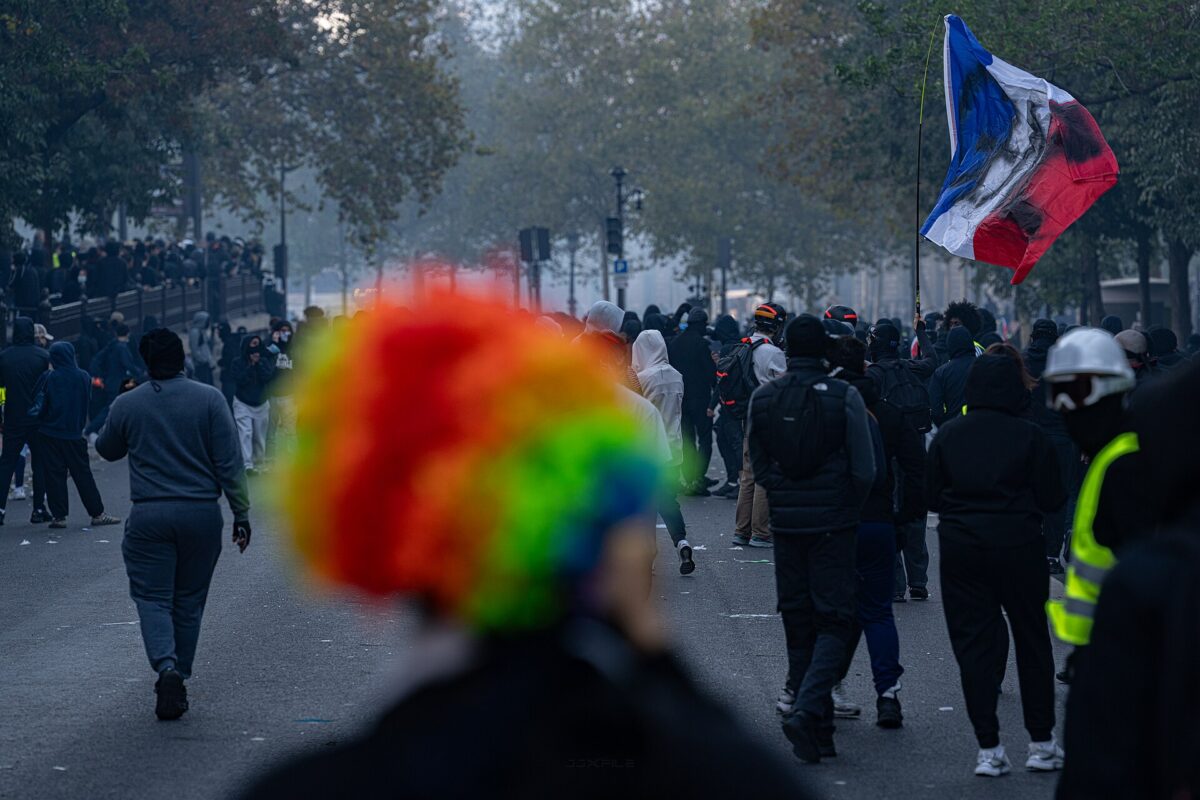
Mass demonstrations, which began about a month ago, have caused serious security challenges in French cities. During the recent protests in Limoges, the historic town hall building was burned down, and the total number of people detained by law enforcement across the country has exceeded 1,800.
The primary factors that triggered the outrage were inadequate working conditions in educational institutions and a shortage of teaching staff. The situation escalated after teachers at the Saint-Exupéry Lyceum went on strike on September 17, with students and trade union organizations, including CGT, FO, and Solidaires, joining them later.
Escalation of street confrontation
Government plans to cut budget spending on social sectors became the trigger that took the protests to a national level. Despite sporadic attempts by the authorities to appease the protesters with promises of school repair funding and the recruitment of additional personnel, these steps proved insufficient.
The French experience of street resistance, which has deep historical roots, is now accompanied by clashes involving tear gas and non-lethal weapons. The protests, which traditionally intensify on weekends, have already spread to Belgium, Italy, Spain, and Austria, where youth are taking to the streets against similar socio-economic issues.
Political risks for Europe
The internal political situation in France is increasingly radicalizing under the influence of far-left forces, specifically Jean-Luc Mélenchon’s La France Insoumise party, which is attempting to direct street protests against Emmanuel Macron’s policies. On the other hand, the chaos plays into the hands of the far-right, particularly Marine Le Pen, who is using anti-migrant rhetoric against the backdrop of the unrest.
Executive Director of the Penta Center for Applied Political Studies Oleksandr Leonov noted that the crisis threatens to marginalize moderate politicians ahead of the upcoming presidential elections. “Obviously, this strengthens the positions of the far-right in France, as the government cannot cope with what is happening right now,” said Oleksandr Leonov.
Threats to external support
For Ukraine, current turbulence in the EU creates real threats due to a shift in the focus of government programs. European leaders may be forced to redirect efforts toward overcoming internal conflicts, which minimizes resources for foreign policy.
“The situation in France will primarily affect both support for Ukraine and the health of the European Union, because France is one of the key EU countries,” emphasized Oleksandr Leonov. There is a risk that internal crises will stimulate discussions about cutting European aid programs or even calls for reconciliation with the Russian Federation, which Russian propaganda is attempting to use to push a narrative about a weak Europe.
Illustrative photo: Jorge Jaramillo / CC BY-SA 4.0
Read also: NATO model unchanged since the Cold War: Andrii Kovalenko outlines threats to Western unity