Tragic reports on the status of Ukrainian citizens held by Putin’s Russia in places of non-freedom, and the catastrophic worsening of living conditions for the population in the temporarily occupied territories of Ukraine, urge us to look at these events not merely as isolated cases of human rights violations, humanitarian problems, or consequences of economic decline. Their juxtaposition reveals a broader question: how does Russian occupation policy change the living conditions of people and entire communities under the total control of the occupying state, and what does this mean for understanding the nature of its presence on Ukrainian territories?
This is discussed by Hryhoriy Liubovets and Valeriy Korol, employees of the NGO “Center for Communication and Content Security,” exclusively for the Prompolitinform portal.
One such piece of evidence is the situation of Crimean Tatar citizen journalist Asan Akhtemov, whom the Putin regime holds in strict regime colony No. 5 in the city of Koryazhma, Arkhangelsk Oblast. According to human rights activists, his health continues to deteriorate: he suffers from constant pain in his joints, knees, and back, has endured a prolonged high fever, and experiences dizziness, weakness, and low blood pressure. Medical assistance is effectively inaccessible, necessary treatment is not provided, and dental problems remain without professional intervention.
Under these circumstances, it is impossible to properly establish the causes of his health deterioration or assess future risks to his life. This is not just about difficult conditions of serving a sentence—a person deprived of liberty by a Russian court decision is, in fact, also deprived of proper access to medical care.
Another example is the story of Feodosiia resident Oleksandr Osadchyi. According to human rights defenders, he was abducted by officers of the FSB of the Russian Federation in August 2023, after which he was held in isolation for nearly two years without his family knowing his whereabouts or his proper legal status. Subsequently, a case was opened against him on charges of state treason and aiding terrorists, and the court sentenced him to 19 years in prison.
On November 5, 2026, the appellate court upheld the verdict. In this story, it is important to see not only the fact of long-term imprisonment but also the preceding stage—the disappearance of a person as a result of the actions of security forces, the prolonged uncertainty about their fate, and the family’s inability to use ordinary legal mechanisms of protection.
Both stories concern citizens of Ukraine who are being persecuted by a state exercising occupation control over part of Ukrainian territory. This is why the way they are represented in the public space is of fundamental importance. In reports, Asan Akhtemov and Oleksandr Osadchyi are often called “political prisoners.” This is an established human rights definition that points to the political nature of the persecution. However, if used without additional explanation, another equally important circumstance may disappear from view: that these are illegally imprisoned citizens of Ukraine from the temporarily occupied territory of Ukraine, held in the penitentiary system of the Russian Federation.
Such a difference in wording affects the context of how the event is perceived. When a report is limited to the term “political prisoner,” the audience, especially international, may focus on the fact of political persecution without seeing who is actually persecuting the person, on which territory this began, and under what legal status the state exercising coercion acts. A risk arises of unintentionally moving the event into the context of the internal politics of the Russian Federation—as if it were a matter of citizens violating the political order of that state. Instead, it is necessary to maintain the full picture: these are citizens of Ukraine who found themselves under the power of the occupying state as a result of the temporary occupation of Ukrainian territory.
This does not mean that the human rights term “political prisoner” should be abandoned. It should be used in such a way that it does not displace the person’s citizenship and the context of Putin’s terrorist-barbaric occupation.
For instance, the definition “illegally imprisoned citizen of Ukraine, Crimean Tatar citizen journalist, political prisoner of the Russian occupation authorities” allows for not losing any of these dimensions. In cases where abduction, prolonged isolation, or torture have been established, these circumstances need to be named separately, without reducing them to the general label of political persecution.
It is also important to compare the situation of illegally imprisoned citizens with what is happening to the living conditions of the population in other temporarily occupied territories. According to reports from Donetsk Oblast, on the eve of the winter period, at least 40% of heating plants were shut down. For residents of these settlements, this means not an abstract malfunction of communal infrastructure, but a direct uncertainty regarding the possibility of heating homes in cold conditions.
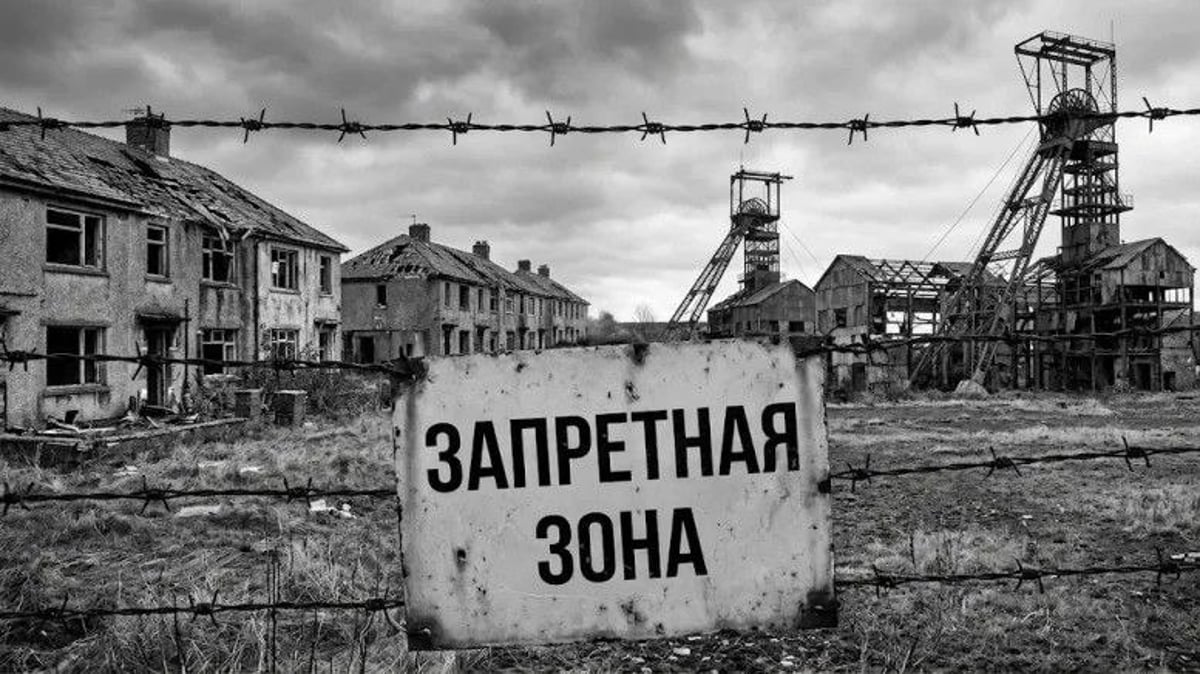
In Luhansk Oblast, the consequences of long-term occupation manifest in the decline of the coal industry, mine closures, reduced extraction, deterioration of enterprises, accumulation of wage arrears, and the destruction of interconnected economic sectors. Added to this are the outflow of the working-age population, the lack of prospects for stable employment and income, and environmental threats related to the flooding of mines and the cessation of work by treatment and drainage systems.
Of course, these phenomena have different natures and require separate research into causes and responsibility. Health deterioration in a colony, abduction and isolation, the shutdown of heating plants, industrial decay, and the environmental consequences of mine closures cannot be mechanically equated. However, the simultaneous recording of these facts in various points of the temporarily occupied territories of Ukraine provides grounds to ask: does the state exercising actual control over these territories ensure the protection of the civilian population and conditions for their normal existence? And how much does its real behavior correspond to the duties that international humanitarian law imposes on an occupying power?
These duties are not limited to formally maintaining administrative control. The occupation authority must respect protected persons, ensure public order and safety, facilitate the proper functioning of vital systems, and take measures to protect the civilian population. Therefore, the issue is not only whether certain administrative structures or public services are preserved in the occupied territory. It is important whether their activity creates appropriate conditions for human life, or, on the contrary, leads to the deepening of danger, deprivation of rights, loss of livelihoods, and the destruction of social ties.
In this context, the cited reports allow us to see a broader contradiction between the legal status of occupation and the practices reproduced by Putin’s Russia. Instead of ensuring the protection of the population, we observe the persecution of citizens of Ukraine, forced displacement of illegally imprisoned persons to remote regions of the Russian Federation, restricted access to medical care, worsening living conditions, the collapse of the economic base of entire regions, and growing environmental risks. All of this requires reflection not only as a set of separate violations but also in connection with the nature of the administration of occupied territories and the consequences of such administration for people.
The question of the boundaries of the common term “occupation” in public perception deserves special attention. It accurately defines the legal status of the territory and the corresponding obligations of the state exercising effective control over it, but the concept itself does not reveal the full diversity of practices through which the occupation authority influences people’s lives. If one limits oneself only to stating the fact of occupation, one may fail to see how the persecution of individual citizens is combined with the destruction of the social conditions of existence for entire communities, and how forced subordination is combined with depriving people of the opportunity to independently determine their own future.
This is where the question arises about the systemic nature of terror as a method of influencing the population of the temporarily occupied territories. Terror in this context should be viewed not only through direct physical violence or isolated acts of intimidation. It is also important to research how the atmosphere of uncertainty, the threat of abduction or imprisonment, the inaccessibility of legal protection, the worsening of living conditions, and the loss of socio-economic prospects affect the behavior of people, their ability to maintain Ukrainian civil and national subjectivity, support interaction, and plan for the future.
Such an approach does not substitute for the legal qualification of specific crimes but helps to see the broader context in which they take place.
The question of possible genocidal practices also requires separate research. The cited reports alone do not provide sufficient grounds for the final legal qualification of all described phenomena as genocide. At the same time, they should not be ignored when analyzing policy aimed at persecuting Ukrainian citizens, destroying the conditions of their social existence, and suppressing Ukrainian subjectivity in the temporarily occupied territories. Here, it is important not to preempt the proving process with a legal verdict, but also not to narrow research only to those violations that have already received a separate legal assessment.
Thus, the cited cases return us to the question of how the Ukrainian and international public space describes the reality of occupation. If illegally imprisoned citizens of Ukraine appear only as “political prisoners,” economic decay only as economic problems, and the lack of heating only as communal incompetence, individual reports may lose their connection with a broader process. It is communication-content analysis that allows this connection to be restored: to return to the individual their civic belonging, to events their territorial and legal context, and to social consequences their proper place in understanding occupation policy.
Therefore, it is fundamentally important not only to report on the next case of persecution, worsening of conditions, or destruction of vital infrastructure but also to explain what these events mean for the people who remain in the temporarily occupied territories of Ukraine. It is about preserving their visibility as citizens of Ukraine, about recognizing their right to protection, freedom, dignity, and normal living conditions. This is also a question of social responsibility for the accuracy of public definition, as communication should not inadvertently reproduce a picture of reality in which occupied Ukrainian territory is perceived as an ordinary part of the Russian Federation, and the persecution of its residents as an internal affair of the Russian state.
In a broader dimension, these circumstances compel us to view temporarily occupied territories not only as a space of military control but also as an environment where the struggle for human subjectivity, civic identity, social memory, and the possibility of free coexistence takes place. This is precisely why the analysis of Russian occupation policy by the Putin regime requires the integration of legal, humanitarian, economic, anthropological-cognitive, and communication-content dimensions. Such a view allows us to move beyond recording separate tragic reports and to consistently reflect on how, through various practices of coercion and destruction, the conditions of life and the reproduction of Ukrainian subjectivity are changed in the temporarily occupied territories.
Conclusions
* Juxtaposing these circumstances compels us to go beyond considering individual human rights violations, humanitarian problems, or the economic consequences of occupation. The stories of Asan Akhtemov and Oleksandr Osadchyi concern specific Ukrainian citizens who have been deprived of liberty, subjected to persecution, and effectively stripped of proper legal protection. The situation with heating in the Donetsk region and the destruction of the industrial base in the Luhansk region reflects another scale of the problem—the deterioration of the physical, economic, and social existence of the population.
These phenomena are not identical in their nature and cannot automatically receive the same legal qualification. However, their comparison allows us to see that the consequences of Russian occupation policy affect the individual, the community, the region, and the Ukrainian community as a whole simultaneously.
* It is in such an interconnection that the glocal dimension of collective Putinism’s aggression emerges. We are talking about a combination of practices that vary in scale and mechanism, which influence the freedom and safety of specific people, destroy the living conditions of communities, weaken the economic and social basis of regions, and create obstacles to the preservation of Ukrainian civic, cultural, and national subjectivity. While the simultaneity of these manifestations does not in itself prove centralized coordination, it provides grounds for investigating their functional compatibility, shared consequences, and place in the broader trajectory of Russian aggression against Ukraine.
* The genocidal dimension of this aggression requires special attention. It cannot be defined solely by the scale of destruction, the number of persecuted people, or the severity of humanitarian consequences. The legal qualification of genocide requires the establishment of specific acts against a protected group and a special intent to destroy it in whole or in part.
At the same time, the research-oriented approach to the genocidal focus of aggression should not be limited to already established cases of physical destruction. It requires attention to how the persecution of Ukrainian citizens, the creation of dangerous living conditions, the destruction of socio-economic foundations of existence, and the suppression of Ukrainian identity may interact in a process aimed at undermining the existence of Ukrainians as a national community. This is why the cited facts should be considered in the broader context of researching the genocidal practices of collective Putinism, without replacing the necessary legal proving process.
* This is the analytical significance of the concept of glocal genocidal aggression (GGA). It allows us to view aggression not just as a set of military operations, repressions, or individual crimes, but as a process that simultaneously encompasses the physical existence of people, the conditions of social life, identity, subjectivity, and the possibility of national reproduction. Glocalism reflects the interconnectedness of local practices and their national and international consequences; the genocidal dimension prompts the investigation of the focus of these practices regarding Ukrainians as a protected national group.
Such an approach does not mean that every individual case already proves the existence of genocide. It means that without analyzing the totality of practices, their consequences, and focus, it is impossible to adequately assess the scale of the threat.
* Applying the term “political prisoners” as a universal definition for the situation of Ukrainian citizens illegally imprisoned by the occupation authorities does not reflect the existential nature of the confrontation with collective Putinism and may disorient international partners. It moves the situation from the plane of occupation and aggression into the plane of internal political repressions, weakening the understanding that these are not just opponents of a certain regime being persecuted, but citizens of Ukraine who remain bearers of Ukrainian identity, civic position, and subjectivity in the temporarily occupied territory.
The category of “political prisoner” was formed primarily within the coordinates of internal political relations and human rights understanding of repression. It cannot be a sufficient umbrella category for describing the status of Ukrainians who are being persecuted within the framework of aggression and occupation.
* In international communication, the definition of the status of such people must proceed primarily from the fact of their Ukrainian citizenship, the temporary occupation of the territory, and the persecution by the occupying state. The human rights category of “political prisoner” may be used to characterize individual circumstances of a case but should not substitute for this determining context.
It is important to name and document the actions themselves—abduction, violent isolation, illegal persecution, torture, denial of medical assistance, if the corresponding facts are confirmed. International partners should see not “political prisoners in the Russian Federation,” but Ukrainian citizens whom the occupation authority is persecuting within the framework of aggression against Ukraine. Otherwise, even human rights language, intended to protect a person, may unintentionally reproduce the worldview imposed by the occupier.
* The communication-content dimension of this problem lies in the fact that fragmented reports may not reproduce the completeness of reality. If the illegal imprisonment of a Ukrainian citizen is described only through the “political prisoner” category, a part of the occupation context disappears. If the destruction of vital infrastructure is presented only as communal incompetence, its influence on the conditions of existence for the civilian population may be overlooked.
If the decline of industry is viewed only as an economic problem, its social, demographic, and environmental consequences are not revealed. In this way, various manifestations of aggression remain fragmented, and their interconnection remains insufficiently visible for public reflection.
* The task of Communication and Content Security (CCS) is not to mechanically replace one term with another or to predetermine the assessment of every event. It is about preserving the completeness of the context: the Ukrainian citizenship of persecuted people, the status of temporarily occupied territories, the duties of the occupying state, the nature of its actions, and the consequences of these actions for the population. CCS must ensure an understanding of events in which individual facts do not lose their connection with the broader process of aggression, and society and international partners gain the opportunity to see not fragments of tragedies, but the holistic picture of the glocal genocidal aggression of collective Putinism, which requires proper documentation, legal assessment, and joint opposition.
Authors: Hryhoriy Liubovets, Valeriy Korol, NGO “Center for CCS”
Photos from open sources
Read also: Head of occupied Alchevsk receives charges for seizing Ukrainian citizens’ housing