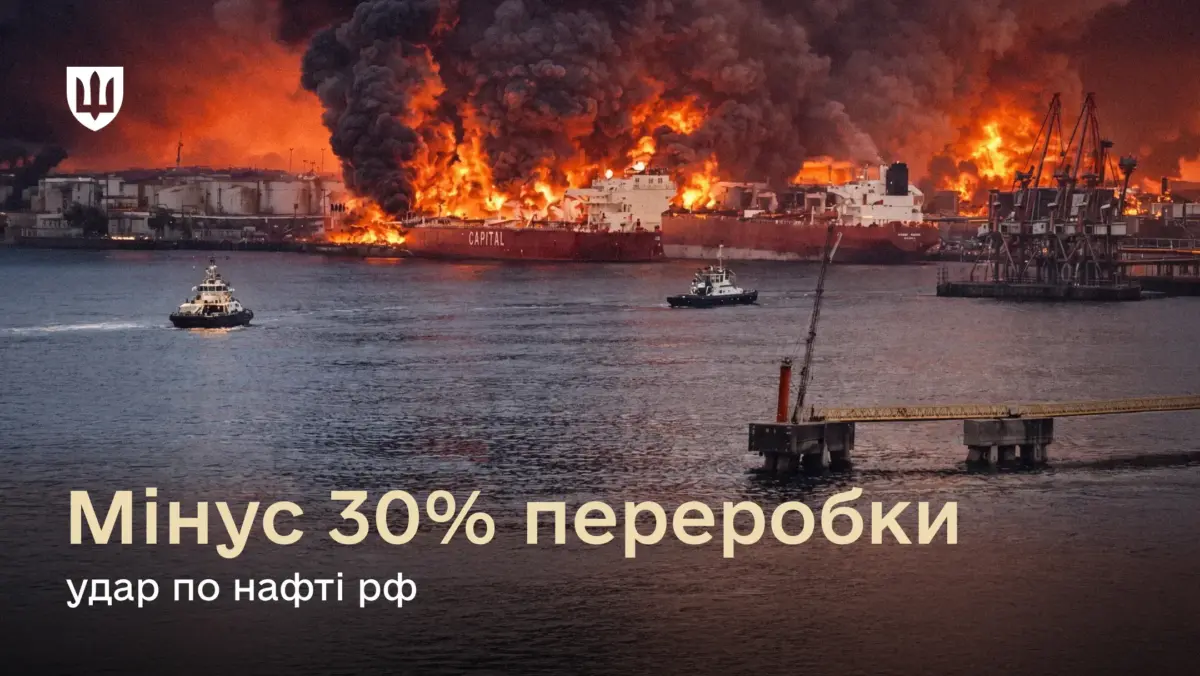
Five fuel tanks with a capacity of 150,000 cubic metres damaged in Ust-Luga port
Ukraine's campaign of long-range strikes against Russian oil infrastructure has led to a significant reduction in domestic crude refining. The Defence Forces continue hitting refineries, storage facilities, pumping stations, and export terminals, forcing Russia to import fuel and limit domestic sales. This is reported by the portal PromPolitInform, citing information from the Ministry of Defence of Ukraine.
Extensive damage to key process units at Russian facilities is creating long-term fuel shortages. While primary processing units can be repaired within weeks, restoring complex secondary equipment such as hydrocracking or reforming units takes six to eight months. This causes a prolonged decline in refined product output.
Fuel Shortages and Foreign Imports
As a result of lost refining capacity, fuel sales restrictions have been reinstated at Rosneft petrol stations across several Russian regions. Limits were introduced in Karelia, Buryatia, Krasnoyarsk and Zabaykalsky Krais, as well as several oblasts. Simultaneously, Russia began importing refined petrol by sea from Turkey, Morocco, and Egypt.
Key production sites remain under attack. Following a drone strike in the industrial zone of Volgograd, a fire broke out near the LUKOIL-Volgogradneftepererabotka refinery, which accounts for approximately 5% of total Russian refining capacity.
Strikes on Export Terminals in Ust-Luga
Concurrently, the Defence Forces of Ukraine are targeting export infrastructure funding the Russian war effort. A strike on the port of Ust-Luga in Leningrad Oblast damaged five fuel storage tanks totalling 150,000 cubic metres, a hydrocracking unit, a pumping station, and a loading berth.
Disruptions in Ust-Luga are critical for Russian trade, as the port previously handled nearly 20% of the country’s seaborne crude and refined product exports. Damage to railway access lines and pumping equipment blocks the loading of oil onto tankers.
Systemic Pressure on Russia’s Fuel Sector
Continuous strikes prevent the Russian energy grid from absorbing losses through backup capacity. Rerouting supplies, repairing damaged units, purchasing foreign fuel, and altering export logistics require substantial financial resources and time.
The targeted campaign against Russia’s oil sector produces a compounding effect, complicating military fuel logistics while draining key state revenues.
Photo: Ministry of Defence of Ukraine
Read also: Russian troops use African mercenaries as bait for Ukrainian drones