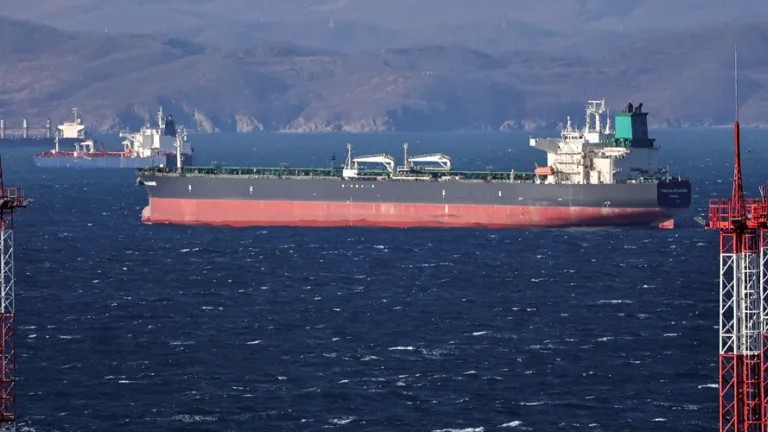
Traffic through the Strait of Hormuz has reached its highest level since the war with Iran began, as more countries conclude safe passage agreements with Tehran.
It is reported by Bloomberg, informs the portal PromPolitInform.
Over the weekend, 21 ships passed through the waterway, as more and more governments, lacking petroleum products, are negotiating the removal of ships, cargo and crews from the Persian Gulf. This is the highest figure for two days since the beginning of March, when traffic was reduced. Of these ships, 13 went to the Arabian Sea.
Iranian vessels continue to dominate traffic, but on Sunday a tanker carrying Iraqi oil sailed through the strait after Iran said it would grant an exemption to “brotherly Iraq.” India, which negotiated the withdrawal of some vessels and even bought Iranian liquefied petroleum gas for the first time in years, has already accepted eight of its tankers with gas.
Although the number of ships is still a fraction of what it was before the war, when about 135 ships regularly passed daily, more and more countries provide transit traffic. Last week, two container ships linked to China made the crossing on their second attempt. Two vessels connected to Japan also passed through.
“Iran is responding to the requests of its partners, while strengthening its control over the Strait of Hormuz. The passage is still up to Iran and the situation could change anytime if the conflict escalates,” said Muyu Xu, senior crude oil analyst at Kpler Ltd.
Iran is also pushing a law governing its control of the strait and passage fees, which shipowners say formalizes a peculiar payment system that has been in place for weeks.
Although Tehran is negotiating with friendly countries, the terms of these agreements remain opaque. This applies even to cases where agreements are publicly recognized, such as with Iraq. This is especially true in cases where it is not clear which counterparties provided safe passage, such as in the case of ships connected with France and Japan.
Last week, Pakistan was offered 20 slots for ships to leave the Persian Gulf – more than it currently has across the Strait of Hormuz. The country has been considering options including accepting other tankers and potentially changing their flag to provide fertilizer, oil and other supplies.
Ships connected with China, Turkey, Greece and Thailand also transited.
To date, most of the ships that have received permission have followed probably the route indicated by Tehran along Iran’s coast. However, more and more ships began to go along the opposite coast. Oman, which has the common waters of the strait, confirmed that it had negotiated to smooth the flow.
How many ships are stuck in the Persian Gulf
The Director-General of the International Maritime Organization (IMO) Arsenio Dominguez said that approximately 2,000 ships and 20,000 sailors were stuck in the Strait of Hormuz due to the war in the Middle East.
Dominguez said insurance companies refuse to cover losses and costs, noting that the vast majority of companies have either terminated contracts or are claiming exorbitant premiums.
He added that thanks to the humanitarian assistance provided by the countries surrounding the strait, there is currently no humanitarian crisis on board the vessels, and that the IMO is pressing for the creation of a humanitarian corridor to allow the vessels to leave the area. Dominguez stressed that US President Donald Trump’s plan to escort ships through the strait is not viable, since it does not give any guarantee that commercial ships will not be targeted for attacks and that innocent sailors will not die.
The Iranian government agreed to allow 20 vessels flying the flag of Pakistan to pass through the Strait of Hormuz.
India for the first time in 7 years paid for Iranian oil.
Photo – from open sources