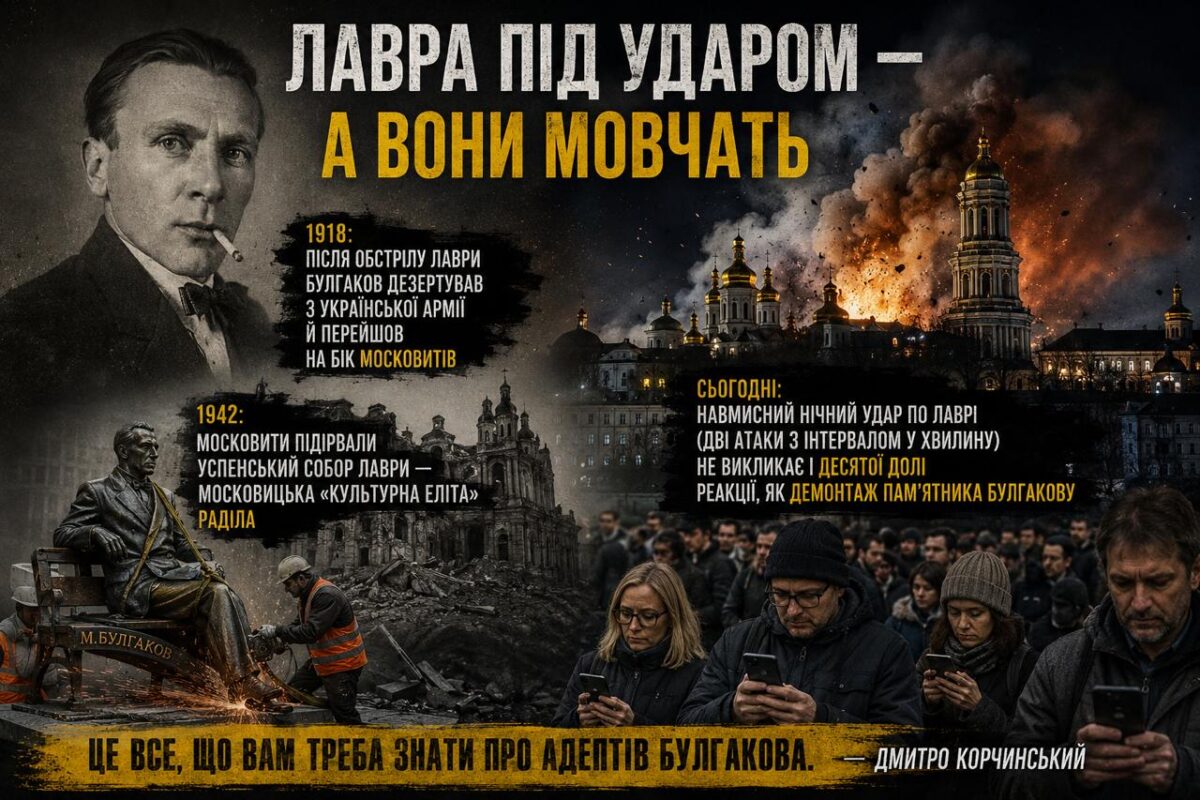
After the Russian strike on the Kyivan Cave Lavra, the reaction of many defenders of Mikhail Bulgakov’s legacy turned out to be surprisingly restrained. Significantly more restrained than when discussions were taking place in Kyiv about dismantling the monument to the writer
The Russian strike on Kyiv on the night of June 15, 2026, again affected the territory of the Kyivan Cave Lavra. A shrine that has survived Mongol invasions, Bolshevik terror, world wars, and dozens of rulers whose names have long faded from the memory of nations.
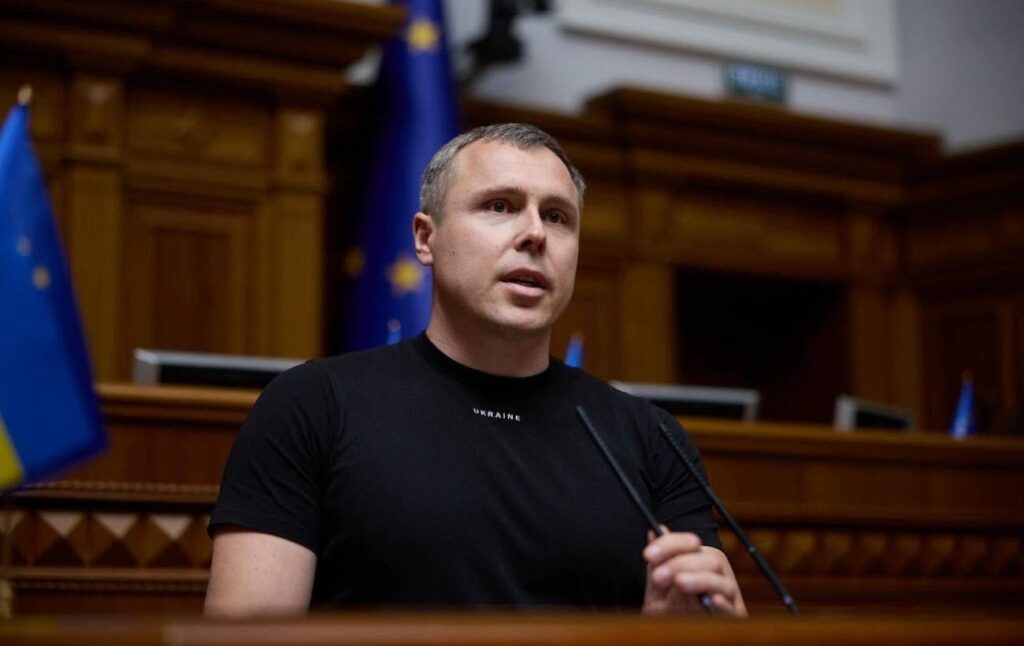
It is against this background that Dmytro Korchynskyi expressed an interesting thought.
He drew attention to the fact that after the Russian strike on the Lavra, the reaction of many defenders of Mikhail Bulgakov’s heritage turned out to be surprisingly restrained. Significantly more restrained than when debates were raging in Kyiv over the dismantling of the writer’s monument.
Korchynskyi recalled that the history of the Kyivan Cave Lavra has repeatedly intersected with the history of Russian imperial policy. According to him, after the artillery shelling of the Lavra in 1918, Bulgakov effectively found himself on the side of forces fighting against Ukrainian statehood.
Korchynskyi also noted that the destruction of the Dormition Cathedral during World War II was one of the greatest tragedies for Ukrainian cultural heritage, and the question of responsibility for this crime remains a subject of historical debate to this day.
But today, something else matters.
Russia is once again demonstrating the true value of its talk about “protecting Orthodoxy,” “shared history,” and “spiritual bonds.” Because when a missile or drone heads toward a Ukrainian shrine, all those slogans turn to dust faster than windows shattered by the blast wave.
Particularly telling is the reaction of part of the so-called “Russian cultural intelligentsia.” When it comes to a monument to a writer, an uproar of international scale erupts. But when one of the main Orthodox shrines of Ukraine comes under attack, an astonishing silence falls.
And this silence speaks far louder than thousands of statements.
Because love for culture is not tested when defending a bronze monument. It is tested when defending living history, churches, museums, and people.
The Lavra will endure. As it has endured many times before.
And yet another Russian imperial idea, which considers itself eternal, will sooner or later take its place alongside all previous empires — in history textbooks, in the chapter on states that lost the war against time.
Author: Ivan Ariefiev
Collage: Andrii Atlantov