The sanctions imposed by the international community on Putin’s Russia due to its kinetic aggression against Ukraine are forcing the Kremlin to seek ways to circumvent the restrictions
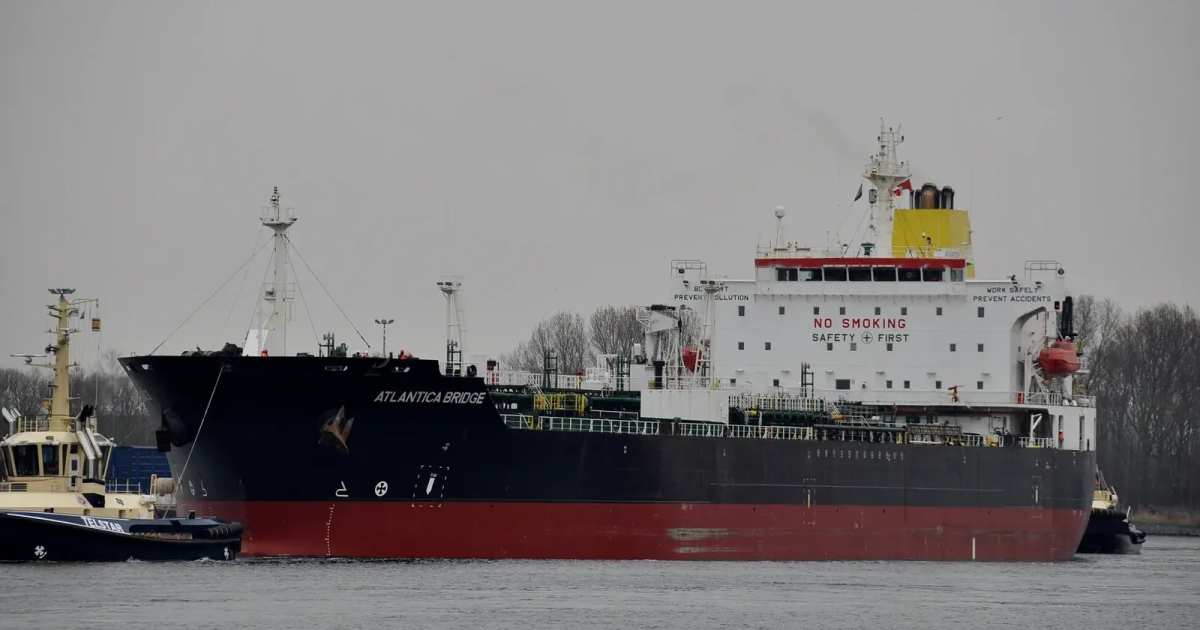
One of the ways to reduce sanctions pressure is the use of the so-called shadow fleet, i.e., tankers from third countries, primarily with African-Asian registration, to deliver oil to those consumers who still buy Russian energy resources under these conditions.
This is written by Valeriy Skrypnyuk and Viktor Velbyk, employees of the NGO “Center for Communication and Content Security,” in their author’s article, the text of which was provided to the editorial board of the Prompolitinform portal.
Since this “fleet” is not only morally but primarily technologically outdated and, moreover, worn out, environmental incidents periodically occur that have every chance of turning into disasters in the future.
In April 2026, an oil spill occurred near the island of Gotland in Sweden’s economic zone. The Swedish prosecutor’s office interrogated the crew, and two individuals were notified of suspicion of committing environmental crimes. However, these individuals were not detained, despite the fact that the vessel Flora 1 is on the EU sanctions list and the status of its flag remained unclear.
Such leniency towards environmental crimes could have serious consequences, as Sweden in this case gave an “indulgence” to the Putin regime in violation of environmental norms. At the same time, Sweden’s Minister of Civil Defense Carl-Oskar Bohlin, commenting on the incident, clearly stated that “the Russian shadow fleet poses a significant threat to security and the environment.”
From the perspective of the hybrid warfare waged by Putin’s Russia, this fact cannot be recognized as an incident, let alone a spill. An act of glocal-environmental aggression has taken place. The sanctioned tanker Flora 1, associated with the so-called “shadow fleet” of the Russian Federation, caused an oil spill in Sweden’s area of responsibility, in the Baltic Sea region, which is critical for Europe. This means that the aggression was carried out demonstratively, despite its sanctioned status.
The key point is not the spill itself. The key point is what happened next: the vessel was detained, the crew was interrogated, and… released. This creates a fundamentally new dynamic in the confrontation between the Russian Federation and the EU/NATO – there is aggression, there is documentation of it, but there is no adequate legal response or accountability. Thus, the aggressor (the Russian Federation) and its partners received a signal to continue ignoring international law and committing similar crimes. That is, this is no longer just an event – it is an operational model of behavior of a glocal aggressor, and the essence of the action is the transformation of ecology (the natural ecosystem) into a global weapon. In this precedent, oil ceases to be a raw material resource – it becomes a tool for damaging the marine environment, a means of pressure on coastal states, a way to create long-term consequences without military confrontation.
This is precisely environmental weaponry of distributed application. And it has already been tested as a component of global hybrid aggression. Therefore, this spill does not have local significance, as a glocal strike was delivered not at a point, but at a system. It operates simultaneously on several dimensions:
• Environmental (pollution);
• Economic (risks to maritime logistics);
• Security (pressure on the Baltic states);
• Psychological (demonstration of the powerlessness of international law).
That is, the action is local, but the effect is international, with every chance of becoming systemic. This is the essence of glocal aggression.
This precedent is not isolated, as it is embedded in a network of interaction along the Russian Federation-Iran-other regimes line that use sanctions evasion.
In April of this year, a similar incident occurred near Anapa (Krasnodar Territory, Russia), where a large-scale oil products spill was recorded, the cause of which may have been the Russian tanker Sofia.
According to estimates by the shipbroker Clarksons, the shadow fleet numbers about 1,800 vessels, of which approximately 1,500 are oil or product tankers over 20 years old, meaning they are no longer suitable for further operation.
The “shadow fleet” in this case should be viewed not as transport, but as a maritime infrastructure of genocidal aggression operating outside international law. The most dangerous thing is not the fact of aggression itself, but that:
• There is no mechanism for immediately halting such actions;
• There is no right to forcibly neutralize “shadow fleet” vessels;
• There is no tool for preventive blocking.
Conclusion: The precedent of the tanker Flora 1 near the island of Gotland records not an incident, but a fact of committed glocal-environmental aggression. The sanctioned infrastructure associated with the Russian Federation and, possibly, with other countries – Moscow’s partners – has demonstrated the ability to:
• Cause environmental damage without declaring war;
• Operate despite sanctions;
• Remain outside the mechanism of immediate compulsory response.
This means that international law does not fully capture such actions, the sanctions model does not block the aggressor, and security institutions, including NATO, do not have an instrument of immediate response. As a result, a new reality has been recorded where environmental damage has become an operational form of glocal aggression.
Authors: Valeriy Skrypnyuk, Viktor Velbyk, NGO “Center for CC Security”
Photo from open sources