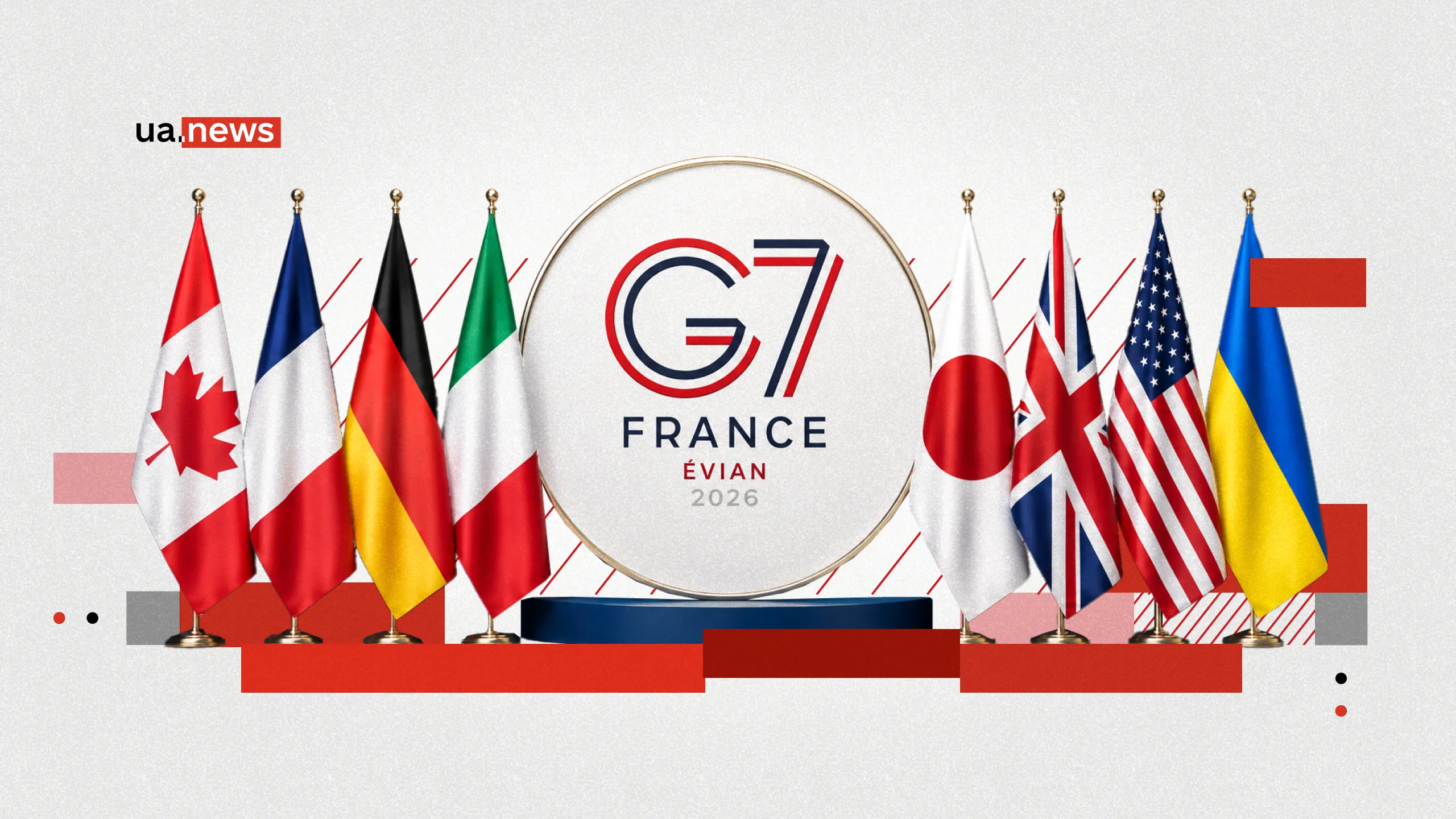
The 2026 G7 Summit, held at the French resort of Évian-les-Bains from June 15 to 17, brought Ukraine new guarantees of support and the Kremlin new reasons for irritation
The leaders of the world’s leading democracies and economies reaffirmed their continued support for Ukraine, the extension of sanctions pressure on Russia, aid for Ukrainian energy, and the strengthening of Ukrainian air defense. Ivan Arefyev writes about this for the Prompolitinform portal.
For the Kremlin, however, the news is far worse. Because back in 2022, Moscow was confident that the West would tire within a few months. That the European Union would collapse under the pressure of the energy crisis. That NATO countries would fall out with each other. That sanctions wouldn’t work. That Ukraine would be left alone to face the Russian army.
But Ukraine stands.
The European Union hasn’t collapsed.
NATO has grown larger and stronger.
And the G7 continues to support Ukraine.
This is precisely what irritates the Kremlin most today.
Ukrainian President Volodymyr Zelenskyy stated that due to the weakening of the Kremlin’s position, Russian strikes on Ukraine may intensify. And this doesn’t look like strength. It looks like nerves.
Because when a dictator cannot show victory on the front lines, he starts demonstrating strength where he still can — through terror against peaceful cities.
Do you know what irritates Putin the most? Not sanctions. Not NATO. Not Western aid. What irritates him most is that the fifth year of the full-scale invasion has already begun, and Ukraine continues to stand.
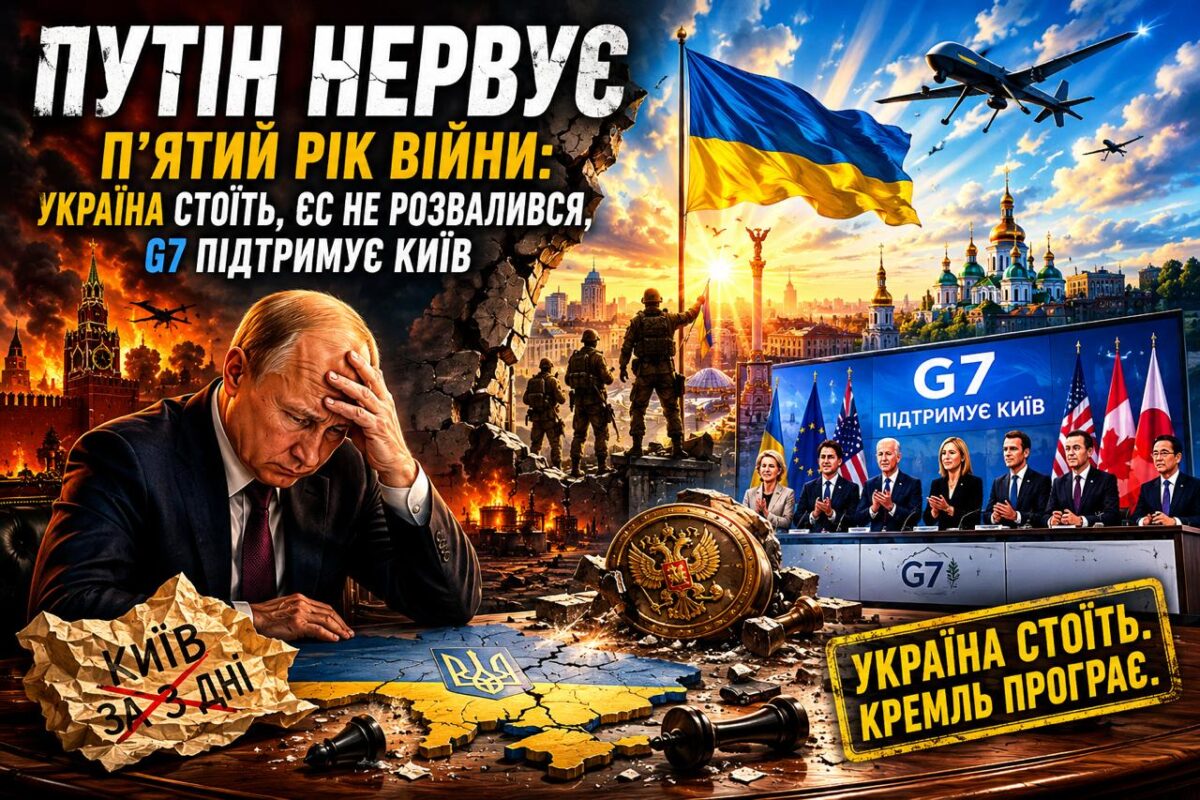
In February 2022, they planned to take Kyiv in three days. Then in three weeks. Then by May. Then by autumn. Then by the New Year. Four years have passed. The fifth is underway. Kyiv stands. The Ukrainian army fights. Ukrainian defense industry works. Ukrainian drones and missiles reach places that the Kremlin recently considered impossible.
And Russian propaganda still explains to its own population why “everything is going according to plan.”
What went wrong?
Putin’s problem is simple. He started this war as a short punitive expedition. He wanted to change the government in Kyiv. He wanted to destroy Ukrainian statehood. He wanted to restore the empire. He wanted Ukraine to cease existing as an independent country.
Instead, he got the largest war in Europe in decades, hundreds of thousands of casualties, billions in costs, and a state that not only survived but learned to strike back. And most importantly — not a single one of the Kremlin’s strategic goals has been achieved. That is precisely why Putin is nervous.
Why is the Kremlin resorting to terror?
Because the war is gradually coming to places where, according to Moscow’s plan, it was never supposed to be. To military airfields. To oil depots. To refineries. To logistics hubs. To the facilities that feed the Russian military machine.
Not long ago, Russians watched the war on television. Today, they are increasingly watching it through the windows of their own homes. And this raises very unpleasant questions for their own authorities. Because when you are told for years about the “second army in the world,” and then airports are closed due to drone attacks, you start to wonder if everything is really as good as they show on TV.
And where is their “best air defense”?
For years, Russian propaganda spoke of the invincible S-400 systems, of “analogovnet” (no equivalent), and of the completely closed skies over Moscow. Then oil refineries started burning. Airports started closing. Warehouses and facilities started exploding. Reports began coming in about strikes on military targets deep inside Russia.
And suddenly it turned out that Russian propaganda shoots down targets much better than some elements of the Russian air defense.
Why might strikes on Ukraine intensify?
Because terror is the last argument of those who have not achieved the desired result. When you can’t defeat an army — you strike cities. When you can’t break a state — you try to intimidate people. When you can’t show victory to your own population — you show another missile strike on civilians.
That is why Zelenskyy’s words should be taken seriously. Russia may increase the number of attacks. It may launch more drones. It may strike more often. But this is not a sign of strength. This is a sign that the fifth year of the great war has not brought the Kremlin the result for which it was started.
When everything goes according to plan — you don’t have to convince your own population of that every day. When everything goes according to plan — you show results. And when, in the fifth year of the great war, you have to explain why Kyiv still hasn’t been taken, why Ukraine hasn’t submitted, why the European Union hasn’t collapsed, why NATO has become larger and stronger, and why the G7 continues to support Kyiv — it means something has gone very seriously off plan.
Putin is nervous
And the more nervous he gets, the more he will try to intimidate Ukrainians. But there is one problem. In total, the Moscow-Ukrainian war has been going on for the twelfth year. The fifth year of the great war is ongoing. During this time, Ukrainians have been tried to be broken by missiles, bombs, blackouts, occupation, terror, and daily threats.
It didn’t work. Everyone sees the result every day. In free Kyiv. In indomitable Kharkiv. In Zaporizhzhia, which lives on despite the shelling. In Kherson, which did not submit. In every Ukrainian flag flying over our land. Because the twelfth year of the Moscow-Ukrainian war and the fifth year of the great war have proven the main thing:
Ukraine has stood firm.
Ukraine is fighting.
Ukraine is striking back.
And this is what irritates the Kremlin most of all. Because Putin’s worst nightmare is not sanctions, not NATO, and not the West. His greatest nightmare is Ukraine, which refused to become Russia. And the longer this war lasts, the clearer one simple thing becomes:
It was not Ukraine that lost the war in three days. It is the Kremlin that, for five years now, has been unable to win that “three-day war” it started itself.
Author: Ivan Arefiev
Collage: Andrii Atlantov
Photos: ua.news