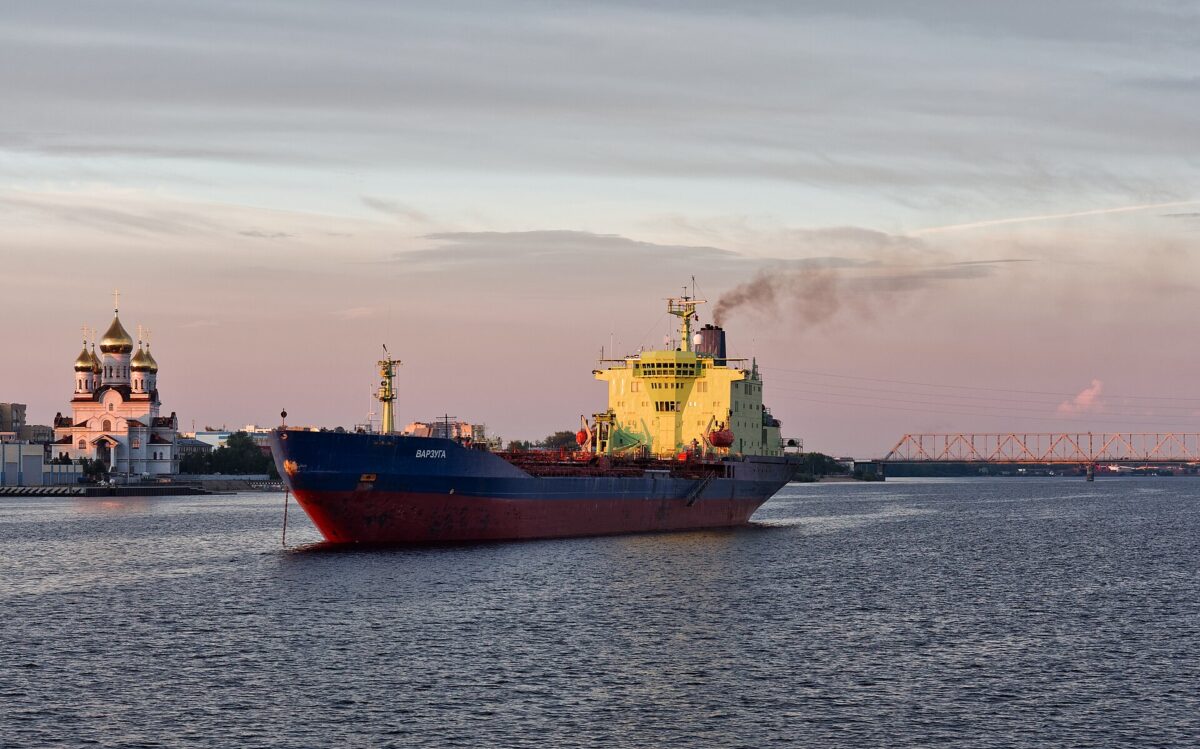
Export supplies of oil from russia have fallen to their lowest levels since late April due to the consequences of Ukrainian attacks. The cumulative decline has continued for the fifth consecutive week, affecting marine terminals, tankers, and oil refineries.
This was reported by Liga.Business citing Bloomberg, according to the portal PromPolitInform.
The situation escalated after not a single vessel was loaded at the key port of Novorossiysk throughout the week. Such a prolonged downward trend is the largest recorded since the full-scale conflict began.
In the four weeks leading up to August 16, shipment volumes shrank to 3.58 million barrels per day. The prior export growth driven by forced refinery shutdowns has now been entirely neutralized by new strikes on logistics infrastructure.
Prices for major oil grades show growth amid supply restrictions
Despite volume reductions, overall maritime figures remain close to year-to-date averages. The cost of Urals crude loaded in the Baltic Sea increased by approximately $3.30 to reach $67.08 per barrel.
In the Black Sea, the price of the same grade rose by $3.20 to $65.85 per barrel. The Pacific ESPO grade became more expensive by $0.8, priced at $70.45 per barrel.
Domestic market restrictions and fuel export ban
russia directs revenues generated from the oil and gas sector to fund military operations against Ukraine. It was previously reported that large compensations are paid to refineries from the state budget, diminishing budget revenues.
Due to domestic shortages, the government of the russian federation extended the ban on gasoline and diesel exports for another six months. Russian facilities provided only about 65% of seasonal demand at the beginning of July.
Illustrative photo: Alexxx1979 / CC BY-SA 4.0
Read also: Eggs rise in price while milk gets cheaper: current supermarket prices on August 18, 2026