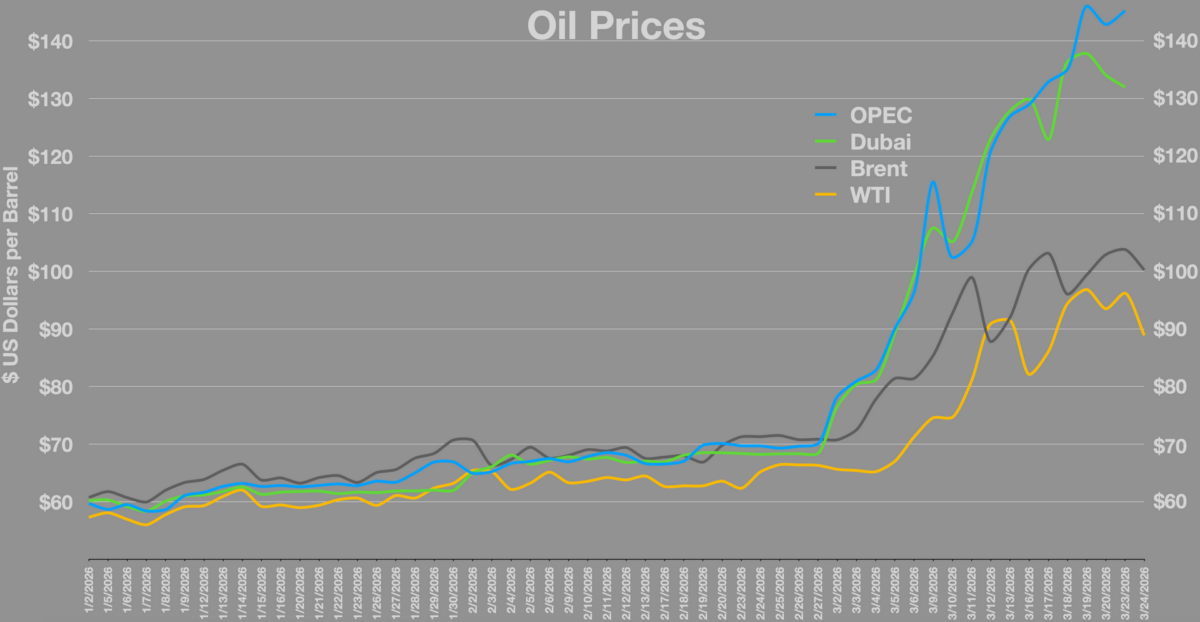
Benchmark crude oil prices continue to climb on international markets. The trend is driven by worsening geopolitical tensions surrounding Iran and heightened concerns over energy supply disruptions. This was reported by Ukrinform citing Reuters, according to the portal PromPolitInform.
Brent crude futures rose by 62 cents, or 0.7%, to $91.49 a barrel. Meanwhile, West Texas Intermediate crude futures gained 75 cents to reach $85.25 a barrel.
Market tensions escalated following statements from Tehran that the country would shift to a fully offensive military posture due to stalled peace talks. In response, the United States ruled out extending the ceasefire agreement with the Iranian side.
Geopolitical risks strain the energy market
Analysts highlight severe uncertainty regarding the security of vital trade routes in the region. “Oil rose at the start of the week as US-Iran relations look increasingly shaky. An agreement to restore shipping through the Strait of Hormuz still seems out of sight, and traffic volumes remain minimal,” said Tim Waterer, chief market analyst at KCM.
Market participants fear that elevated raw material prices could persist for an extended period. Suvro Sarkar, head of energy research at DBS Bank, emphasized that the lack of any diplomatic deal will impact oil price expectations going forward into the fourth quarter and even into 2027.
Illustrative photo: Wikideas1 / CC0
Read also: Fuel prices on August 18, 2026: how much petrol, diesel, and gas cost at filling stations