A 58-year-old defense plant engineer was sentenced to 15 years in prison for high treason
Attempts by Russian special services to destabilize the situation inside Ukraine demonstrably span completely different social strata. The work of enemy recruiters is built both on involving ordinary perpetrators without access to secrets and on utilizing defense sector specialists. A comparison of recent high-profile cases shows the variability of the tools used by the aggressor to create threats to civilian and military facilities.
In the first case, a regular delivery service became the tool of infiltration. As the Security Service of Ukraine reported in its official Telegram channel, counterintelligence detained a local courier in Rivne who was planning to carry out an explosion in the city center near a state institution. According to the investigation, the detainee planted an improvised explosive device in a trash container near the administrative building and intended to detonate it remotely during peak crowds.
Messengers and Coordinates from Caches
The perpetrator’s modus operandi turned out to be primitive yet dangerous due to its everyday inconspicuousness. The man, who worked as a moped courier, was recruited through specialized resources in messengers and gathered intelligence on the perimeters of state institutions under the guise of performing work tasks. Afterwards, he received the coordinates of a cache containing a remote-controlled explosive device, but SBU officers exposed his intentions and detained him at the crime scene while trying to escape.
According to the special service, the detainee was served a notice of suspicion of a completed attempt to commit a terrorist act under Part 2 of Article 15 and Part 2 of Article 258 of the Criminal Code of Ukraine. Currently, the court has chosen a preventive measure for him in the form of detention without the right to bail. The maximum sanction under these articles provides for up to 12 years of imprisonment with confiscation of property, although the investigation is also considering additional qualification under the article on high treason.
Systemic Leak from the Defense Sector
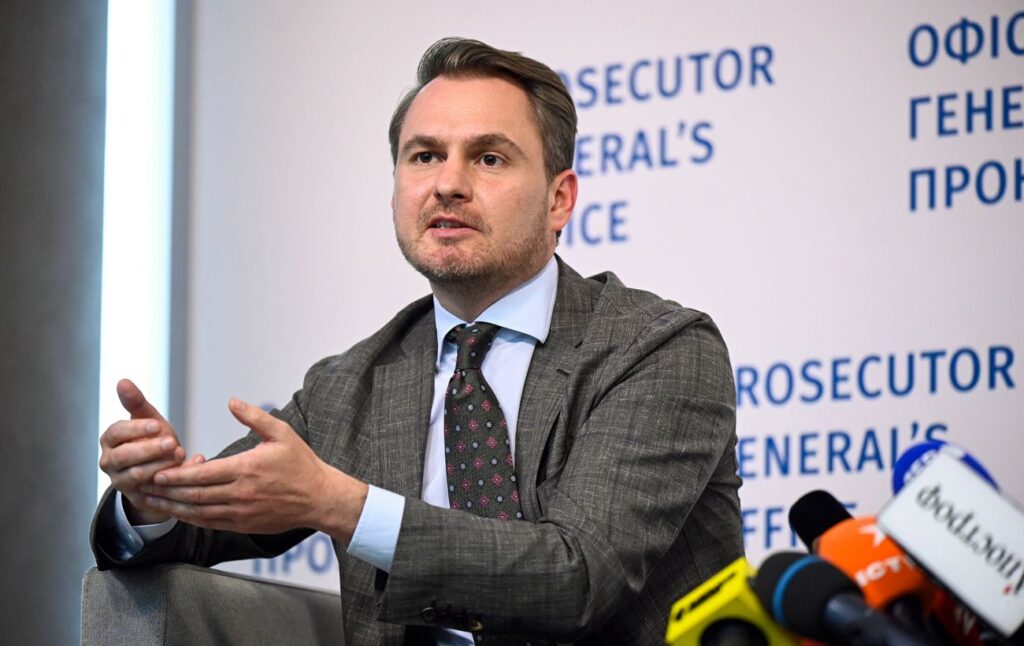
A completely different level of threat and access to secrets is demonstrated by the case from Mykolaiv Oblast, where the person involved turned out to be a highly qualified specialist. The Office of the Prosecutor General informed about the court verdict in this case. For securing the public prosecution by the Mykolaiv Specialized Defense Prosecutor’s Office of the Southern Region, a 58-year-old lead design engineer of a defense enterprise was sentenced to 15 years of imprisonment with confiscation of property under Part 2 of Article 111 of the Criminal Code of Ukraine (high treason under martial law conditions).
As investigators of the USBU in Mykolaiv Oblast established, the convict voluntarily agreed to cooperate with a representative of Russia in July 2024 due to his support for the armed aggression. To maintain secrecy, communication was maintained through a specially configured channel in the Telegram messenger, where sent messages were automatically deleted after reading.
15 Years in Prison for Handing Over Secrets
During August and September 2024, the design engineer transferred data to handlers about the deployment of air defense units, the movement of servicemen, and the location of ammunition depots in Mykolaiv and the region. In addition, as noted by the Office of the Prosecutor General, he informed the enemy about the status of state defense orders at local enterprises and the condition of critical infrastructure facilities.
A comparison of these cases indicates that the enemy is simultaneously looking for low-skilled labor for one-off sabotage and professional insiders to adjust systemic strikes. However, in both situations, the final outcome for the perpetrators is severe prison terms and property confiscation.
Illustrative photo: Tony Webster from Minneapolis, Minnesota / CC BY-SA 2.0
Read also: