We also include here the discussion prompted by reports of calls by US Department of Defense officials on the Baltic states to restrain public rhetoric regarding Russia. These events unfold situationally in the same historical time but reflect different ways of understanding the problem that have not yet formed a sufficiently coherent vision of what exactly Ukraine, Europe and the international order are facing.
This is written about by Hryhorii Liubovets and Valerii Korol, staff of the NGO Centre for Communication and Content Security, specially for the Prompolitinform portal.
The appeal of the First of December initiative group emphasised the existential nature of the Russian-Ukrainian war, Ukraine’s legitimate right to an independent existence and the need to continue resistance. The authors directly define Russia’s aggression as the sole cause of the war, reject accusations against Ukraine of causing it and recall the historical consequences of the loss of Ukrainian statehood — deportations, camps, the Holodomor and attempts to destroy Ukrainian identity.
Such a framing is fundamental because it returns the discussion to the main point: this is not a dispute over territories or the geopolitical interests of current political elites, but the right of Ukrainian society to determine its own present and future independently. At the same time, explaining aggression primarily through Russian imperialism and the Russian-Ukrainian war leaves the following question open: is this conceptual framework sufficient to explain the simultaneity of military violence, anthropological destruction/annihilation, cognitive degradation and other forms of aggressive activity that go far beyond the Ukrainian theatre of hostilities?
This question acquires particular weight if Putinism is viewed not merely as a political regime or the will of one dictator, but as a collectively reproduced system of authoritarian-imperial revanchist logic of forces of geostrategic scale. Such an approach does not deny Russia’s responsibility for armed and genocidal aggression; instead, it makes it possible to explain why the threat is not exhausted by the actions of a single state centre, why its manifestations arise in different societies and environments, and why the cessation of a particular operation or a change in political circumstances does not by itself guarantee the cessation of aggressive dynamics. The collective character of Putinism does not necessarily mean the existence of a single centre managing all processes; we record the capacity of the relevant glocal logic to reproduce itself through various institutions, networks, political practices and local circumstances.
That is precisely why analysis of the threat cannot be limited to establishing the Kremlin’s will or assessing individual military operations — it is necessary to see the broader geospace in which this logic acquires new forms and scales.
A similar contradiction can be traced in international security discourse. On 28 October this year, at a special event of the Kyiv Security Forum in Brussels, organised with the participation of Ukrainian and European politicians, representatives of NATO, the European Commission, diplomats, military personnel and experts, support for Ukraine, the protection of Europe, defence capabilities, technological independence, energy security and the lessons of war were discussed.
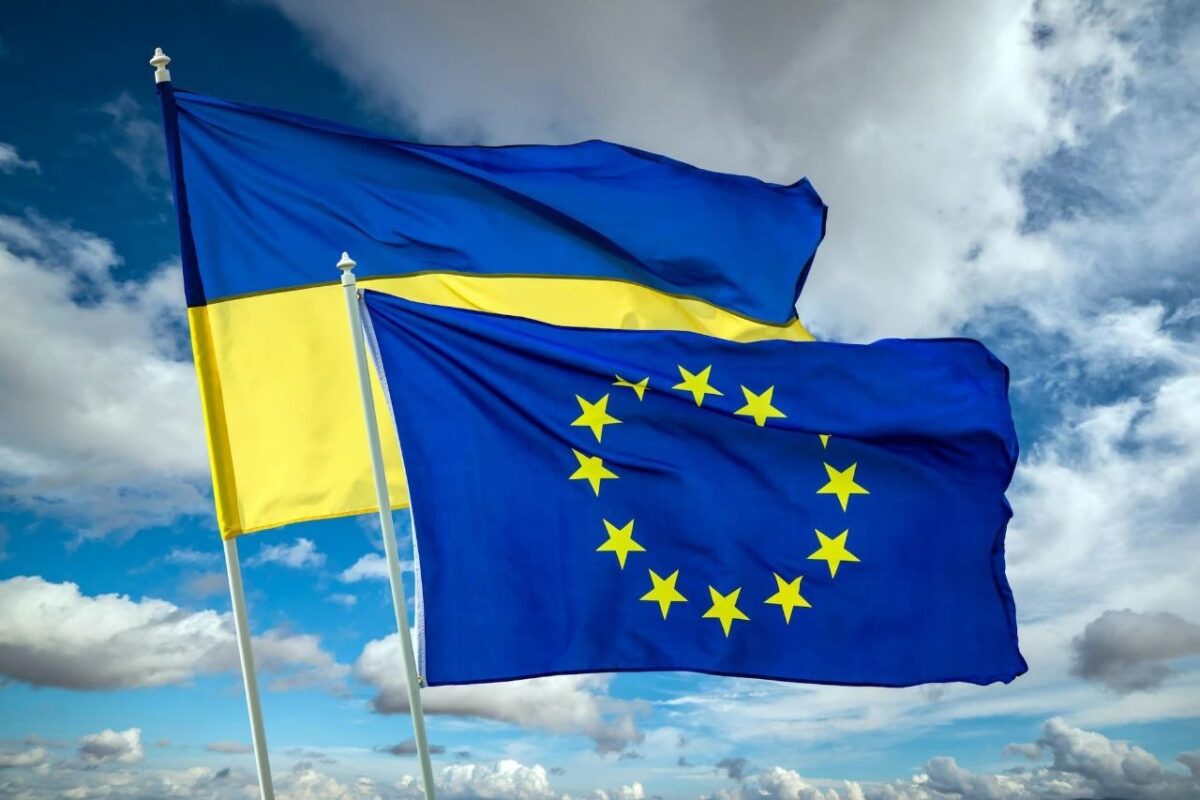
The very title of the event — “Support Ukraine — Protect Europe” — attests to the desire to link the Ukrainian standoff with the security of the European space. At the same time, the content of the discussion revealed how difficult it is for this awareness to turn into a common practical model of the tempo-rhythmic action of contemporary aggression.
NATO Deputy Secretary General Radmila Shekerinska stressed that support for Ukraine remains unwavering, reported on the supply of critically important equipment under the PURL programme and American military sales mechanisms, and called on allies to use available stocks of air defence assets for Ukraine. Her formula that every interceptor in the hands of Ukrainian military personnel saves lives every day gives the discussion a concrete dimension — decisions on arms supplies directly determine the possibilities of protecting people and infrastructure. At the same time, Ukrainian representatives drew attention to the political inability of certain partners to assume calculated risks, the insufficiency of existing supplies and the dependence of critical defence decisions on the positions of individual states.
European Commission Executive Vice-President Henna Virkkunen stressed that Ukraine is fighting not only for its own existence but also for the principles on which the European Union is founded. She linked Europe’s future security to increased defence production, technological innovation, the development of artificial intelligence and reduced dependence on external suppliers. Her statement that supporting Ukraine and strengthening Europe’s defence capability are not competing priorities was also important.
Ukraine’s Deputy Prime Minister for European and Euro-Atlantic Integration Vsevolod Chentsov, for his part, emphasised that Ukraine already perceives NATO not as a potential security umbrella but as a partner, and that Ukraine’s role in Europe’s security must be defined now, without waiting for the formal end of the war or accession to European and Euro-Atlantic structures.
However, alongside these statements, practical contradictions also emerged at the forum. Ukraine’s urgent need for anti-aircraft interceptors, in particular for Patriot systems, did not translate into equally resolute commitments from all states possessing the relevant stocks. The PURL programme continues to operate, but its functioning does not eliminate dependence on political circumstances regarding each subsequent supply.
The discussion of the use of frozen Russian assets also revealed differences between recognition of the aggressor’s direct advance responsibility and the readiness of states to assume the legal and financial risks of such decisions. In the energy dimension, Ukraine is already experiencing the consequences of systematic strikes on critical infrastructure, while European partners are only discussing mechanisms of assistance, financing and technological independence. These examples do not deny the importance of international support but show how often its pace and scale depend on national positions, procedures and political circumstances.
Particular attention should be paid to the sober assessment of former Chairman of the NATO Military Committee Admiral Rob Bauer. He stated that Europe is already effectively in a state of war with Russia in certain domains, in particular in cyberspace and in the sphere of countering disinformation, although war has not been legally declared. Bauer also stressed that NATO and the EU are not learning the lessons of Ukrainian resistance quickly enough, and that political restraint prevents a transition from recognising the importance of Ukrainian experience to corresponding decisions.
These words are of fundamental importance — they attest that the actual space of security standoff with Russia and its allies on the part of NATO and EU countries no longer coincides with the formal boundaries of the declared confrontation, which is also existential.
If European countries are already facing glocal aggressive actions in cyberspace and the sphere of disinformation, their security cannot be viewed merely as a matter of supporting Ukraine or as a delayed response to threats that directly reach the territory of NATO member states. The standoff unfolds in environments on which the functioning of state institutions, public trust, the ability of citizens to distinguish reality from manipulation and the capacity of societies to adopt coherent decisions depend.
Consequently, the actual scale of the global threat goes beyond the purely military dimension of security and requires understanding in the categories of protecting the European and broader international civilisational order. Russia’s kinetic aggression against Ukraine is not a war separate from these processes: it constitutes the most intense and most obvious dimension of a broader, precisely existential, standoff that simultaneously affects the political, technological, cognitive, communication and institutional foundations of the social existence of the international order.
Bauer’s other statements are also important for understanding this contradiction. He drew attention to the fact that distance from war increases the tendency of European societies to underestimate danger, and that the habitual peaceful everyday life in Brussels or other European cities complicates awareness of how dangerous the current period is. At the same time, the admiral acknowledged that NATO, in the event of an attack on a member state, would employ a significantly broader set of military capabilities than those available to Ukraine, and that the Alliance’s regional plans have already been agreed at the political level.
He also stressed the unacceptability of Russia’s demands to limit the size of the Armed Forces of Ukraine and the need for effective mechanisms to deter repeated aggression. These statements combine recognition of Ukrainian subjectivity, NATO’s readiness to defend its own members and, at the same time, awareness that the actual standoff is already taking place beyond the formal application of Article 5.
However, awareness of the broader space of the threat-challenge does not yet mean that a corresponding model of joint action has been formed. When support for Ukraine is viewed primarily as a contribution to the security of NATO and the EU, the risk persists of treating the Ukrainian standoff as a separate direction of international policy rather than as part of a common task — countering collective Putinism and its capacity to undermine the international order. Under such an approach, the scale and pace of the response may continue to be determined by the coordination of national positions, departmental competences, defence procurement and political agreements, while aggressive dynamics unfold simultaneously in different spaces and time rhythms.
This does not mean that international coordination is absent or that all differences between allies indicate a refusal of joint commitments. The problem lies elsewhere: the formal existence of allied structures and agreed procedures does not guarantee that collective action matches the pace, scale and heterogeneity of contemporary glocal aggression of an existential nature.
Differences in risk assessments, political priorities and readiness to bear the costs of counteraction can create a gap between recognition of danger and practical capacity to act preemptively. It is precisely this gap that affects not only the volume of support for Ukraine but also the ability of international institutions to protect the order on which their own powers and obligations are based.
Particularly indicative in this context was the discussion around Reuters reports of 30 October that US Department of Defense officials in bilateral contacts with several allies, in particular Lithuania, Latvia and Estonia, called for restraint in public rhetoric regarding the threat from Russia. According to the agency’s interlocutors, American officials were concerned by statements by European politicians that Russia had found itself in a hopeless situation and was resorting to increasingly desperate actions. Among the examples cited was rhetoric that Russia had been “cornered like a rat”.
The Pentagon neither confirmed nor denied these reports, citing the confidentiality of private conversations between allies. Thus, this concerns information obtained by journalists from informed sources, not an officially published NATO or US directive.
The response of Estonian Prime Minister Kristen Michal revealed another side of this contradiction. He stated that Estonia does not intend to soften its assessments of the threat from Russia, recalled the experience of the Baltic states and stressed that Putin will continue to kill people until he is forced to change course. In this position, what matters is not only the unwillingness to change rhetoric.
It reflects the experience of a state for which the threat is not a distant geopolitical abstraction but a direct component of assessing its own security. The difference between the positions is not reducible to a choice of words: it raises the question of whether diplomatic caution should determine the boundaries of public awareness of the threat, especially when its manifestations are already occurring in various European countries.
Calls for restraint may be explained by various political and diplomatic considerations. The very fact of such calls does not provide grounds to automatically speak of capitulation or abandonment of allied commitments. However, when the management of rhetorical risks becomes more noticeable than the formation of a common understanding of the nature of aggression, a fundamental question arises: is diplomatic caution beginning to limit the ability to characterise the threat in accordance with its real manifestations?
If the conceptual framework does not encompass awareness of the collective character of Putinism, its constant aggressiveness and its simultaneous-global scalability, political decisions risk remaining tied to individual incidents and formal signs of war rather than to a process that is changing the world, primarily the environment of international security.
In this situation, it is fundamentally important not to equate the security of NATO and the EU with the aggregate security needs of their member states and, at the same time, not to reduce the civilisational scale of the threat to the protection of institutions alone. Collective Putinism has challenged not only Ukraine as an object of armed aggression but also the international order, the European political space and the principles on which contemporary mechanisms of international interaction are based. Ukraine is experiencing direct existential aggression, while for European states and international institutions the threat manifests itself in the undermining of their security, political subjectivity, institutional capacity and ability to maintain the existing international order.
These dimensions are not identical in intensity and immediacy, yet they are connected by a single aggressive process. Therefore, this is not about mechanically equating Ukraine’s situation with that of NATO or EU states, but about recognising a common source of existential danger and the interconnectedness of threats that already have different forms and different intensities of action, not intentions.
This is where the significance lies of moving from interpreting the geostrategic situation exclusively as the Russian-Ukrainian war to understanding the glocal aggression of collective Putinism, which in Ukraine has acquired a genocidal character and is implemented as genocidal practice. This is not about replacing one term with another for the sake of conceptual novelty. What changes is the scale of explanation of the essence of the challenge-threat, because Ukraine appears not only as a state that needs support in war but also as a society resisting existential aggression, the consequences of which manifest themselves in the European and global environment.
Accordingly, the task of the international community is not only to help Ukraine so that it can withstand but also to form urgent necessary capabilities that make it possible to jointly detect, explain and preempt various manifestations of Putinism without waiting for each of them to take the form of a separate crisis.
Therefore, the question is not only how effectively international partners help Ukraine. It is whether they are aware of their own involvement in the standoff that is already taking place and whether they are ready to move from supporting a state that is resisting to forming joint capabilities of resistance. Such a transition presupposes recognition that various manifestations of aggression are already creating interconnected risks, and that delaying their joint overcoming increases the ability of collective Putinism to reproduce and scale these risks.
This implies the need for a conceptual and doctrinal rethinking of the threat-challenge in NATO, the EU and other international institutions. Such rethinking must link military deterrence with tempo-rhythmic (daily) counteraction to cybernetic, cognitive, communication-content and institutional mechanisms of aggression. It must also take into account that collective counteraction is not simply the sum of national contributions but the ability to adequately coordinate assessments and decisions and to act in accordance with the nature of existing threats.
Otherwise a paradox arises — international structures may have significant resources, developed procedures and formally agreed plans, yet remain insufficiently adapted to current glocal aggression, which does not fit within the boundaries of one front, one incident or one political cycle.
In this perspective, Ukraine’s experience should be viewed not only as the experience of a state being helped but as a source of knowledge, practices and capabilities for the joint protection of the international order not in the future but already now. At the same time, the involvement of Ukrainian experience should not be reduced to borrowing individual military solutions: it is necessary to understand how Ukraine acts under conditions of simultaneous pressure on the military, state, social, cognitive and communication foundations of its existence. It is precisely such an understanding that makes it possible to move from support whose volume each time depends on political circumstances to the joint formation of direct capabilities to counter a threat that is not limited to Ukrainian borders.
This implies the need for a conceptual and doctrinal rethinking of the threat in NATO, the EU and other international institutions. Such rethinking must link military deterrence with constant, tempo-rhythmic-daily counteraction to cybernetic, cognitive, communication-content and institutional mechanisms of aggression. At the same time, the scale of this counteraction must correspond not to the administrative borders of individual states or the competences of specific agencies but to the global/continental character of the threat.
This means the need to form a common space of cyber-resistance and countering disinformation capable of acting simultaneously at the European and global levels, taking into account local specifics and ensuring horizontal interaction of states, societies, institutions and professional communities. This is not about the mechanical expansion of existing structures but about a doctrinal change in the scale of vision, coordination and practical organisation of resistance and the displacement of Kremlin technologies.
However, the global-continental scale of action by itself will not ensure adequate counteraction if the anthropological-cognitive-mental (ACM) and communication-content (CCS) dimensions are left out of attention. ACM determines the human capacity to think, reason, see, distinguish, evaluate and act independently under conditions of simultaneous influence of heterogeneous processes, in particular those constantly imposed by the Putin regime. CCS, in turn, concerns the protection and development of the environment in which knowledge and meanings are formed, circulate, are verified and acquire public legitimacy, and in which subjectivity, presence and joint action are ensured.
Accordingly, countering disinformation cannot be limited to detecting false messages, refuting them or administratively restricting distribution channels. It must be supplemented by the creation of full-fledged communication-content environments capable of supporting adaptive criticality, forward-looking vision and generative publicity. Likewise, cyber-resistance should not remain merely a technological function of protecting networks and systems: it must be viewed as a component of the broader ability of societies to preserve their own capacity to act and their subjectivity under constant aggressive pressure.
Consequently, collective counteraction is the ability at the global level to coordinate assessments, decisions and actions, combining cyber-resistance, countering disinformation, and ACM and CCS formats of activity. This is precisely how one can move from reacting to individual cyber incidents and information operations to protecting and developing the environment of human subjectivity, social interaction and international coexistence. Otherwise, international structures may have significant resources, developed procedures and formally agreed plans yet remain insufficiently adapted to glocal aggression, which simultaneously changes the technological, cognitive, communication and institutional conditions of the existence of societies.
For Ukraine, this is a question of direct existential resistance. For Europe and NATO, it is a question, unfortunately, of delayed protection of their own security, political subjectivity and international order, which are already under pressure, although this pressure has not yet taken the form of open kinetic collision. For the international community as a whole, it is a question of preserving the conditions under which states and societies can coexist, independently determine their future and act on the basis of international law.
That is precisely why joining the resistance to collective Putinism cannot be postponed until the moment when its threat becomes equally obvious to all. It is necessary already now to form joint capabilities to detect, explain, limit and preempt aggressive processes, as well as to create conditions for the dismantling of Putinism as a reproducible political and geostrategic system.
Joint resistance must develop as a global-continental system of interaction in which cyber-resistance, countering disinformation, ACM capabilities and CCS environments do not exist as isolated directions but mutually strengthen the ability of societies to preserve subjectivity, reproduce knowledge, legitimise meanings and act preemptively.
The generalising conclusion can be formulated as follows: the European community must move from recognising glocal aggression to forming a global-continental arena of civilisational resistance.
* Public recognition by NATO representatives of the actual standoff in cyberspace and in the sphere of countering disinformation attests to an important shift in international discourse: the Alliance and European societies are already involved in a standoff that goes beyond the formally defined lines of combat collision and zones of application of kinetic force. However, recognition of the actual standoff does not yet mean the formation of an adequate model of joint action. A gap persists between the scale of the glocal aggression of collective Putinism and the ways of its institutional understanding and overcoming.
* The kinetic aggression and genocidal practices of collective Putinism are directly visible and destructive manifestations of the threat, yet they do not exhaust its civilisational content. When these manifestations are perceived as a complete description of war, the technological reproduction of dehumanisation, which transforms the conditions of human coexistence, the ability of societies to reproduce knowledge, retain meanings, preserve subjectivity and act jointly, remains outside proper understanding. Consequently, this is not about adding a cybernetic or informational direction to the traditional military architecture but about rethinking the very scale of the standoff and the interconnection of its kinetic, anthropological, cognitive, communication-content, technological and institutional dimensions.
* Accordingly, cyber-resistance and countering disinformation require a global-continental scale and interaction with the development of anthropological-cognitive-mental (ACM) capabilities and communication-content security (CCS). ACM determines a person’s ability to think, reason, see, distinguish, evaluate, choose and act. CCS forms and protects the communication-content environment in which knowledge and meanings can be formed, verified, acquire public legitimacy and become the basis of subjectivity and joint action.
Without these dimensions, cyber-resistance risks being reduced to the technological protection of infrastructure, and countering disinformation to the administration of messages and channels. Instead, their combination creates the prerequisites for preserving humanity, social subjectivity and the capacity for free coexistence.
* This necessitates the formation of a glocal arena of resistance to collective Putinism. Its purpose is not to replace military deterrence and defence but to combine them with constant interaction in the spheres of cyber-resistance, countering disinformation, developing ACM capabilities and forming CCS environments. Such an arena does not necessarily presuppose a single centre managing all processes. Its effectiveness will be determined by the horizontal interaction of states, societies, institutions and professional communities, the coordination of assessments and actions in various local contexts and the ability to act in the simultaneous tempo-rhythms of aggression. This is precisely how actual involvement in the standoff can turn into conscious and organised joint resistance.
Consequently, the civilisational-planetary task is not only to defeat the aggressor on the lines of combat collision but also to prevent the scaling of dehumanisation technologies and to preserve humanity as a community of subjective, thinking and interaction-capable people. The global-continental arena of resistance is needed not instead of military victory but so that it is accompanied by overcoming a broader threat — the destruction of the conditions of humanity, subjectivity and free human coexistence.
Authors: Hryhorii Liubovets, Valerii Korol, NGO Centre for CCS
Illustration by Yurii Zhuravel.
Photo from the web
Read also: The Challenge of Permanent Aggression: From Cognitive Erosion to Communication and Content Security