Financing sources for the new program spark controversy among entrepreneurs
The Cabinet of Ministers has included UAH 58.7 billion in the draft state budget for 2027 for a business war loss compensation program based on the First-loss model. The initiative's funding is planned to be secured mainly by raising the standard value-added tax rate from 20% to 21%, which is currently causing discussions in parliament and the business community. This was reported by RBC-Ukraine (Олександр Бердинських) citing KSE Institute, according to the portal PromPolitInform.
In the draft state budget for 2027, the Cabinet of Ministers has envisioned a significant increase in the Ministry of Economy’s expenditures primarily due to a new budgetary program called Support for Business Entities. The funding volume for it is set at UAH 58.7 billion, which amounts to about USD 1.2 billion at the projected national currency exchange rate. The concept entails creating a state fund to insure businesses against war risks and compensate for losses from missile strikes.
According to experts’ calculations, the existing commercial reinsurance market has exhausted its capabilities, and annual losses of enterprises’ fixed assets reach from USD 4 to 10 billion and more. The government proposes introducing a first-loss compensation mechanism where the state assumes the baseline layer of risks, and the maximum payout under the program can reach USD 10 million per company. Concurrently, portfolio insurance, sectoral limits, and preferential lending under updated state programs are planned to be applied for large enterprises and critical infrastructure.
Funding Sources and Government Position
The ministry names raising the standard VAT rate by one percentage point — from 20% to 21% — as the key source for filling the fund. It is expected to yield about USD 1 billion, while the remaining funds are planned to be attracted from international donors provided there is co-financing from Ukraine. At the same time, the necessary draft laws on changing tax rates have not yet been registered in the Verkhovna Rada, and the total volume of revenues in the draft estimate not secured by new decisions is estimated at more than UAH 117 billion.
Minister of Economy Oleksandr Kravchenko noted during a meeting with journalists that the program is scheduled to start on January 1, 2027, provided that funding sources are promptly found. According to him, raising the VAT is practically the only solution for the rapid mobilization of funds amid ongoing shelling. The ministry emphasizes that alternative options like a temporary import duty create additional pressure on inflation and gross domestic product.
Business and Parliament Reaction
The government’s initiative has faced mixed reactions among business associations and in the specialized parliamentary committee. Chairman of the Verkhovna Rada Committee on Finance, Tax and Customs Policy Danylo Hetmantsev stated that there is no support in parliament for raising taxes on legal businesses due to the position of entrepreneurs themselves. Some associations oppose the additional fiscal burden, suggesting instead to focus on the de-shadowing of the economy or the introduction of alternative levies.
Certain sectoral associations demand expanding the list of covered assets to include warehouse inventory and making participation in the program voluntary. Individual leaders of large companies warn that increasing the value-added tax could reduce consumer demand and harm enterprises that operate transparently. Meanwhile, the Federation of Employers of Ukraine agreed to support the proposed model on the condition of its temporary nature for the period of martial law.
Consequences of Failing to Reach a Compromise
Experts and analytical centers warn of serious budgetary risks in the event of adopting expenditures without confirmed sources of revenue. Since the state budget deficit is already set at a high level, the shortage of national resources could jeopardize the attraction of the expected USD 2–4 billion from international partners. At the same time, current limited support and preferential lending programs do not cover the needs of large industrial facilities.
The Ministry of Economy leadership emphasizes the need to achieve a compromise among all involved parties for the sake of preserving the economy. If the necessary legislative changes are not adopted in the coming months, the launch of a full-scale war risk insurance system for businesses starting in early 2027 will be jeopardized.
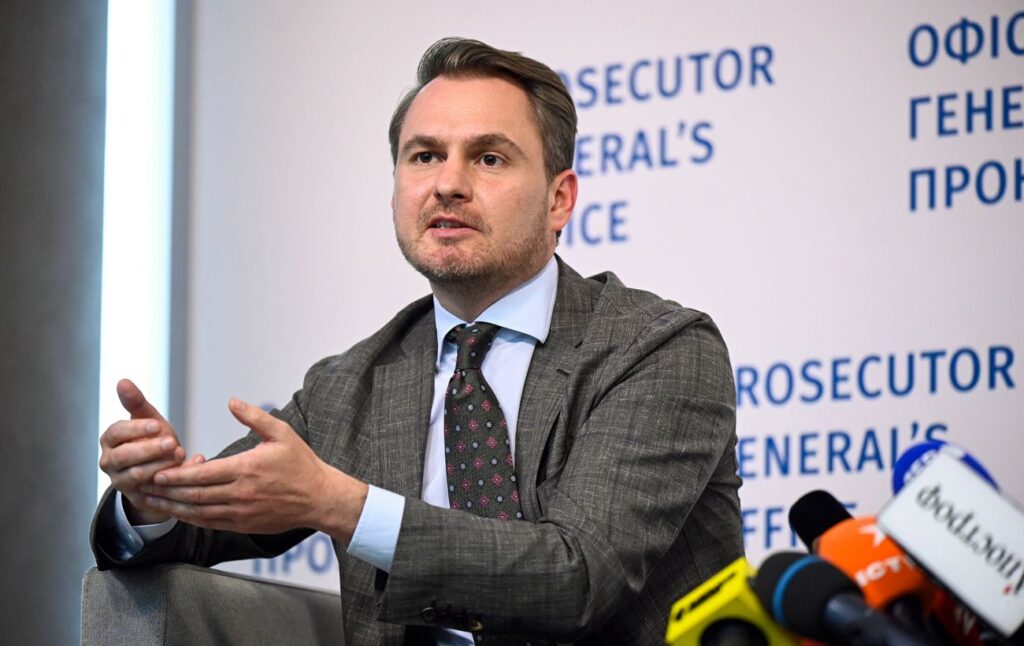
Photo: RBC-Ukraine
Read also: Ukrainian businesses submit compensation and insurance claims worth 7.63 billion UAH