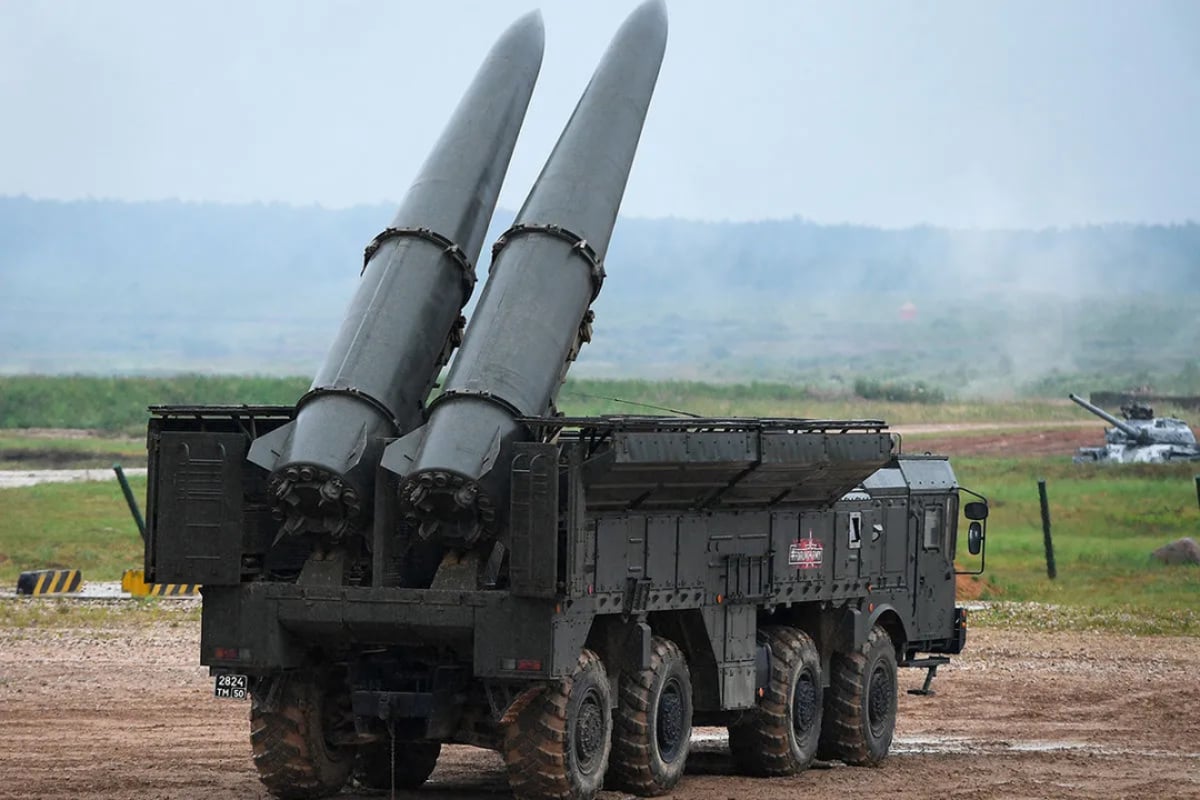
The Russian defense industry is capable of manufacturing over 200 missiles monthly
As of October 2026, Russia has amassed up to 700 ballistic missiles and several thousand cruise missiles. The aggressor state’s defense industry continues to ramp up production despite international sanctions. This was reported by Ukrinform citing Defence Intelligence of Ukraine, according to the portal PromPolitInform.
The total production capacity of the Russian military-industrial complex allows for the output of over 200 missiles per month. Of this volume, approximately 110 units consist of ballistic weaponry.
Current reserves of 9M723 Iskander-M missiles stand at approximately 115 units. Russian defense enterprises consistently produce about 65 such missiles monthly while simultaneously developing a modernized version of the system with an engagement range of up to 700 kilometers.
Missile production performance
Stockpiles of RM-48U anti-aircraft missiles for the S-400 system have reached 400 units, with a monthly growth of 40 new missiles. In the anti-ship systems sector, over 600 units of 3M55 Oniks missiles have been accumulated, which are now being adapted for ground target engagement by increasing their warhead size.
The arsenal of 3M22 Zircon hypersonic missiles exceeds 120 units, although production dynamics remain low—only 30 missiles over the first seven months of the current year. As for the Kh-47M2 Kinzhal missiles, their production is temporarily suspended due to identified accuracy issues, and facilities have been reoriented toward other types of ammunition.
Cruise missile features and operations
Kh-101 cruise missiles remain the primary tool for massive attacks, with a planned monthly output exceeding 80 units. Despite this, the operation of these missiles is plagued by technical malfunctions during launch from aircraft, forcing some batches to be returned to plants for repairs.
Currently, over 450 units of 3M14 Kalibr cruise missiles have been accumulated, with production rates around 29 missiles per month. A significant portion of this resource is being directed into strategic reserves to support the Russian Navy.
Photo: Ukrinform
Read also: US Army tests VICTOR drone with 3D-printed engine