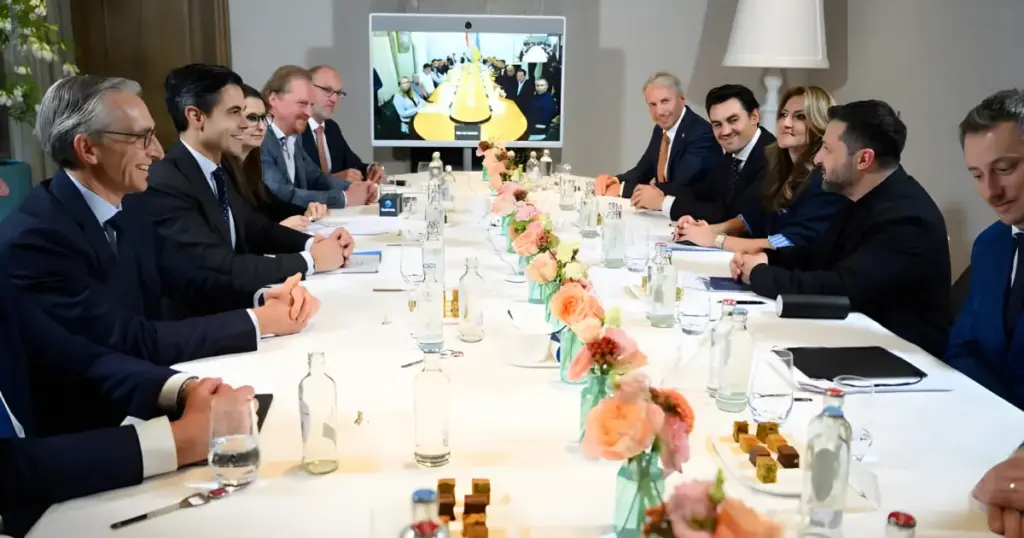
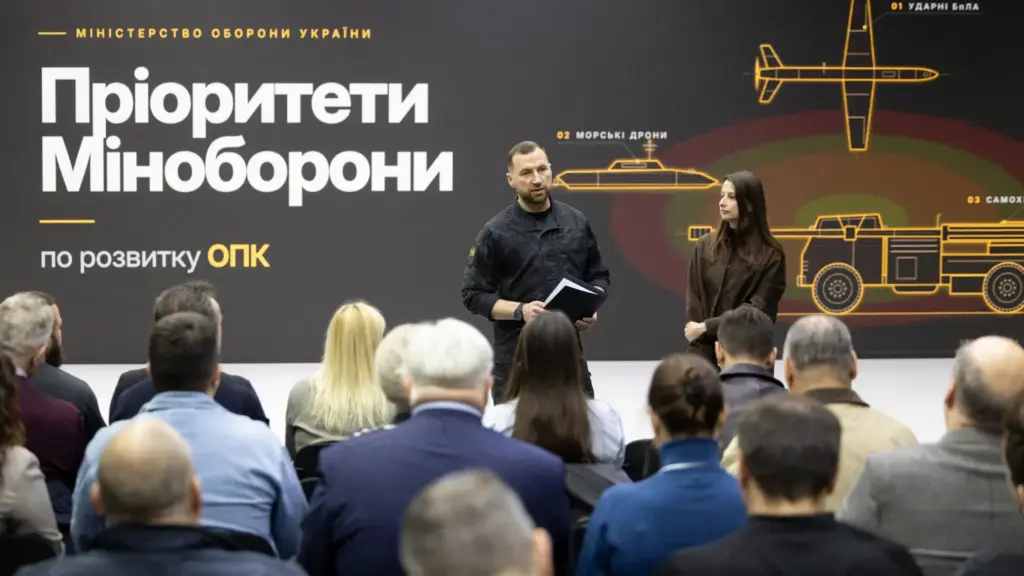
Minister of Defence of Ukraine Rustem Umerov held a conversation with Minister of Defence of Germany Boris Pistorius, Secretary of State for Defence of the United Kingdom John Healey, and NATO Secretary General Mark Rutte.
The parties discussed the key needs of Ukraine ahead of the next meeting of the Ukraine Defense Contact Group, scheduled for June, the press service of the Ukrainian Ministry of Defence reports.
The main goal of the negotiations is to ensure the most effective international support in specific areas that truly strengthen the Defence Forces of Ukraine and meet the current needs of the front line.
In fact, this is no longer just about another aid package, but about forming a new model of warfare — technological, networked, and maximally fast in decision-making.
Air defense is Ukraine’s top priority
Special attention during the conversation was paid to air defense and anti-ballistic protection.
This is critically important against the backdrop of intensifying Russian aerial attacks. During the last massive strike alone, Russia used over 30 ballistic missiles in a single night.
“Russia cannot achieve success on the battlefield, so it is increasing strikes on cities and critical infrastructure,” emphasized Rustem Umerov.
In this way, Ukraine is effectively explaining to partners that modern war is not just a fight on the front line, but a battle for the survival of the rear, energy sector, logistics, and civil infrastructure.
That is why strengthening air defense and anti-ballistic capabilities remains one of the state’s main strategic priorities.

Three key needs of Ukraine ahead of Ramstein
Before the next Contact Group meeting, Ukraine expects support from partners in three main areas:
— additional contributions to the Prioritized Ukraine Requirements List (PURL) mechanism and the procurement of PAC-3 missiles via JUMPSTART;
— supply of long-range artillery ammunition as part of the Czech initiative;
— funding for the production of Ukrainian drones.
The issue of funding the Ukrainian drone-tech sector is particularly important.
Ukraine is gradually convincing its partners that investments in Ukrainian unmanned technologies are one of the most effective ways to strengthen not only Ukrainian but also European security.
Today, Ukraine has become the main testing ground for modern technological warfare. New approaches to deep strike operations, FPV drones, networked interaction of units, and automated combat control systems are being formed here.
Aid must quickly translate into results
Rustem Umerov emphasized that it is fundamentally important for Ukraine that international assistance accurately corresponds to the real needs of Ukrainian soldiers.
“International support must quickly transform into a concrete result for the military on the front line,” the Minister of Defence of Ukraine stressed.
At the same time, Ukraine emphasizes: in addition to multilateral support mechanisms, it is critically important to maintain and scale up bilateral assistance from partners.
This is what allows the defense strategy of Ukraine to be implemented promptly, strengthens the Defence Forces, and maintains the advantage in key domains of modern warfare.
At the end of the conversation, Rustem Umerov thanked Germany, the United Kingdom, and NATO for their support of Ukraine and their readiness to strengthen defense cooperation.
REFERENCE: WHAT IS THE RAMSTEIN FORMAT
The Ramstein format is the Ukraine Defense Contact Group, established in April 2022 after the start of the full-scale Russian invasion.
The first meeting was held at the Ramstein Air Base in Germany, from which the unofficial name of the format originates.
The group includes over 50 countries from around the world, including NATO members, EU states, and other partners of Ukraine.
The main goal of the format is to coordinate international military assistance to Ukraine:
— supply of weaponry;
— strengthening air defense;
— provision of ammunition;
— training of Ukrainian military personnel;
— support for the defense industry;
— funding for the production of modern weapon systems.
It was within the Ramstein format that key decisions were made regarding the transfer to Ukraine of Patriot, HIMARS, Leopard, Abrams, F-16 systems, and other critically important weaponry.
Recently, the format has been increasingly shifting from emergency assistance to long-term war planning, the development of the Ukrainian defense industry, and the formation of a new European security system.
Author: Ivan Arefiev
Photo: Ministry of Defence of Ukraine
Author’s collage