Russian information special operations involving Polish symbols ahead of the Ukraine Recovery Conference in Gdansk failed, as Ukraine and Poland signed 160 agreements worth over $10 billion.
The Kremlin is once again relying not only on missiles but also on information special operations. During the international Ukraine Recovery Conference, Russian intelligence services may resort to provocations involving Polish symbols to sow distrust between Ukrainians and Poles. Why has Russia intensified this front now, and how can one avoid becoming a tool of hostile propaganda?
First, the timing is not accidental. The Ukraine Recovery Conference is not just an international forum. It is a demonstration that Ukraine, together with its partners, is already planning its post-war future today. For the Kremlin, any strengthening of international support for Ukraine poses a direct threat to its political agenda.
Second, Russia traditionally employs the method of so-called “false flag operations.” The use of Polish symbols may be aimed at creating a false impression of a supposed escalation in Ukrainian-Polish relations. Russian intelligence agencies have already used such scenarios repeatedly in various European countries.
Third, social media remains the primary arena for such operations. This is where information spreads fastest, and emotions often outpace facts. A few videos, photographs, or anonymous messages are enough to trigger a massive wave of manipulation.
Furthermore, in recent months, narratives about alleged “Polish fatigue with Ukraine,” “historical contradictions,” “economic conflicts,” or “betrayal of allies” have been appearing systematically in the information space. These are separate elements of a single information campaign that has one goal—to weaken trust between the two nations.
At the same time, reality tells a different story. Poland remains one of Ukraine’s key partners in security, logistics, humanitarian support, and international diplomacy. That is precisely why destroying the Ukrainian-Polish partnership is one of the priority tasks of Russian intelligence services.
It is important to remember that any high-profile event linked to Polish symbols or having an obvious anti-Ukrainian or anti-Polish undertone in the coming days requires maximum verification. Yet, it is precisely on the public’s immediate emotional reaction that the Kremlin is counting.
Thus, Russia is once again demonstrating that its main weapons remain not only missiles and drones but also lies, provocations, and information special operations. The Kremlin understands perfectly well that as long as Ukraine and Poland remain united, its chances of achieving its political goals decrease significantly.
That is why, today, the best response to any provocation is a cool head, verified information, and mutual trust between allies. Because the real enemy is not in Warsaw or Kyiv—they are, as before, sitting in the Kremlin. And while Russian intelligence services are trying to set fire to Ukrainian-Polish relations with information provocations, Ukraine and Poland are doing the exact opposite in Gdansk—strengthening their strategic partnership.
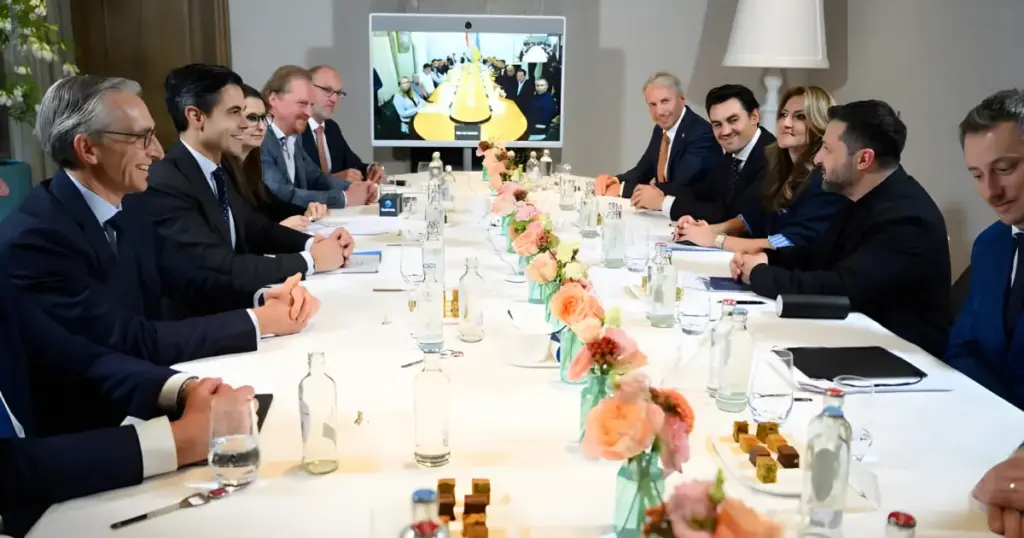
During the Ukraine Recovery Conference held in Gdansk on June 25-26, 2026, Prime Minister of Ukraine Yulia Svyrydenko and Prime Minister of Poland Donald Tusk agreed to deepen cooperation in the energy sector, develop joint projects between Naftogaz and Orlen, and further strengthen economic ties. The conference concluded with the signing of over 160 agreements worth more than 10 billion euros, the launch of new European financial instruments, and large-scale investments in the recovery of Ukraine.
So, while the Kremlin invests in lies, hatred, and provocations, Ukraine, together with Poland and the rest of Europe, is investing in security, reconstruction, and a shared future. That is the main reason why Moscow is so afraid of Ukrainian-Polish unity.
Author: Ivan Arefiev
Collage: Andrii Atlantov
Photos from open sources