The National Bank considers revising its monetary policy forecast towards tightening
The National Bank of Ukraine does not plan to lower its key policy rate in the coming months due to accelerating inflation. Most members of the Monetary Policy Committee acknowledge the possibility of a tighter scenario than previously forecast. This was reported by Minfin, according to the portal PromPolitInform.
During a discussion held on October 28 with 11 members of the NBU Monetary Policy Committee participating, the regulator expressed its readiness to continue curbing inflationary processes even at the cost of increased pressure on economic activity. In September, annual inflation reached 10%, significantly exceeding the previous forecast of 8.4%, while core inflation stood at 8.8% instead of the expected 8.3%.
Factors of inflationary pressure
Price growth is driven by a combination of factors, including rising fuel costs, which increase logistics expenses, and russian attacks on production and storage facilities. Due to infrastructure destruction, businesses are forced to pass additional costs on to consumers, which has already accelerated price growth for consumer goods. In particular, household chemicals became 14.4% more expensive in September, and shampoos increased by 13.4%.
The wage-price spiral
The NBU identifies the formation of a wage-price spiral as a distinct risk, where employees demand higher wages and employers pass these costs into product prices. Financial analysts’ inflation expectations rose from 7.5% in June to 8.8% in October, and banks revised their own forecasts from 8.7% to 10%.
Currency and market risks
Additional imbalance is created by the situation in the money market, where declining export opportunities against a backdrop of persistently high imports require more active interventions from the NBU. In October, eight of the 11 Committee members voted to raise the key policy rate from 16% to 16.5%. The remaining participants insisted on keeping the rate unchanged, noting that previous decisions had not yet fully reflected on the cost of banking products.
Future outlook
Despite a hawkish policy, the NBU is considering the possibility of a gradual rate reduction to 14% by 2027, provided that price stability is achieved. The National Bank emphasizes that future steps will depend exclusively on the dynamics of macroeconomic indicators. According to the regulator’s estimates, the consequences of russian shelling will add approximately 0.7% to inflation in 2026 and another 0.2% in 2027.
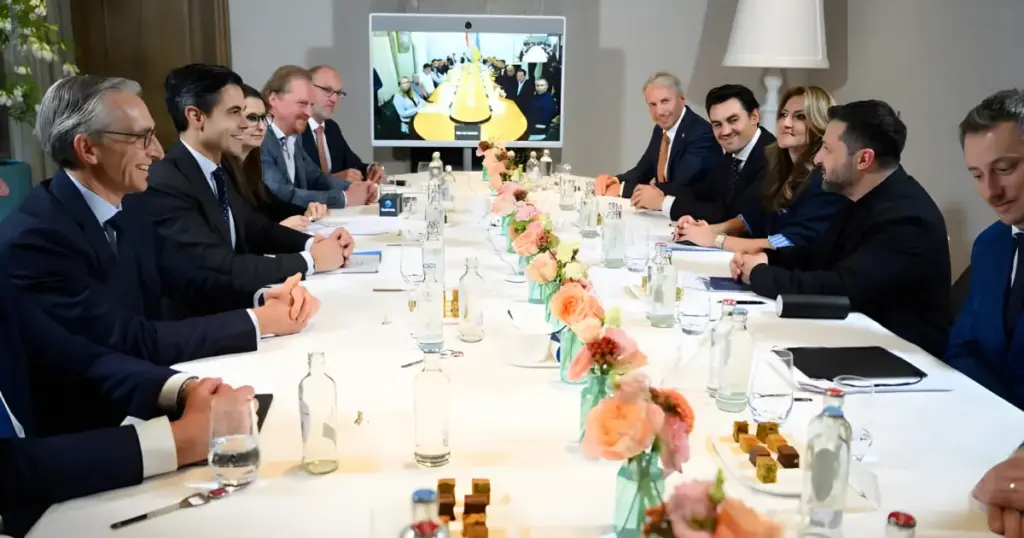
Photo: facebook.com/pyshnyy
Read also: G7 supports NBU independence amid cryptocurrency market debate