“Sometimes it is said that history is a science about the past. In my opinion, this is incorrect… The subject of history is man. Let us be more precise – people.”
Marc Bloch, 1941.
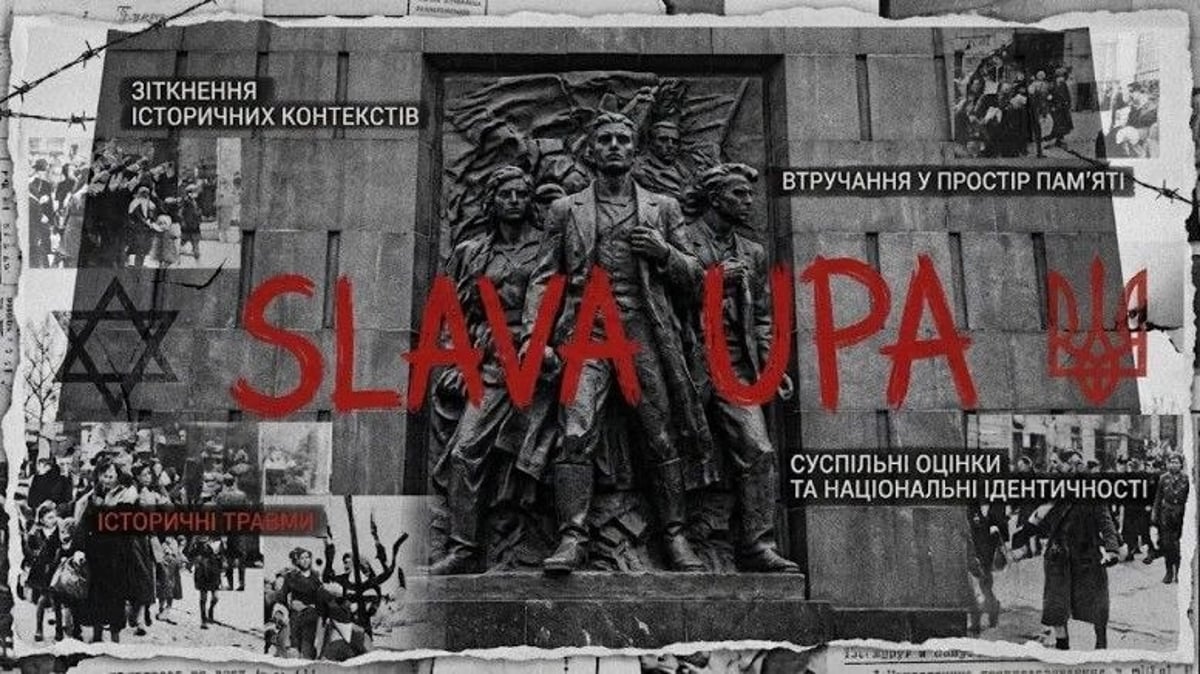
The events in Warsaw on November 14, 2026, draw attention not only due to the fact that monuments were damaged, but also because of the locations, symbols, and social circumstances in which this occurred. On the Ghetto Heroes Monument, unknown individuals painted the inscription “Slava UPA” in red. According to Polish media, a similar inscription appeared on the monument to the soldier of the First Polish Army at the Square of Political Prisoners of Stalinism. Similar incidents were reported in Gdynia. The Polish police are investigating these occurrences.
This is reported by Hryhorii Liubovets and Valerii Korol, employees of the NGO “Center for Communication and Content Security,” exclusively for the Prompolitinform portal.
At first glance, this might be perceived as another act of vandalism or a provocative action related to Ukrainian-Polish historical controversies. However, the location of the inscription fundamentally changes the scale of how the event is perceived. The Ghetto Heroes Monument is a place of memory for the Warsaw Ghetto Uprising and the victims of Nazi persecution. Therefore, the appearance of a Ukrainian historical slogan on it creates an intentionally or objectively provocative clash of several historical contexts. This is no longer just about damaging a memorial object, but about interfering in the space of memory, where historical traumas, social assessments, and national identities are particularly sensitive.
This circumstance requires a substantive distinction. The inscription itself is not evidence that its authors represent any state, organization, or political force. Likewise, its appearance cannot be a basis for the automatic transfer of responsibility to Ukrainians or for a simplified identification of Ukrainian historical memory with specific interpretations of the UPA’s activities. However, the symbolic effect of such interference is fully subject to analysis, as the use of a Ukrainian historical slogan at a place of memory for Jewish victims of Nazism in Poland creates conditions for its inclusion in existing Polish historical discussions and for the actualization of prejudices regarding Ukrainian identity.
At the same time, the appearance of inscriptions on several memorial sites broadens the context. This forces us to consider these events not just as an isolated act of property damage, but as a series of interventions into the Polish memorial space. It is important to determine whether these cases have common perpetrators, organizers, or a coordination mechanism. Until such circumstances are established, it is premature to claim a specific organization behind the action. But even now, we can assess its potential consequences and political compatibility with practices aimed at deepening distrust between Ukraine and Poland.
In this regard, the statement by the Embassy of Ukraine in Poland, which condemned the vandalism and linked it to Russia’s hybrid war aimed at inciting hatred between Ukrainians and Poles, undermining trust, and weakening support for Ukraine, is significant. The Embassy also drew the attention of Ukrainian citizens in Poland to the risks of recruitment via social networks, offers of “easy money,” suspicious tasks, photographing objects, and other actions that may be used to organize provocations. Such a reaction is important not only as a diplomatic condemnation.
It points to a possible connection between symbolic provocations and broader mechanisms of involving people in destructive activities.
At the same time, the term “hybrid war,” while allowing us to denote the unconventional nature of the threat, does not fully reveal its anthropological-cognitive-mental dimension. In this case, the immediate target is a physical monument, but the possible consequences go far beyond its damage. Historical memory, used to provoke hatred, can simultaneously affect identity, the cognitive capacity of societies to comprehend historical reality, and the mental foundations of mutual perception.
In a broader dimension, this creates a threat to civilizational coherence—the ability of Ukrainian and Polish societies to preserve their own agency, mutual recognition, and capacity for joint action despite the complexity of their historical experience.
This provides grounds to speak about the anthropological dimension of the provocation. Its potential destructiveness lies in the attempt to use historical memory to pit people, societies, and national identities against each other, weakening the possibilities for mutual understanding and the preservation of a common communication space. Moreover, such an act can have different consequences at different levels.
For some, it becomes a pretext for hostility toward Ukrainians; for others, a basis for simplified or manipulative assessments of Polish historical memory; for others still, an opportunity to propagate claims about the alleged irreconcilability of Ukrainian and Polish historical experiences. As a result, a single provocation is capable of extending far beyond the place where it was committed, gaining a broader communication resonance.
It is important to see another circumstance here: historical memory is not an isolated sphere of the past. It is present in modern social relations, political decisions, education, diplomacy, economic interaction, and security cooperation, forming part of the foundation for their development. That is why its use to provoke hatred can extend far beyond historical discussions themselves, affecting mutual trust, social interaction, and the ability of states to develop cooperation in other areas.
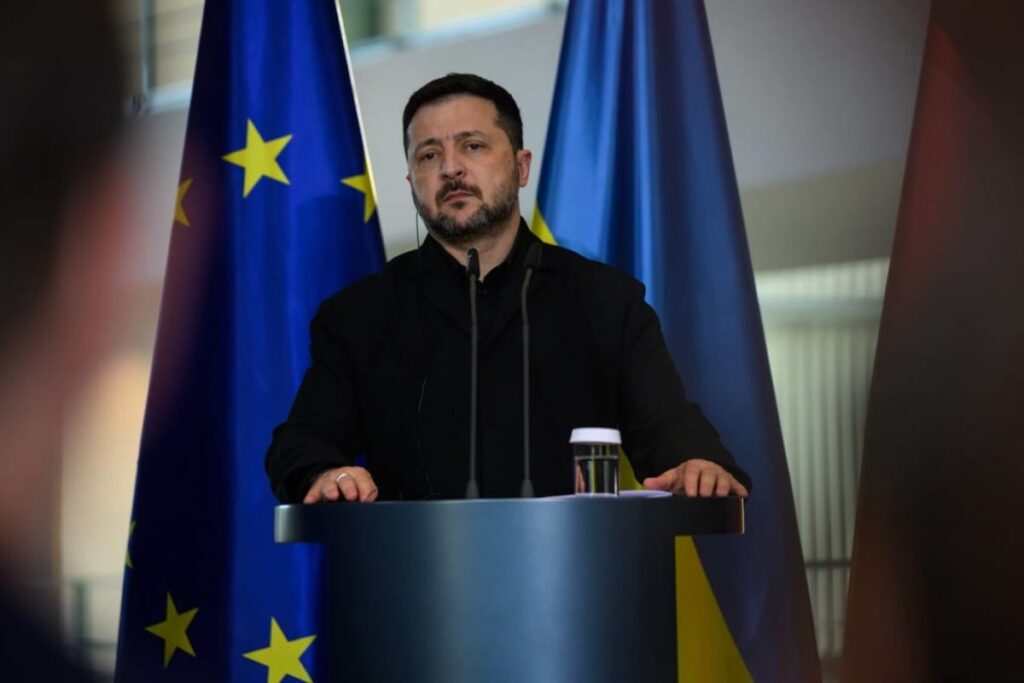
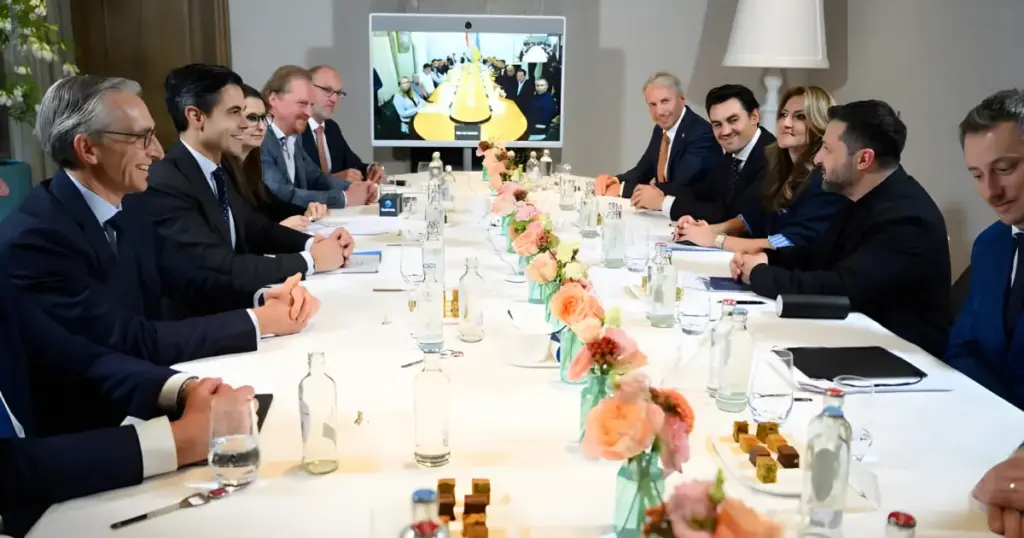
This is particularly evident against the backdrop of other events on the Ukrainian-Polish agenda. In Warsaw, events dedicated to the development of economic, defense, educational, and technological cooperation were taking place simultaneously. At the Ukrainian-Polish business forum, the Deputy Head of the Office of the President of Ukraine, O. Kovalska, emphasized the need to focus on a shared future, develop economic and defense projects, and not avoid complex issues of shared history.
Discussions covered energy, defense-industrial cooperation, university interaction, technical laboratories, education in the field of military technologies, and prospects for Ukraine as an international educational center after the war.
The Head of the Office of the President of Ukraine, K. Budanov, separately emphasized the importance of defense-industrial cooperation as one of the foundations of the strategic partnership. Meanwhile, European Commissioner M. Kos announced four investment programs for Ukraine totaling 376 million euros at the EU-Ukraine conference within the framework of ReBuild Ukraine. The scale of the event—thousands of participants, hundreds of exhibitors, and the representation of Ukrainian communities—testifies that Warsaw is not only a place for political discussions but also an important space for the practical formation of European interaction around the recovery of Ukraine.
Thus, within the same socio-political space, two different but interrelated trajectories are unfolding simultaneously. The first uses historical memory as a potential resource for division, distrust, and conflict. The second is aimed at creating a common future through economic, defense, educational, and technological ties. They cannot be viewed separately, as the effectiveness of the second depends, in particular, on whether societies are capable of protecting trust from the manipulative use of the past.
Therefore, the call to focus on the future should not turn into a proposal to postpone historical issues or move them beyond the scope of social responsibility. Historical research should be professionally conducted by historians, but the social consequences of using history cannot be the business of historians alone. Educators are responsible for forming knowledge and the ability to work with historical sources; media—for accuracy and contextuality of coverage; politicians—for responsibility in using historical symbols and assessments; state institutions—for protecting monuments and countering provocations.
Civil society, in turn, must maintain a space for open, evidence-based, and responsible discussion.
In this regard, it is important to clarify the principle of normativity of historical reality. It does not mean establishing a single permitted interpretation of the past or banning discussions on difficult pages of shared history. It is about something else: documented facts, evidence, circumstances, and the acknowledgment of human losses cannot be arbitrarily changed in accordance with the current political situation. Historical symbols should not become an instrument for justifying modern aggression, denying the agency of other nations, or inciting hatred. Open historical discussion is possible only under the condition of respect for evidence and responsibility for the consequences of the political use of the past.
This requirement is especially relevant in the conditions of the glocal aggression of collective Putinism. Its unconventional practices are not limited to direct confrontation between states or military actions. They can use existing contradictions, historical traumas, social prejudices, and institutional vulnerabilities of different countries. A local provocation in such a configuration is capable of gaining broader significance, as its potential consequences extend to international relations, support for Ukraine, and the ability of European societies to act together.
This is precisely what allows us to see the glocal dimension of the threat. The event occurs in a specific place, affects specific monuments and societies, but its potential consequences do not remain local. They can be integrated into broader information, political, and diplomatic processes, amplified through digital distribution of images and manipulative interpretations, and subsequently influence the perception of Ukraine and Ukrainians in the European space. Therefore, glocality here is not just the simultaneous presence of the local and the global, but the possibility of turning a local act into a factor changing broader social relations.
Hence the need to consider the protection of historical memory as a component of communication and content security. It is not just about the physical protection of memorials. Systematic documentation of their condition, digital archives, credible historical descriptions, rapid reporting of damage, verification of the origin of provocative materials, and interaction between museums, educational institutions, communities, law enforcement agencies, and diplomatic missions are required. It is also important not to allow the distribution of images of damaged monuments to turn into uncritical replication of provocation or a basis for the collective accusation of Ukrainians or Poles.
The task is not to remove complex historical issues from the public space, but to make societies capable of working with them without loss of mutual respect, credibility, and the ability for joint action. This requires not only a reaction to already committed provocations but also conditions under which historical memory does not become an easily accessible instrument of manipulation. It is here that the protection of monuments, historical education, professional communication, diplomacy, and the development of joint Ukrainian-Polish projects acquire a single strategic significance.
The Warsaw events raise a question that goes far beyond a specific act of vandalism: are societies capable of preserving historical memory as a foundation of human dignity and responsibility, while at the same time not allowing it to be turned into a means of destroying modern relations? The answer cannot lie in either hushing up the past or in the political consolidation of a single interpretation of history. It must be formed through evidence, mutual acknowledgment of guilt, responsibility for public statements, and the ability to act together.
Historical memory in this sense is not an obstacle to a common future, but one of the conditions for its formation. The Ukrainian-Polish partnership requires not an absence of complex issues, but the capacity to pass through them without losing trust and civilizational agency. It is precisely this capacity that provocations, which turn memory into an instrument of hostility, are trying to call into question.
Conclusions
* The incident involving the damage to monuments in Warsaw reveals a problem that goes far beyond vandalism and an individual provocation against Ukrainian-Polish relations. Historical memorials are becoming points through which one can interfere in collective memory, pit the experiences of different peoples against each other, provoke mutual accusations, and reproduce configurations of distrust. The inscription “Slava UPA” on the Ghetto Heroes Monument gains special sensitivity due to the clash of Ukrainian military-historical symbolism with the memory of Jewish victims of Nazi persecution. In such a context, the provocation can be used to reproduce Russian propaganda constructs aimed at discrediting Ukrainian identity and weakening solidarity between Ukrainians, Poles, and Jews.
* This case demonstrates that historical memory can no longer be viewed merely as a sphere of humanitarian policy or professional activity of historians. It is directly linked to the security of societies, trust between states, defense cooperation, and the ability of nations to preserve their own agency. That is why the physical protection of memorial objects must be supplemented by the protection of their digital representation, the credibility of historical information, and the social environment in which the understanding of the past is formed.
* The simultaneous discussion by Ukraine and Poland of joint economic, defense, technological, and educational prospects is indicative. It demonstrates that historical memory and a common future cannot be separated from each other by administrative decision. Future cooperation requires not the hushing up of past contradictions, but the ability to responsibly comprehend them, without allowing them to be turned into an instrument of modern aggression.
* In a broader context, this raises the question of the normativity of historical reality. Historical facts, documentary evidence, and the experience of victims cannot become a subject of arbitrary political construction. Historical comprehension must remain open for research and discussion, but the political use of the past should not become a means of justifying modern violence, denying the rights of peoples, or legitimizing aggressive intentions.
Thus, the protection of historical memory becomes one of the directions for preserving communication and content security and human agency. It is not only about ensuring that monuments remain physically undamaged, but also about ensuring that the memory they represent does not turn into an instrument of dehumanization and mutual alienation. After all, a common future for nations cannot be built on an arbitrarily constructed past, and international solidarity cannot be preserved without respect for human dignity, historical experience, and the right of every nation to its own identity.
Authors: Hryhorii Liubovets, Valerii Korol, NGO “Center for CCS”
Photo: Історична пам’ять
Read also: Poland halts funding for arms procurement for Ukraine through PURL fund