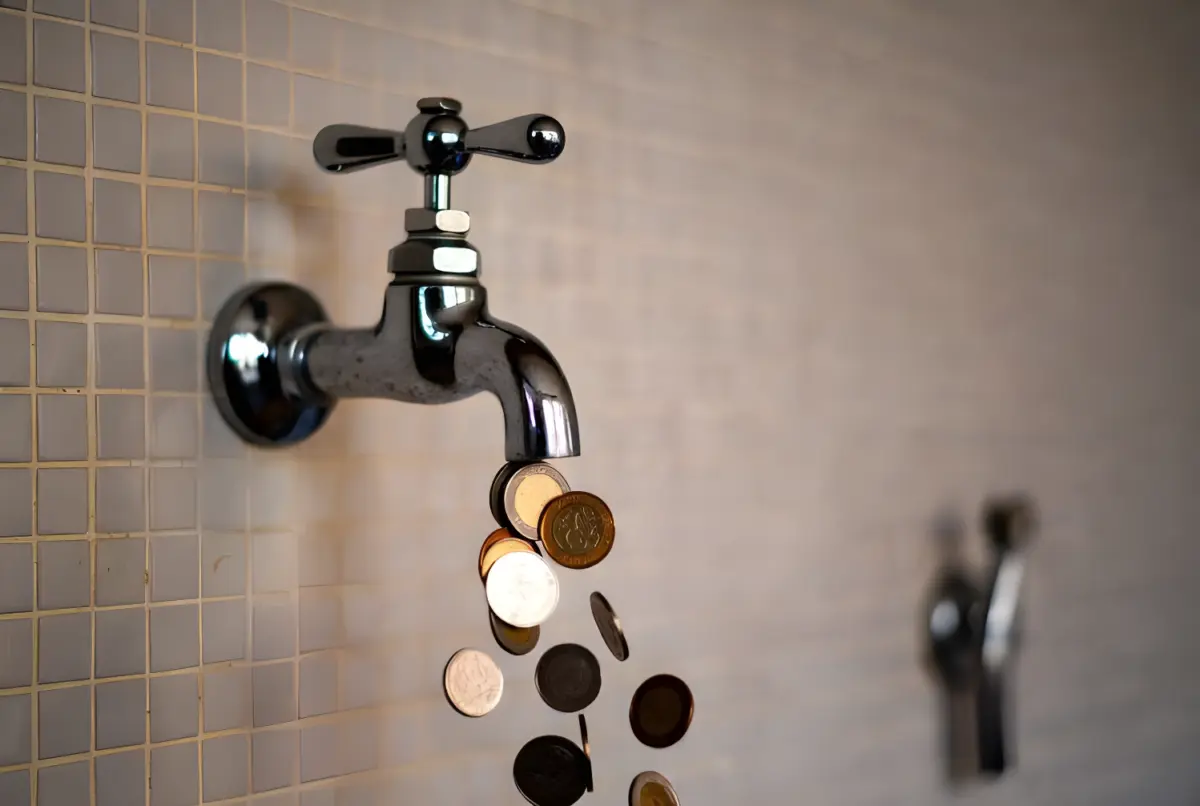
On September 3, the Kyiv City Council voted to increase water tariffs. Now the tariff for the population will be 63.79 hryvnia instead of the current 30.38 hryvnia.
It should be noted right away that tariffs for all water utilities, as well as for other enterprises engaged in water supply and wastewater, are set by the National Commission for Regulation of Energy and Communal Services (NKREKS). Tariffs are set separately for water supply and separately for wastewater, and they are different for different water utilities.
In addition, there are two groups of tariffs: for the own centralized supply of cold water and wastewater (for residents of the private sector and collective consumers who are not business entities in the water supply sector), and for centralized supply of cold water and wastewater using intra-building systems, for multi-storey buildings (for business entities that are performers of these services).
The situation with water tariffs is analyzed by Oleksandr Bondarenko specifically for the PromPolitInform portal.
So what happened to water tariffs during the years of Ukraine’s Independence? Let’s look at the situation that has developed in this segment since the beginning of Russia’s full-scale invasion of Ukraine and up to now
In Kyiv, according to the Ministry of Finance, from July 1 to December 31, 2021, the following tariffs for centralized water supply and wastewater treatment (using in-house systems for the population) were in effect, including VAT:
Centralized water supply: UAH 13.344 per 1 cubic meter
Centralized wastewater treatment: UAH 12.036 per 1 cubic meter
Total: UAH 25.38 per 1 cubic meter
The National Commission for Regulation of Energy and Communal Services (NKREKS) made a decision to increase tariffs. From January 1 in Ukraine, as reported by the press service of Kyivvodokanal, tariffs for centralized water supply and wastewater treatment will increase to UAH 30.38 per 1 cubic meter.
The National Commission for the Regulation of Energy and Utilities of Ukraine (NCERC) has adjusted tariffs for 45 enterprises providing water supply and wastewater treatment.
The establishment of new tariffs by the National Commission for the Regulation of Energy and Utilities of Ukraine (NCERC) has led to an increase in tariffs by UAH 5.00 (including VAT), which will total UAH 30.38 per cubic meter, of which:
– centralized water supply – UAH 16.164/cubic meter including VAT;
– centralized wastewater treatment – UAH 14.22/cubic meter including VAT.
And on Thursday, September 3, the Kyiv City Council voted to increase tariffs for the population for centralized water supply and wastewater treatment. According to Liga.net, the decision was supported by 74 deputies.
Earlier, the Kyiv City State Administration reported that after the increase, the tariff for the population will be UAH 63.79 instead of the current UAH 30.38. This tariff for the population was established by the National Commission for the Regulation of Energy and Utilities.
According to the city hall’s estimates, taking into account the average consumption of cold water in Kyiv, the water fee for a family of three will increase by 200-300 UAH.
Kyivvodokanal, in turn, stated that this tariff does not cover actual costs. Previously, the company offered a much higher tariff – almost 90 UAH per cubic meter. According to its calculations, water supply should have cost 50.69 UAH per cubic meter instead of the current 16.16 UAH, and sewage – 38.21 UAH instead of 14.22 UAH. The Kyiv City State Administration reported that the economically justified cost is indeed approaching 90 UAH, but the city did not plan to introduce such a tariff for the population.
On August 28, the Kyiv City Council registered a draft decision that provides that the current tariff for the population will be maintained, and Kyivvodokanal’s funds will be compensated by the city.
PJSC JSC “Kyivvodokanal” claims that the need to establish (by revising) tariffs is due to the following factors:
changes in the cost of prices/tariffs for electricity (in accordance with the conditions of the electricity market), electricity distribution (resolutions of the National Commission for the Regulation tariff for electricity transmission services of NPC “UKRENERGO No. for 2026”) and natural gas (in accordance with market conditions), which ensure the technological process and maintenance of the working condition of fixed assets for the uninterrupted operation of water supply and sewage systems;
the need to ensure that water quality is maintained at the proper level for Kyiv residents;
the increase in prices for fuel and lubricants;
the increase in repair costs due to the significant level of wear and tear of fixed assets and the increase in prices for components (materials, spare parts, etc.) during the period of martial law with missile and drone attacks by the aggressor;
the need to implement additional engineering protection of the facility of critical infrastructure;
planned increase in the minimum wage for 2027 and the statistical average wage of one employee for 5 months. 2026 in the city of Kyiv by type of economic activity “Industry”.
As reported by the PromPolitInform portal, there is no single tariff for water supply and wastewater services in Ukraine, since prices are set locally. The amount of the fee depends on the specific water utility and is approved by local authorities or the National Commission for the Regulation of the National Energy and Utilities Commission of Ukraine. In Kyiv, the cost of Kyivvodokanal services remains at 30.384 UAH per cubic meter, including VAT. In addition, residents of the capital pay a fixed subscription fee, which in 2026 is 47.19 UAH for water supply and the same amount for wastewater.
Today it became known that the Kyiv City Council supported the increase in the tariff for water supply and wastewater for the population by two times – to 63.79 UAH per cubic meter. The PromPolitInform portal has already informed about this.
The city council explained that the decision does not foresee a sharp increase in the cost of water, but should restrain a possible jump in tariffs. The reason for the increase is a significant increase in the cost of resources in recent years: electricity has tripled, fuel has doubled, reagents have tripled.
The final tariff must be approved by order of the city administration.
We will monitor what will happen to tariffs in the future.