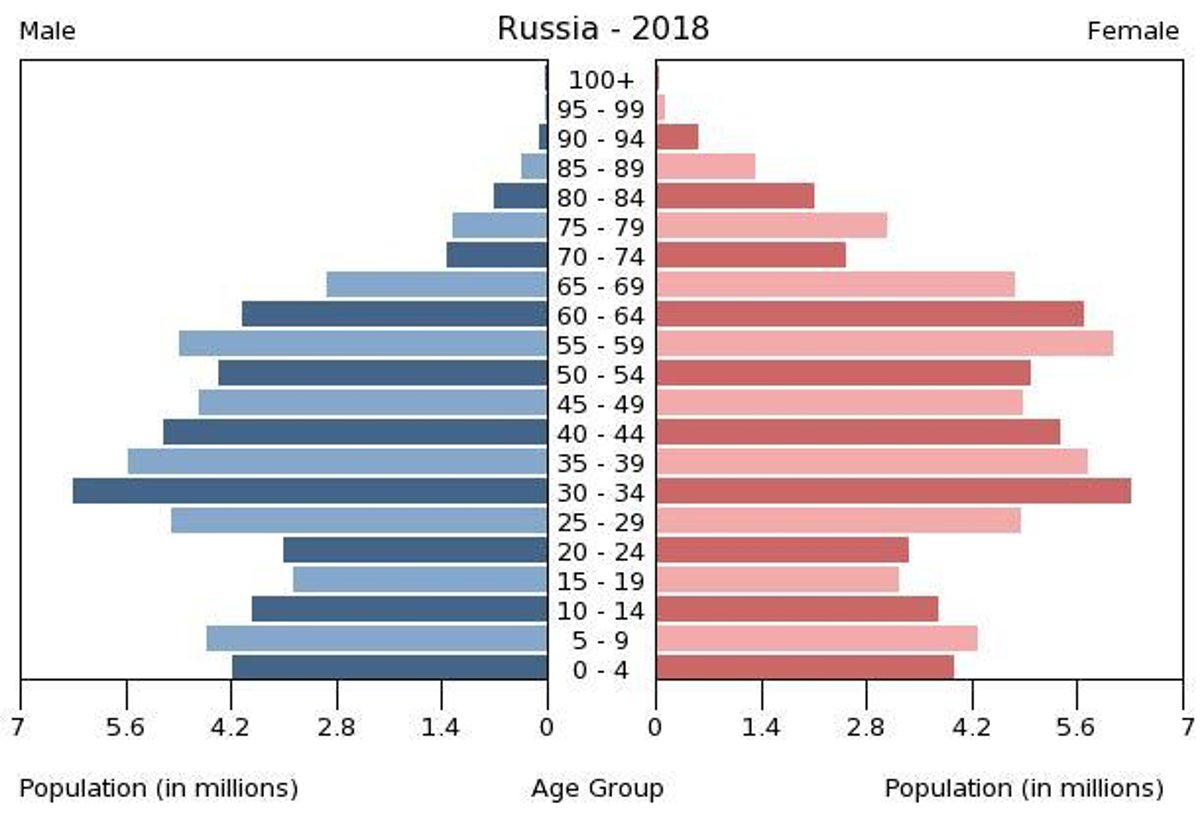
The number of children in Russia has dropped to 6.5 million, while the number of pensioners has risen to 23.7 million
Russia has fallen into a deep demographic trap, outpacing global aging trends by three decades. The country's age structure points to rapid extinction and a critical reduction in the working-age population. This is reported by the portal PromPolitInform, citing information from Foreign Intelligence Service of Ukraine.
The Foreign Intelligence Service of Ukraine (SZRU) stated that the Russian Federation entered a phase of a deep demographic crisis back in the early 1990s. While the world is only now beginning to record signs of global aging, the Russian state exhibits clear indications of a fading demographic potential, making normal human resource reproduction impossible.
Changing age structure in Russia
An analysis of age dynamics reveals an inverted model where the number of elderly people significantly outweighs the number of children. While in the late 1980s, the figures for children under five and people over 65 were comparable—approximately 14.5 million individuals in each category—the situation has drastically changed today.
The number of children in the youngest age group has fallen to 6.5 million, while the number of pensioners has climbed to 23.7 million. This disparity creates an unbearable burden on the social system and the economy of a state that lacks any real prospect of reversing its depopulation.
Causes and consequences of depopulation
The primary driver of this deepening crisis is a chronically low birth rate, which remains significantly below the level required even for simple generation replacement. Despite efforts by pro-government experts in Russia to compare their situation to that of the EU or Japan, the actual figures indicate an accelerated shrinking of the working-age population.
The persistent lack of growth in the number of children will lead to an acute shortage of young professionals in the labor market within the next ten to twenty years. Consequently, the country has effectively led the negative global trend, outpacing the global demographic turning point by nearly 30 years and heading toward the complete extinction of its human potential.
Illustrative photo: CIA Factbook / Public domain
Read also: Demand for construction workers in July 2026: regional trends and wages