Russian aviation is suffering from fuel problems supplied via shadow schemes
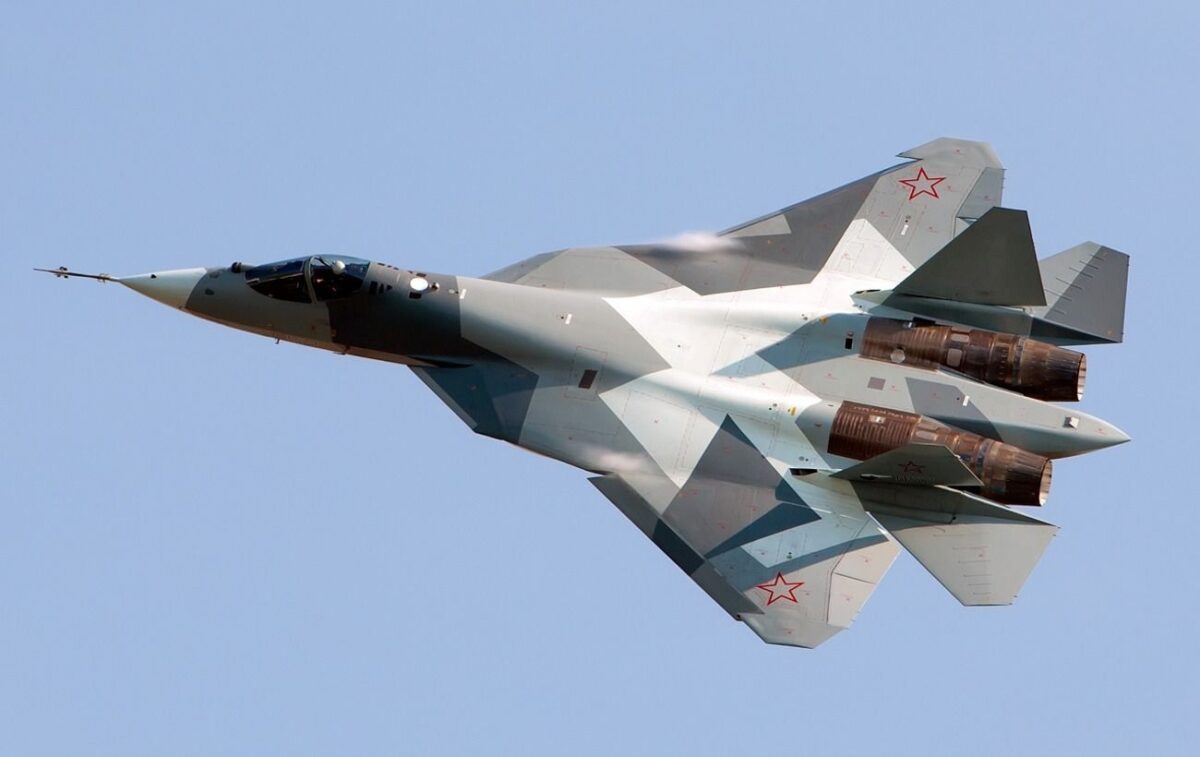
On October 29, 2026, a multipurpose Su-57 fighter jet exploded during an engine start-up at a military airfield in Russia. The cost of the destroyed warplane is estimated at approximately $150 million. This is reported by the portal PromPolitInform, citing information from Defence Intelligence of Ukraine.
The incident occurred at the Russian airfield Akhtubinsk, where the aircraft was preparing for departure. Experts cite the poor quality of fuel as one of the primary reasons for the failure of the AL-41F1 engine, known as the “izdeliye 117”.
Fuel imports bypassing sanctions
Against the backdrop of declining domestic aviation kerosene production, Russia is actively seeking supply sources abroad. Military intelligence has uncovered a scheme in which oil and refined products are sourced via the Indian plant Nayara Energy, in which nearly half of the shares are owned by the Russian Rosneft.
In August 2026, a shadow fleet tanker, GRIF, loaded approximately 40,000 tons of Jet A-1 standard fuel in Vadinar. Later in September, the cargo was transferred ship-to-ship to another vessel, the HALCYON, near the Singapore Strait, after which the fuel was delivered to the port of Nakhodka.
Fuel usage for combat aviation
The obtained resource is distributed through the company RN-Aero to meet the needs of Russian military corporations. Despite technical requirements for using TS-1 type fuel, Russian military aviation, including the Su-57, Su-35S, and Il-76MD-90A, is increasingly using the Jet A-1 analogue.
Experts point out that this fuel is also used for launching Geran jet strike drones. Currently, Russia has introduced a confidentiality regime at the legislative level regarding deliveries for Rosneft structures, which, according to analysts, indicates attempts to hide the impact of sanctions pressure.
Photo: Defence Intelligence of Ukraine
Read also: Russia Forced to Import Aviation Fuel Following Strikes on Its Oil Refineries