40 years of the Chernobyl tragedy: recalling the chronology of the explosion, secrets of the unique sarcophagus and the amazing revival of the Exclusion Zone today.
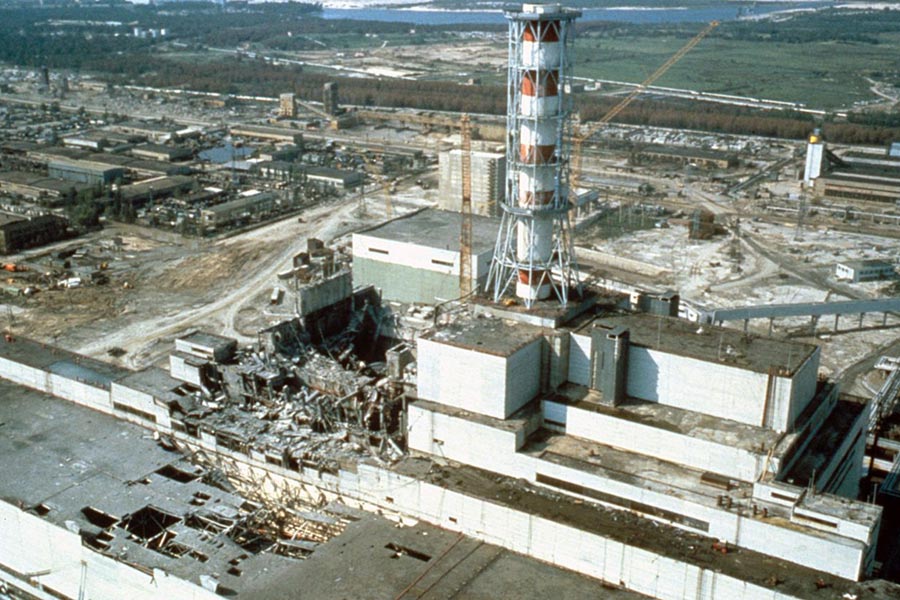
April 26, 1986 changed the course of history forever. What began as a planned experiment at the fourth power unit of the Chernobyl NPP turned into the largest disaster in human history in a matter of seconds. As the BLIK.ua editorial office notes, today, 40 years after the explosion, Chernobyl remains not only a painful scar on the body of Ukraine, but also a unique platform for scientific research and an absolute symbol of the unbreakable resilience of our people. The PromPolitInform portal reports.
Key facts about the accident: a timeline of the tragedy
To understand the scale of the disaster, it is worth recalling the key figures and facts of that terrible day:
Time and place: The tragedy occurred on April 26, 1986 at 01:23:47. A series of two extremely powerful explosions completely destroyed the reactor of the fourth power unit.
The scale of the radiation release: The total release of dangerous radioactive substances into the air was about 50 million curies. For comparison, this figure is equivalent to the consequences of the explosions of 500 atomic bombs, similar to the one dropped on Hiroshima.
Secrecy and lies: The Soviet authorities cynically kept quiet about the fact of the disaster for 36 hours, putting millions of people in danger. The world learned the truth only when radiation safety sensors in Sweden recorded an anomalous jump in radiation.
Heroism of the liquidators: More than 600,000 people took part in the liquidation of the consequences. The first fire brigades that arrived at the station extinguished the flames without any special protection. They actually gave their lives to prevent an even more powerful thermal explosion that could destroy Europe. Secrets of the new sarcophagus: a reliable shield for 100 years
The first concrete “Sarcophagus” (Shelter facility), which was heroically erected in 1986, began to inevitably collapse 20 years later. In order to prevent a new radiation leak, the world community joined forces to create the New Safe Confinement (NSC).
The largest mobile structure in the world: This is a real engineering masterpiece – a giant steel arch 110 meters high (which is higher than the Statue of Liberty) and a total weight of over 36,000 tons.
Unique construction technology: To minimize the radiation exposure of workers, the arch was assembled at a safe distance from the destroyed reactor. After construction was completed, it was delicately “slid” onto the power unit using a system of powerful jacks.
Double shell: The space between the two layers of the arch’s cladding functions as climate control. Heated, dry air constantly circulates there, which makes it impossible for condensation to form and protects the metal from corrosion.
Dismantling prospects: The NSC is designed for at least 100 years of reliable operation. Remotely controlled robotic cranes are installed inside the structure. They will allow the old sarcophagus to be safely dismantled and the remaining nuclear fuel to be removed in the future.
Life in the Exclusion Zone today: a territory of paradoxes
Today, the 30-kilometer zone around the Chernobyl nuclear power plant is a place where the past meets the future, and nature demonstrates an amazing ability to recover:
A paradise for wildlife: In the absence of human intervention, the Zone has become the largest natural reserve in Europe. Nature literally swallows up abandoned concrete cities, and forests have become home to restored populations of wolves, deer, lynxes, bears and rare Przewalski’s horses.
Green energy: Solar power plants are now operating near the infamous plant. It is symbolic that the land that once produced a dangerous atom and suffered from it now generates clean, “green” energy.
The challenge of occupation: In the spring of 2022, the Chernobyl nuclear power plant survived another terrible ordeal – 35 days of Russian occupation. The world froze again in anticipation of the catastrophe, but the heroism of the Ukrainian station personnel, who worked tirelessly under the muzzles of machine guns and without a stable power supply, helped to avoid a new tragedy.
Memory that protects the future
40 years after the explosion, Chernobyl continues to teach humanity the main lesson: safety is not a constant, but our common daily responsibility. Today, despite the full-scale war and constant threats, Ukraine continues to worthily protect the peace of this “metal giant”, protecting not only its own territory, but also all of Europe. The exclusion zone remains an eternal memorial to human error and at the same time a monument to the unprecedented self-sacrifice of those who saved the world from a nuclear apocalypse.