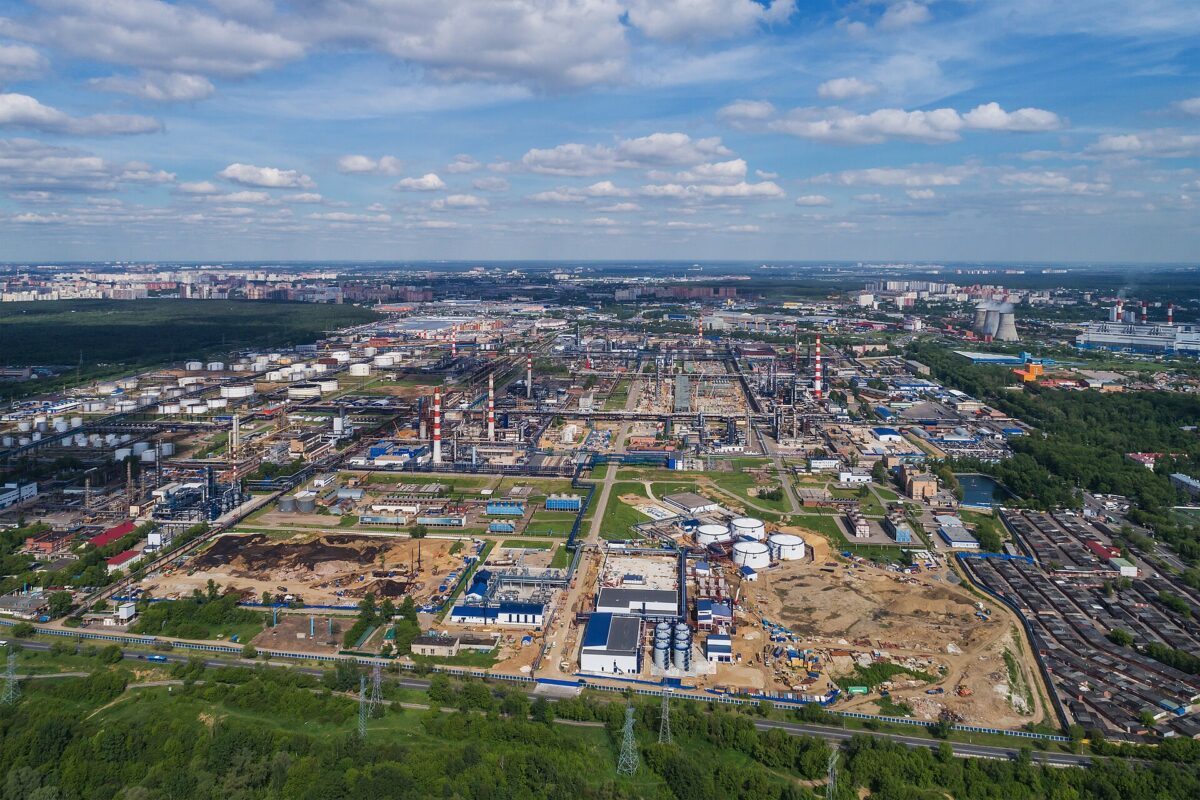
Moscow authorities are working on scenarios regarding the inability to secure city oil refineries from drone strikes. Officials also forecast a rise in bankruptcies due to attacks on Wildberries infrastructure. This is reported by the portal PromPolitInform, citing the Telegram channel of Agentstvo. Novosti.
Relevant data became available following the publication of correspondence of Moscow Deputy Mayor Alexander Gorbenko by the hacking group Black8Mirror. According to the obtained materials, City Hall representatives discussed the futility of fully protecting refineries within city limits and studied the concept of creating a network of mini-refineries in the region.
Strategy of decentralising oil refining
One document notes that mini-refineries should make infrastructure less vulnerable to air raids. This idea was officially discussed at the level of the Russian leadership in July, particularly on the initiative of Alexander Osipov, after which a readiness to intensify work in this direction was declared.
The messages concerning refinery vulnerability are dated June 23, which coincides with the period after the attack on the Moscow refinery in Kapotnya. Hacking data indicate that the relevant City Hall structures do not see effective ways to protect existing large facilities from unmanned aviation.
Consequences of strikes on Wildberries warehouses
A separate block of the published documents is devoted to economic risks resulting from strikes on Wildberries warehouses. Officials forecast a chain reaction that will affect small and medium-sized businesses, including a rise in unemployment and an increase in non-performing loans.
City Hall analytics indicate fears regarding a revision of the pricing policy by the marketplace, which may lead to the abandonment of low prices. Internal reports point to the threat of rising social tension and protest sentiments, which may be directed against the authorities due to the association of crisis phenomena with current military policy.
Illustrative photo: A.Savin / FAL
Read also: ZSU modernises BRDM-2 into remotely controlled robotic platforms