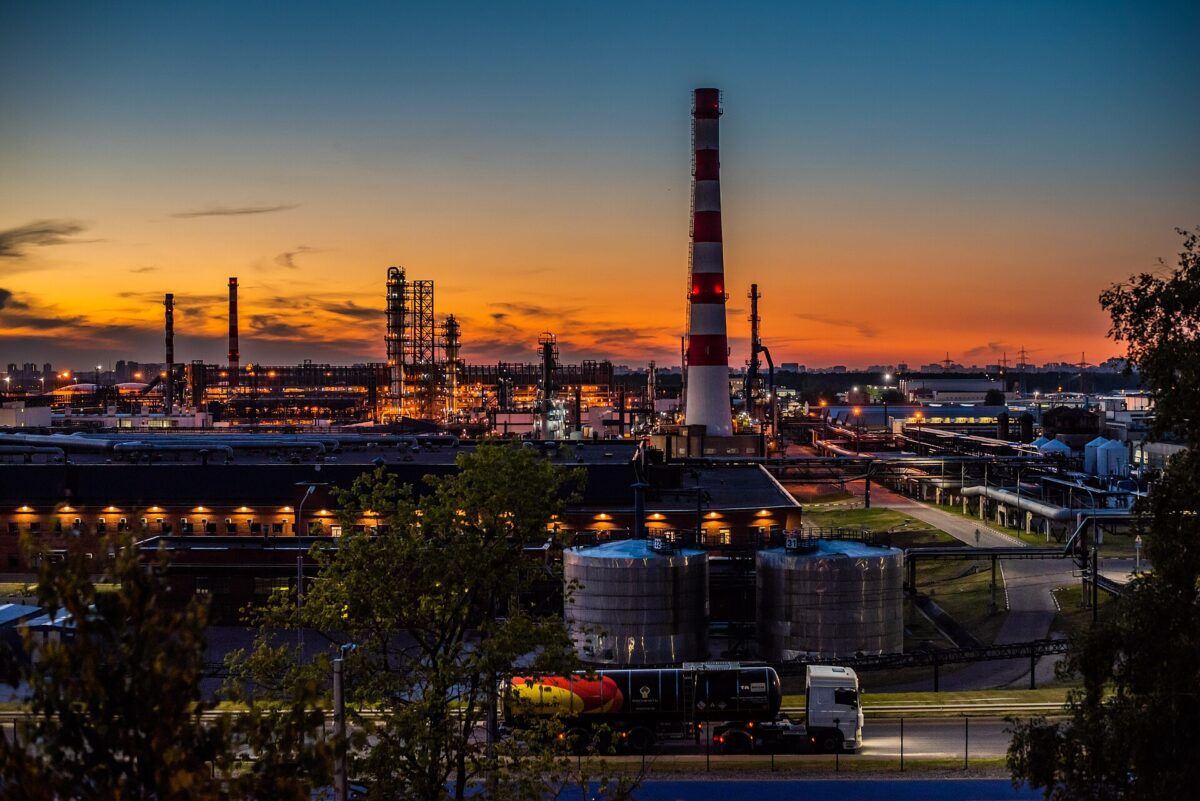
Moscow oil refinery suspended operations following a drone attack on the night of September 20
The issue of mutual de-escalation in the energy sector has finally moved into the plane of specific geopolitical conditions. As stated by President of Ukraine Volodymyr Zelenskyy, the Ukrainian side is ready to stop strikes on Russian oil refineries upon a clear demand. The Russian Federation must completely abandon attacks on Ukraine’s critical infrastructure and life-support facilities.
Such statements were made against the background of obvious technological problems in Russian oil refining. Earlier, attention was drawn to the significant weakening of the Russian oil refining industry due to the protracted war. The oil refining industry in Russia is losing stability under the influence of external factors, demonstrating vulnerability to modern challenges.
Drop in capacity of the Moscow oil refinery
A visual confirmation of this was the events surrounding key enterprises of the industry. The Moscow oil refinery owned by Gazprom Neft suspended crude oil refining after fires broke out as a result of a drone attack on September 20. As Moscow Mayor Sergey Sobyanin noted, the drone raid indeed led to damage to an industrial facility on the territory of the oil refinery.
The scale of the shutdown proved tangible for the market. The main primary processing unit AVT-6 is capable of processing 21,400 tons of oil per day, which accounts for 53% of the facility’s capacity, while the Euro+ combined unit provides another 47% with an indicator of 18,800 tons daily. During 2024, the enterprise processed a total of 11.6 million tons of crude oil, producing 2.9 million tons of gasoline, 3.2 million tons of diesel fuel, and 1.3 million tons of bitumen. Starting September 21, fuel from this plant is no longer put up for auction at the St. Petersburg International Mercantile Exchange.
Economic pressure and corridor security
President of Ukraine Volodymyr Zelenskyy emphasized that not only the energy sector and critical infrastructure, but also the logistics routes of food exports must be protected within the framework of de-escalation. Only the cessation of Russian strikes on these targets will open the way to reciprocal steps by Kyiv. An additional element of the strategy remains the expansion of sanctions pressure by international partners.
Turning to the United States with a call to limit the Kremlin’s ability to continue the war, President of Ukraine Volodymyr Zelenskyy noted in an interview with CBC News that the American side possesses sufficient potential to block many areas and significantly weaken the Russian potential. Such restrictive measures are considered a necessary resource for forcing a diplomatic settlement.
Illustrative photo: kishjar? from Moscow, Russia / CC BY 2.0