In just a few minutes, you can find a trip to another city or abroad, or arrange for cargo delivery.
This is reported by the Cyberpolice Department of the National Police of Ukraine, according to the PromPolitInform portal.
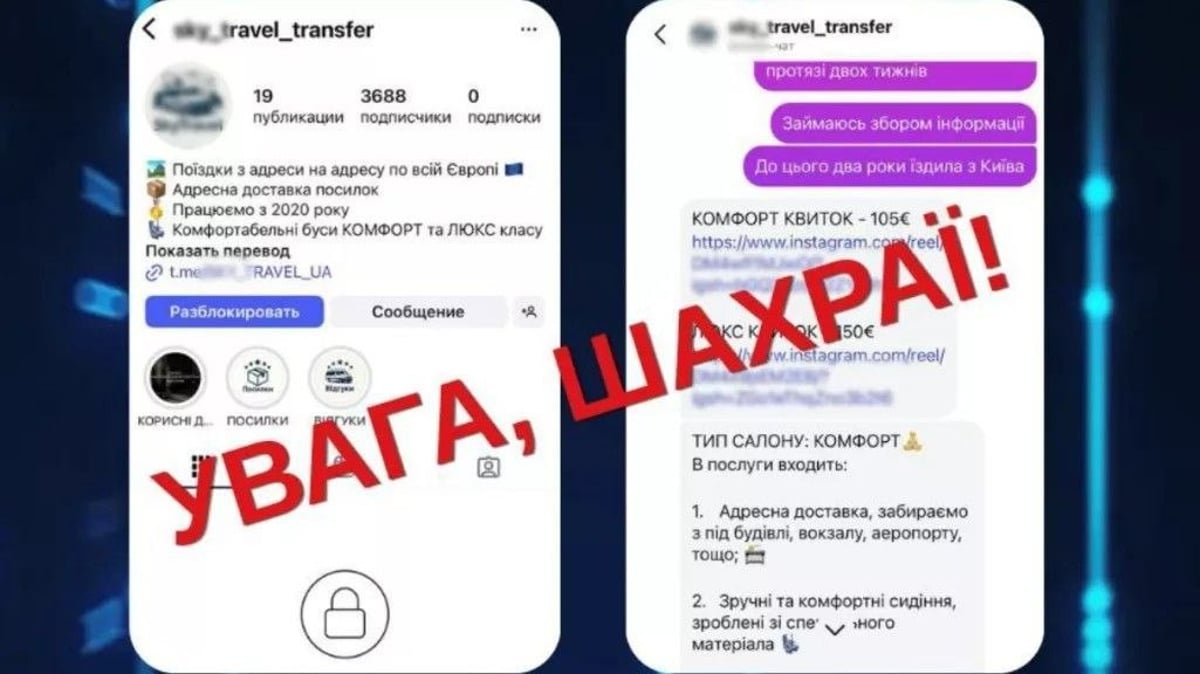
Criminals create fake advertisements and pages, posing as private carriers or representatives of logistics companies.
To build trust, they use photos of real buses and trucks, logos of well-known companies, stolen reviews, and other copied materials.
How the scheme works
Usually, it all starts with an attractive advertisement.
Scammers offer trips at low prices or promise fast and inexpensive cargo transportation.
Once a client reaches out, they try to proceed to payment as quickly as possible. They may claim that only a few spots are left, that other clients are already waiting, or that an urgent prepayment is required to book.
When organizing cargo transportation, they may demand full advance payment to a bank card or an individual’s account. After receiving the funds, the “carrier” stops responding, and the advertisement or page disappears.
Sometimes, after the first payment, scammers invent additional costs such as insurance, document processing, customs clearance, or other non-existent services.
Signs of potential fraud may include:
significantly lower prices compared to other offers;
demands for urgent prepayment;
communication exclusively via messengers without the ability to verify the carrier;
a recently created page or lack of operational history;
reluctance to provide information about the route, vehicle, or terms of service;
the emergence of new charges after an initial agreement.
Be especially wary of links for “booking” or payment. Scammers may use phishing sites that mimic banking or payment services and are designed to steal card data.
How not to lose money
Before paying, verify information about the carrier through several independent sources. Search for the company name, phone number, client reviews, and business history.
Do not rush to transfer funds based solely on chat correspondence. If you are being pressured to pay or told that an offer is valid for only a few hours, it is better to take a break and check everything.
Do not share bank card details, CVV codes, passwords, or one-time confirmation codes with strangers. Do not click on suspicious links for payment or booking.
You can learn more about current fraud schemes and protection methods on the StopFraud platform.
If you have become a victim of fraud, save the correspondence, screenshots of the advertisement, and payment confirmation. If you provided bank details, contact your bank immediately. Also, report the incident to the Cyberpolice via their online form or call 102 or 112.
Join the BRAMA project’s Telegram channel to stay updated on current information and help block hostile resources together: https://t.me/brama_channel
Remember: before sending money to an unknown carrier, it is better to spend a few minutes verifying them than to try and recover your funds later.
Photo: Увага, шахраї під виглядом перевізників!