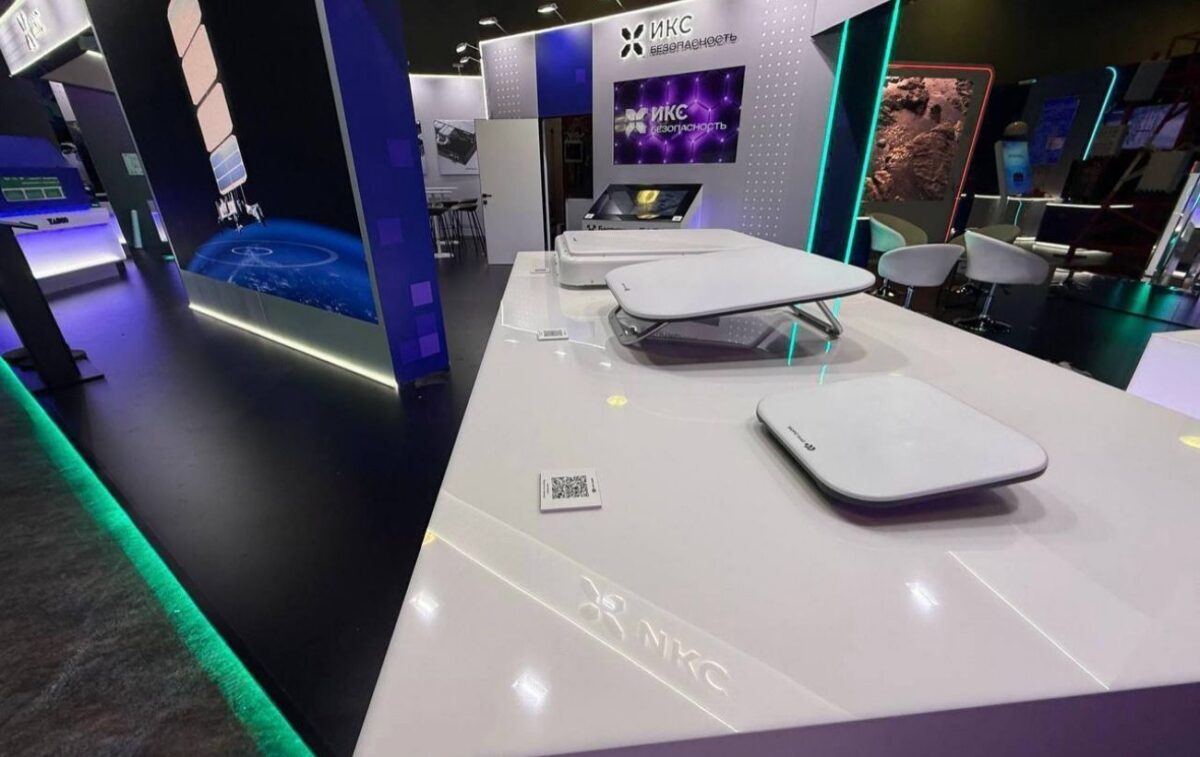
Developers presented a lineup of three satellite communication subscriber devices
Russian company Bureau 1440 has unveiled three subscriber terminals for the Rassvet low-earth orbit satellite system, which could potentially be used to control drones. This was reported by RBC-Ukraine (Лев Шевченко), according to the portal PromPolitInform.
The Russian developer of the Starlink counterpart demonstrated a hardware lineup consisting of three devices designed for different purposes. The first item is 1440.ULTRA, intended for connecting industrial enterprises, remote areas, and infrastructure facilities with data transmission speeds of up to 700 Mbps.
Characteristics of Railway and Compact Equipment
The second device, named 1440.ZEMLYA, is adapted for railway transport operations at rolling stock speeds of up to 400 km/h. The third option, 1440.MINI, is a compact equipment concept with a target speed of about 100 Mbps for mobile deployment by rescue teams and emergency services.
Prospects for Satellite Systems Application
In terms of dimensions and specifications, these models correspond to the Starlink Standard, Performance, and Mini lines, although they currently exist only as serial devices and concepts. Moving forward, such terminals could potentially be installed on Russian strike UAVs for attacks against Ukraine.
Deployment of the Satellite Constellation
The Rassvet system itself is currently undergoing deployment in low Earth orbit. In March 2026, the company launched the first 16 target group satellites into orbit, followed by another 16 spacecraft in July.
Technological Communication Parameters
According to the manufacturer, the system utilizes 5G NTN technology for communications between spacecraft and ground terminals, as well as laser links between the satellites themselves. During testing, data transmission was recorded at distances up to 1,000 km with speeds reaching 10 Gbps.
Spacecraft Launch Schedule
Under the Russian federal project, plans are in place to deploy 156 spacecraft in 2026, 292 in 2027 to launch a full-scale commercial service, and 318 in 2028. The initial March launch took place with a delay of approximately three months due to manufacturing issues.
Expert Assessments on Operability
In late May, presidential adviser Serhii «Flesh» Beskrestnov reported on the test mode of spacecraft operation and indicated that at least 200–250 satellites would be required for stable communication. At the time, it was noted that the project showed no signs of military use.
Integration into Transport Infrastructure
The second serial launch took place on July 19 and consisted of 16 spacecraft, whereas round-the-clock coverage requires over 250 satellites. Simultaneously, Bureau 1440 and the Russian railway are preparing to integrate satellite communications into 135 Sapsan and Lastochka high-speed trains.
Photo: Бюро 1440
Read also: Russia needs up to 15 Soyuz rocket launches to deploy a Starlink analogue