Since the start of hostilities in the Middle East, the number of ship passages through the Strait of Hormuz has plummeted from 130–160 to 7–10 ships per day, i.e. by almost 90%.
The conflict between Iran and the US has a decade-long history, but the open war between the US (along with Israel) and Iran began on February 28, 2026. It began with massive air strikes by American and Israeli aircraft on military facilities, government institutions, and nuclear infrastructure in Iran. In turn, Tehran actually began to block shipping through the Strait of Hormuz, one of the most important maritime corridors in the world. This is what the Prompolitinform portal writes in an editorial.
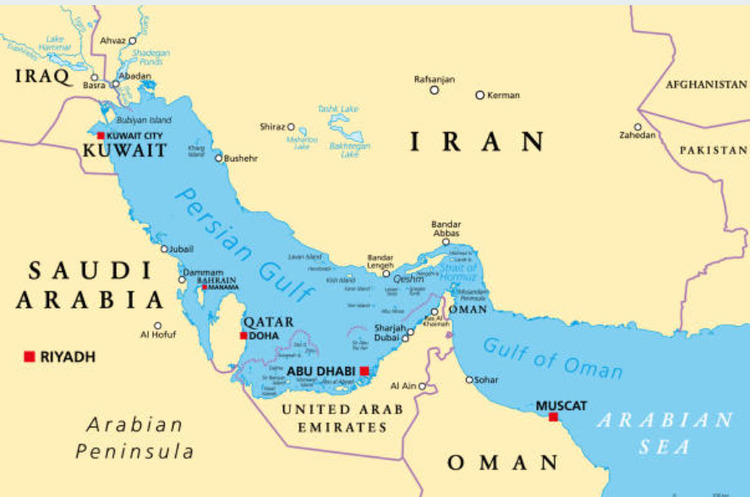
This narrow passage between Iran and Oman carries roughly one-fifth of global oil exports and a significant share of liquefied natural gas shipments. In peacetime, more than 130 vessels passed through the strait every day — including oil tankers, container ships, LNG carriers, and bulk cargo vessels. But after the outbreak of hostilities, traffic collapsed by more than 90%.
Shipowners began avoiding the route because of the risks of attacks, naval mines, and missile strikes, while insurance companies sharply increased premiums for transit through the region. Some tankers became effectively trapped in the Persian Gulf.
As a result, the number of ships in the Strait of Hormuz has become one of the most accurate indicators of either escalation or de-escalation in the conflict between Iran and the United States: the fewer the ships, the higher the level of tension in the region.
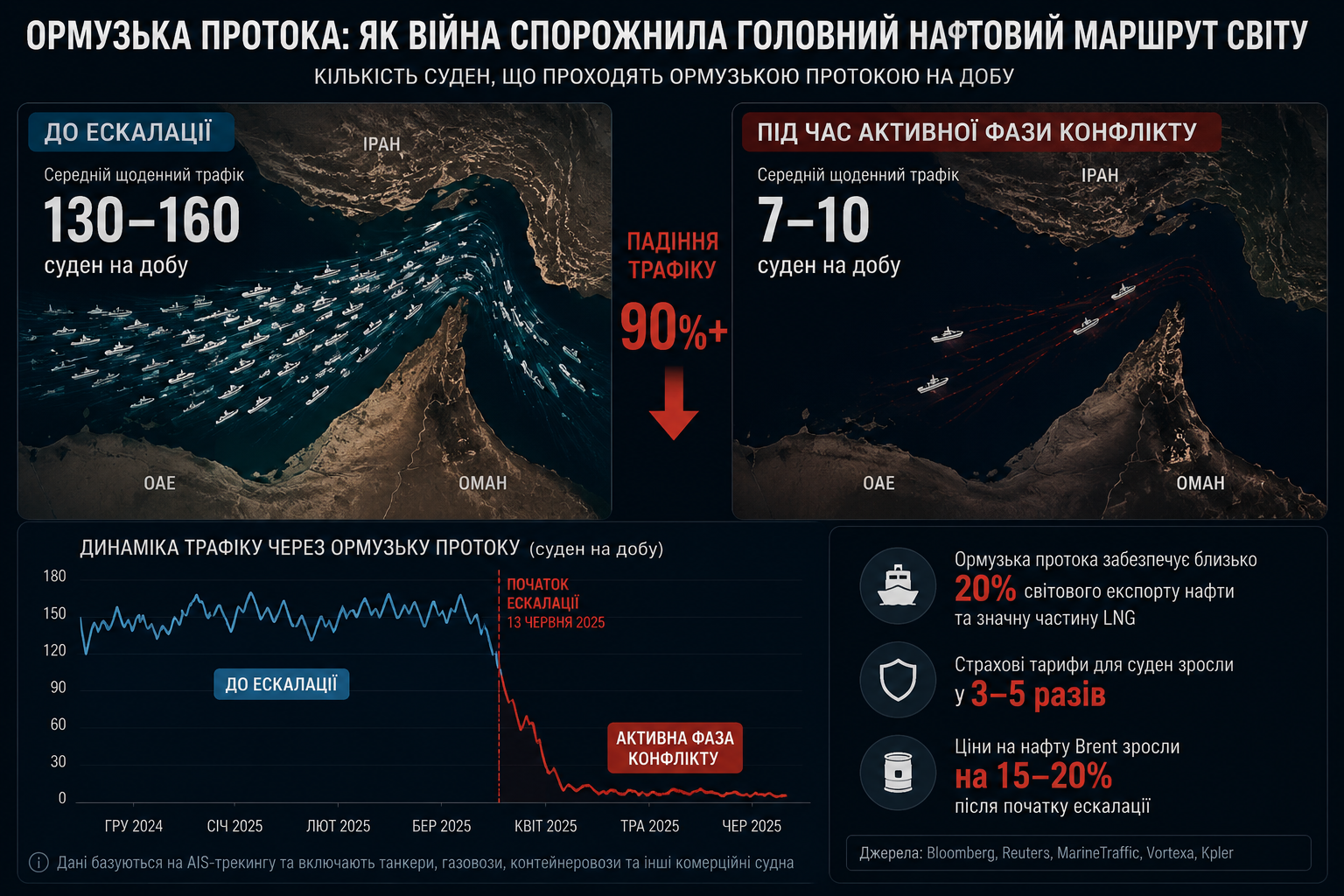
According to Bloomberg, Reuters, and maritime tracking services, approximately 130–160 vessels passed through the strait daily before the escalation, while during the active phase of the conflict traffic dropped to just 7–10 ships per day.
The Impact of the Iran–US War on Global Oil Prices
The Strait of Hormuz is the world’s main oil and gas artery. Around 20% of global oil exports and a large share of LNG supplies pass through it. That is why the escalation between Iran and the United States immediately turned into a shock for global energy markets.
After the United States and Israel launched strikes on Iranian infrastructure in February–March 2026, shipping through the Strait of Hormuz nearly came to a halt. Iran began attacking selected vessels and threatening a complete blockade of the route. In response, insurance rates for oil tankers surged to record levels, while some shipowners refused to enter the Persian Gulf altogether. Markets reacted instantly — Brent crude first rose to $90 per barrel and later exceeded $120. UBS and Barclays raised their Brent forecasts to $100–110 per barrel in the event of a prolonged crisis.
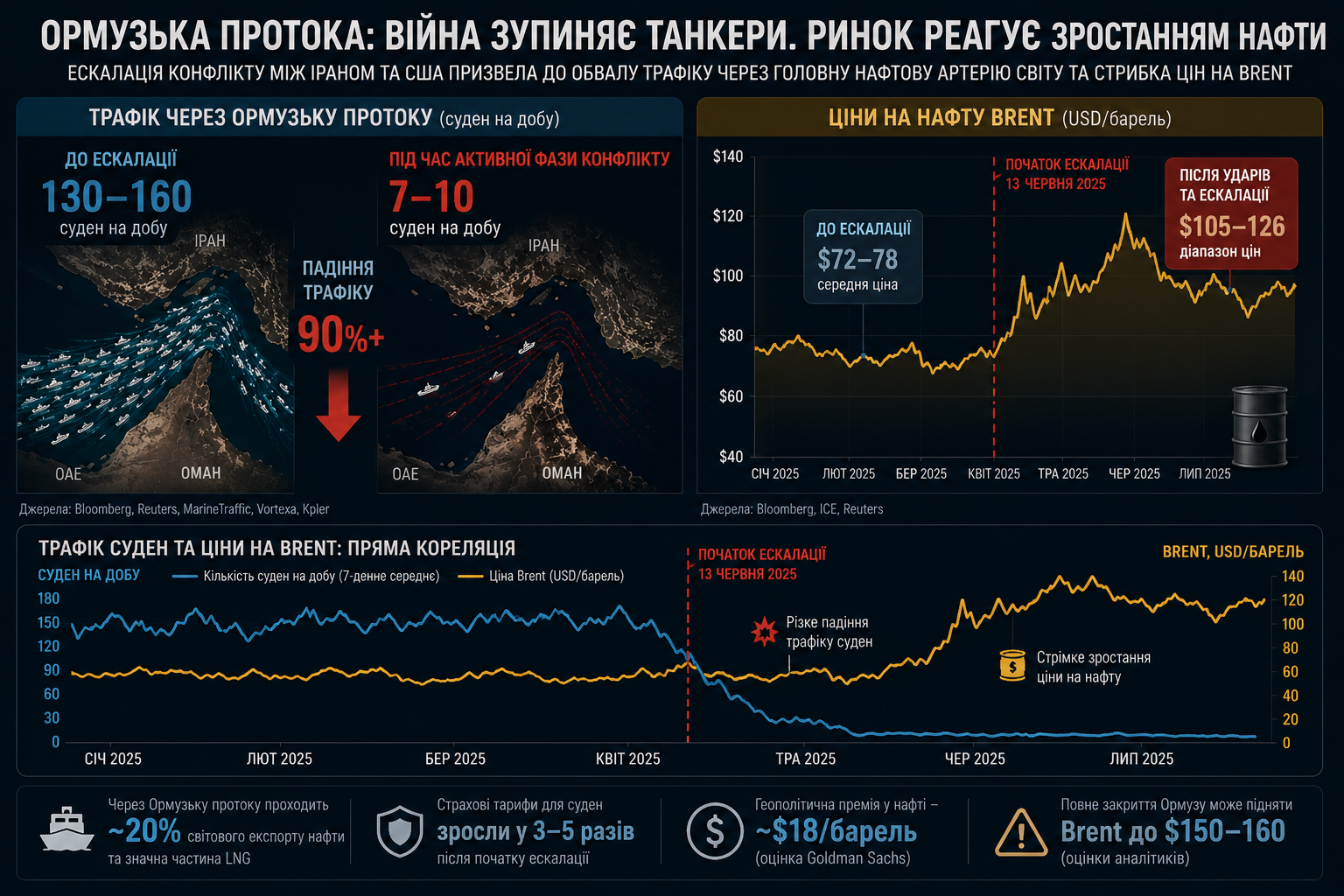
The worst-case scenario would be the complete closure of the Strait of Hormuz. According to Bloomberg estimates and banking analysts, Brent crude could surge to $150–160 per barrel, creating the biggest energy shock since the oil crises of the 20th century. The economic consequences of the Hormuz crisis are already being felt worldwide — fuel prices are rising, inflation is accelerating, logistics costs are increasing, and industries are facing a sharp jump in energy prices.
How the Hormuz Crisis Changed Fuel Prices in Ukraine
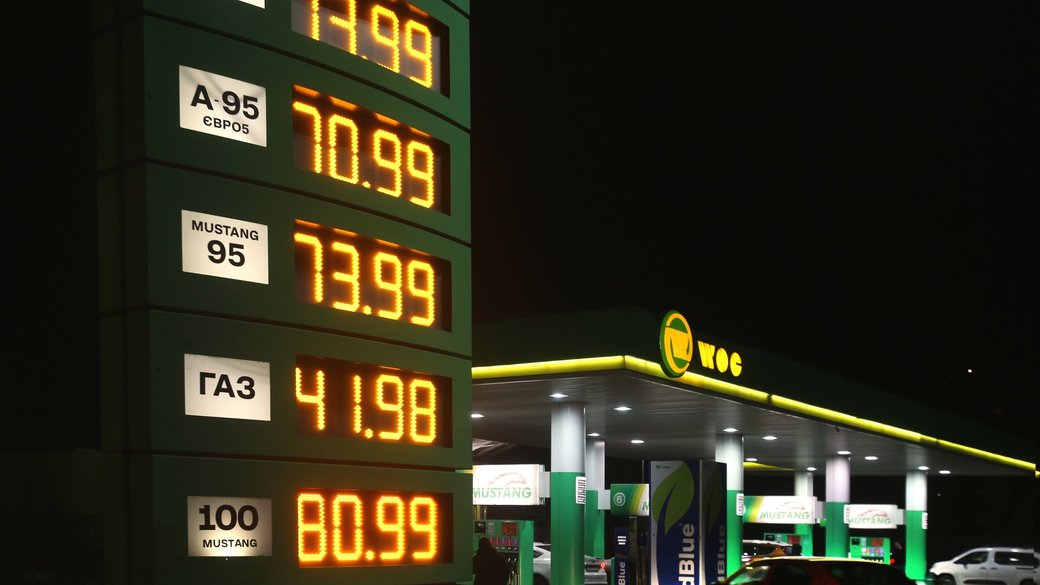
The Strait of Hormuz is located more than 3,500 km from Ukraine, yet it directly affects prices at Ukrainian gas stations. Following the escalation between Iran and the United States, Ukraine’s fuel market also felt the impact of rising global oil prices. Ukraine is heavily dependent on imported fuel, so any increase in Brent prices quickly translates into higher prices at the pump.
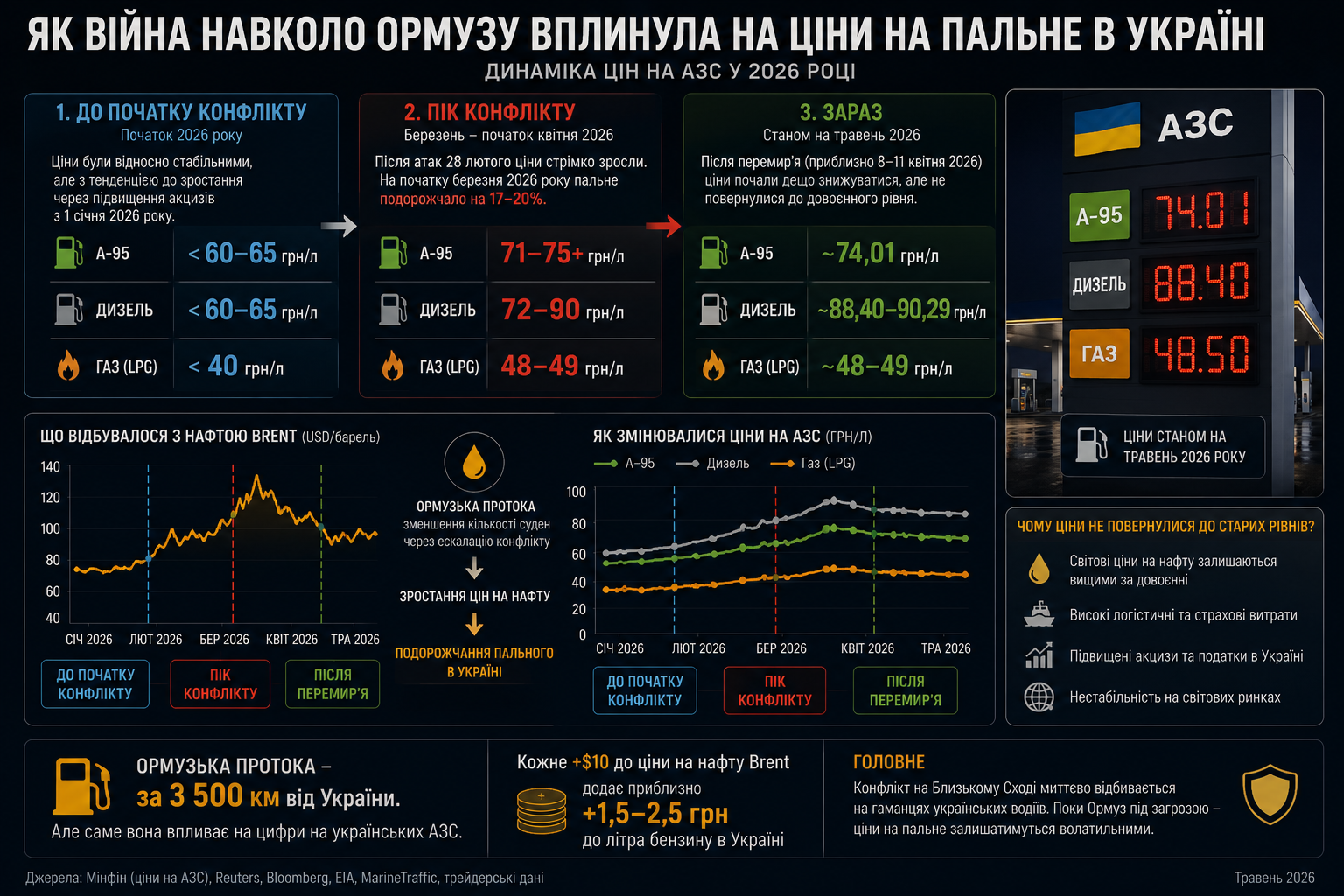
At the peak of the escalation, traders factored not only more expensive oil into fuel prices, but also logistics risks, insurance costs, and the threat of a global shortage of petroleum products.
As a result, average prices for A-95 gasoline, diesel fuel, and LPG in Ukraine rose sharply. Every additional $10 increase in Brent crude prices adds approximately 1.5–2.5 UAH to the price of one liter of gasoline in Ukraine.
No one knows exactly when Iran and the United States may reach a peace agreement. But there is one key indicator — ship traffic through the Strait of Hormuz. Once traffic begins to recover, it will signal that the sides are moving closer to an agreement. We recommend following the NBC News tracker, which counts the number of vessels passing through the Strait of Hormuz each day. In recent days, slightly more than five ships have been passing through daily.
Text: editorial staff of the Prompolitinform portal
Photos: DR and open sources
Infographics: AI-generated