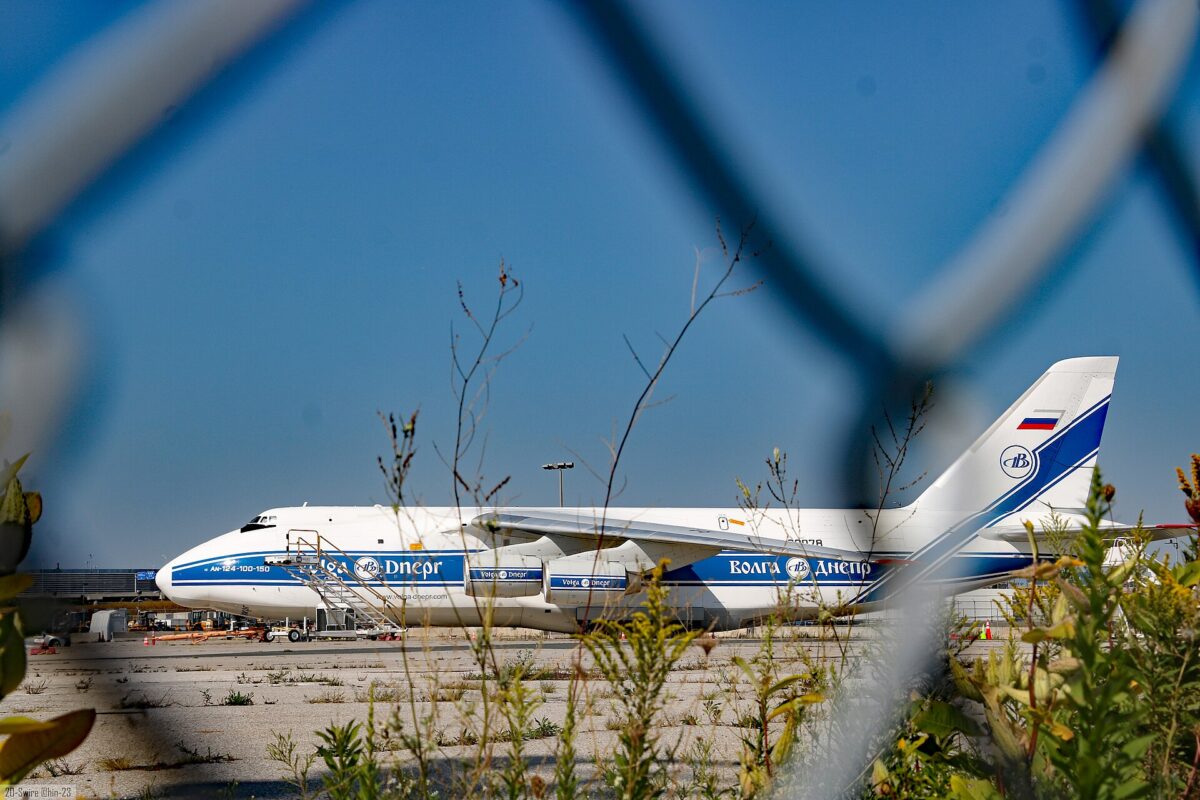
The Federal Court of Canada has upheld the government's decision not to lift sanctions against the Russian cargo airline Volga-Dnepr and its former head. As a result, the An-124 transport aircraft remains blocked at Toronto Pearson Airport. This was reported by Volha-Dnipro citing The Canadian Press, according to the portal PromPolitInform.
The judge dismissed the carrier’s claims, as it had attempted to challenge the restrictive measures and secure the removal from the sanctions list. According to the court, the ministerial decision contained no procedural violations or unreasonableness.
This trial became a test of Canada’s sanctions enforcement model, which is unique among G7 countries. The regulatory framework allows not only for freezing the assets of sanctioned individuals, but also for confiscating them in favor of the state, with subsequent channeling of funds toward the reconstruction of Ukraine.
Legal mechanism of sanctions and confiscation
The company claimed that it stopped transporting military cargo back in 2018 and was not involved in the aggression against Ukraine. At the same time, Global Affairs Canada presented evidence regarding contracts and subsidies that indicated assistance to Moscow in circumventing restrictions.
The An-124 aircraft was grounded at Toronto Pearson Airport before the airspace closure in 2022 and seized in June 2023. During its downtime, the aircraft has accumulated over one million dollars in parking fees.
Expansion of seizure to assets and owners
In February 2025, Ottawa expanded the confiscation order to other legal entities and individuals associated with the aircraft. This list included the Volga-Dnepr group, former head Alexey Isaikin, and Sberbank.
Illustrative photo: Can Pac Swire / CC BY-SA 2.0
Read also: Large-Scale Military Parade Featuring Advanced NATO Aviation Held in Warsaw